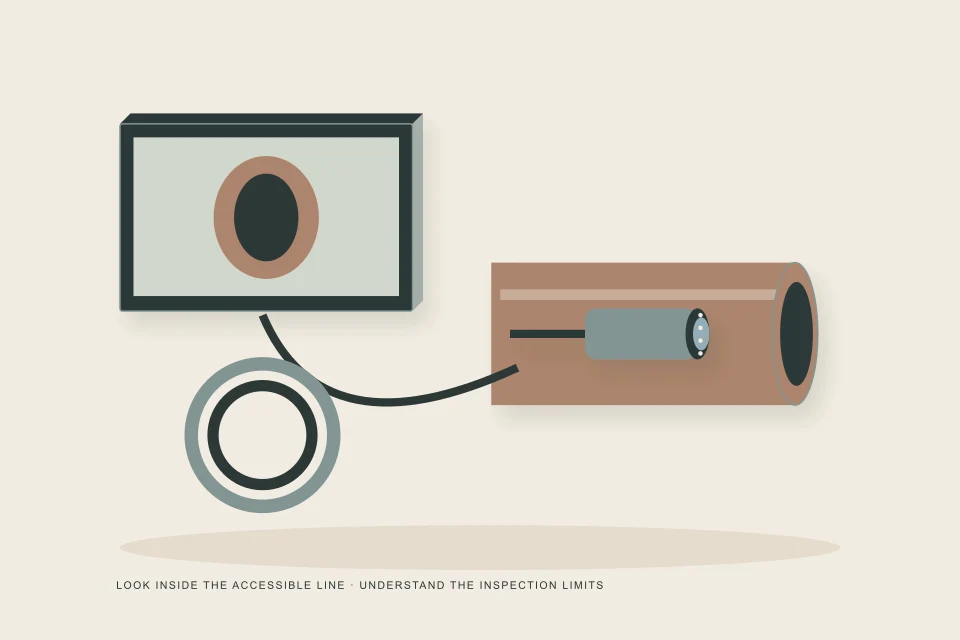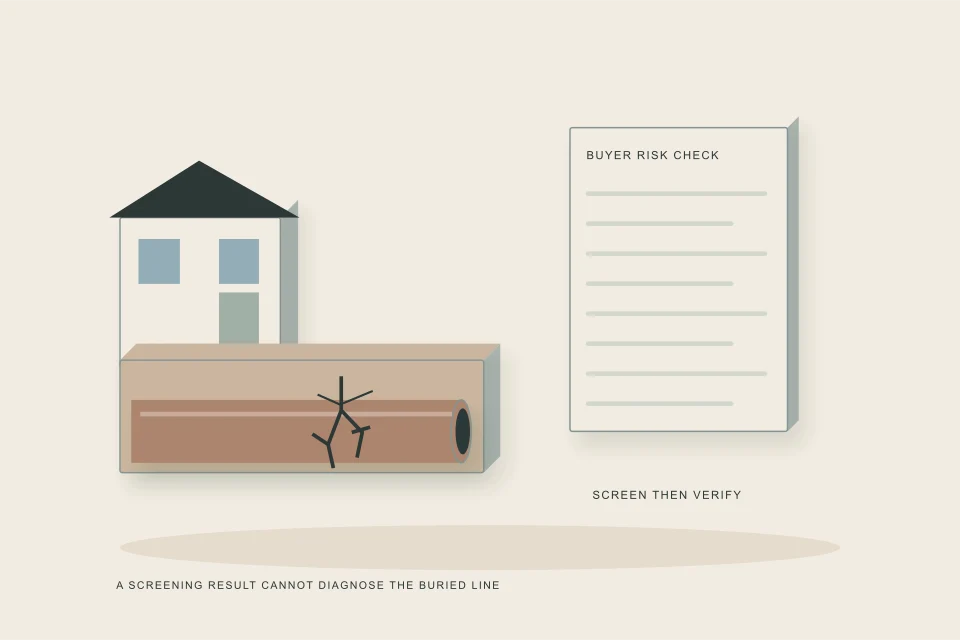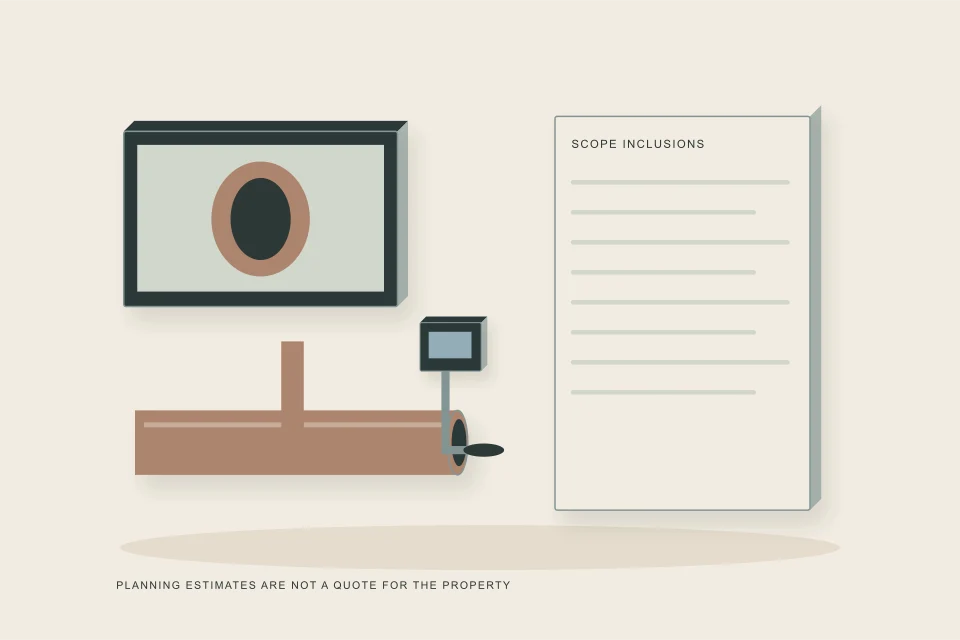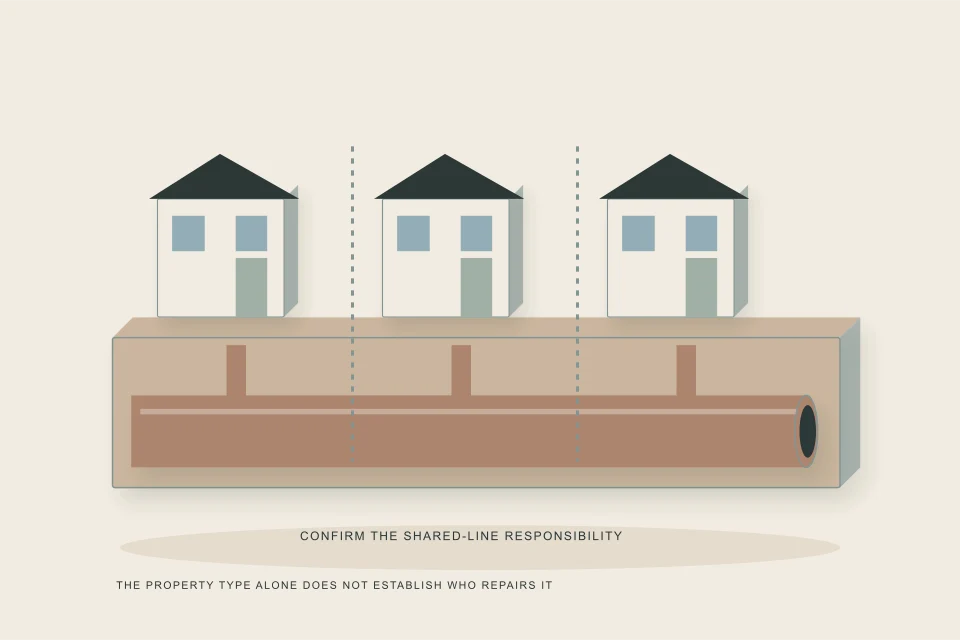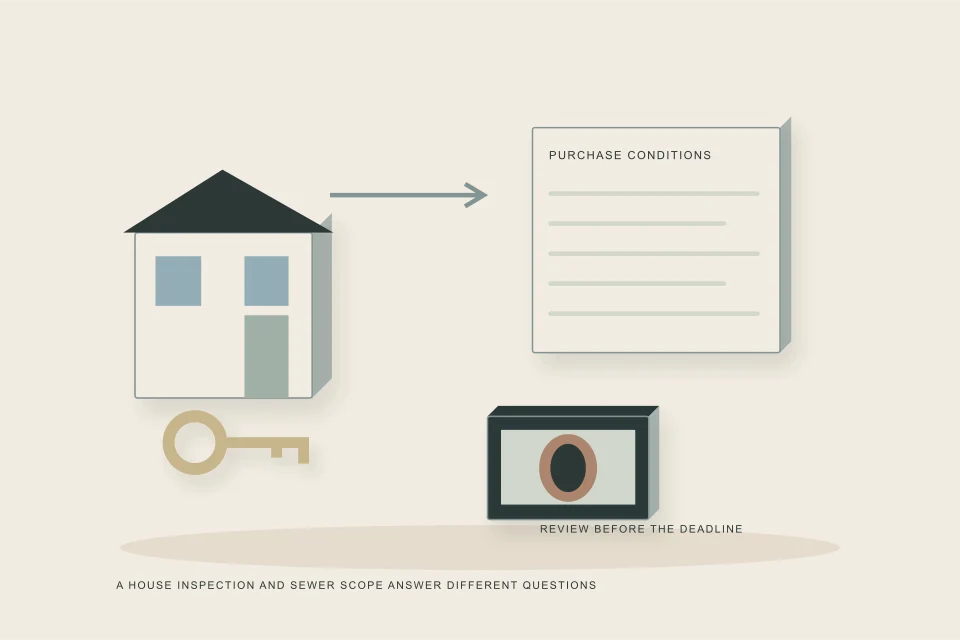
A sewer scope gives a home buyer the one thing a showing and a home inspection cannot: a look inside the buried line that carries the house's wastewater to the City main. Book it as its own condition on any resale house over about twenty years old, or with big trees or a backup history, and schedule it early enough to get a quote and negotiate before the condition deadline.
- The sewer lateral is out of sight until it backs up, and by then the house is yours.
- Pre-1980 houses, mature trees, fresh basement renovations and slow or gurgling drains are the strongest reasons to scope.
- Findings become leverage: cleaning for roots, a credit or repair for damage, replacement or a walk-away for collapse.
- Waiving conditions to win a bid removes that leverage; RECA warns that condition-free offers raise the risk of a failed deal.

01 /Why should a buyer get a sewer scope?
A buyer should get a sewer scope because the lateral is a major system that stays invisible until it fails. At a showing you can look at a roof, open an electrical panel and hear a furnace start. The sewer line is buried under the yard, deep enough in Calgary to stay below winter frost, and the first sign of trouble is often sewage on the basement floor after you have moved in.
At that point the damage is layered. There is the pipe repair itself, which in Calgary can run into five figures, and there is cleanup of whatever the backup reached. The Insurance Bureau of Canada notes that basement water damage from a sewer backup is covered only if you bought optional sewer backup coverage. A scope during the condition period moves that discovery to a time when you still have options.
02 /Which houses need a sewer scope most?
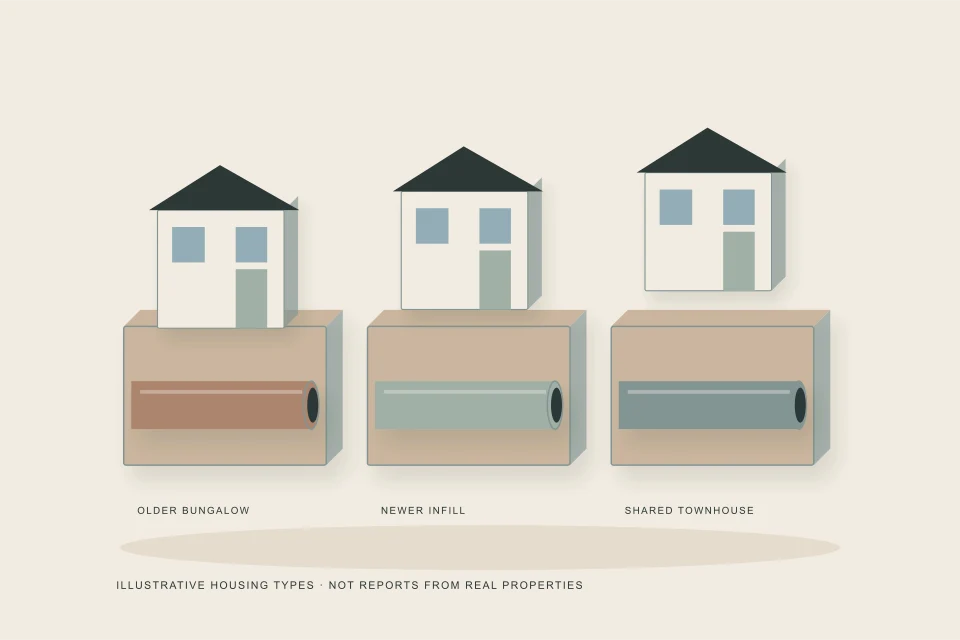
Houses built before about 1980 need a scope most, followed by any house with mature trees between the foundation and the main, any house with a known backup, and any house where nobody can say what the line is made of. A useful rule of thumb is to scope any resale house more than about twenty years old, and to consider it on newer ones, where sags from poor bedding and construction debris still turn up.
| Red flag | Why it matters | What to ask |
|---|---|---|
| Large trees in the front yard, boulevard or backyard near the line | Roots find joints in older pipe | Where does the line run relative to the trees? |
| Built before 1960 | Clay tile, cast iron or fibre pipe likely | Has the line ever been replaced or relined? |
| New basement finishes in an older house | Renovations can cover past water or backup damage | Any backups, claims or drain work before the reno? |
| Slow drains or gurgling at the showing | A partial blockage or venting issue | When was the line last cleaned, and why? |
| Floor drain with a stain or a smell | Past backup or dry trap | Is there a backwater valve, and when was it serviced? |
| Cleanout cap missing, cracked or buried | Access problems and possible past work | Where is the main cleanout? |
Several flags together matter more than any one alone. A 1965 bungalow with a big spruce out front, a freshly finished basement and a seller who cannot say when the line was last cleaned is exactly the house where the scope earns its fee.
For a quick score before you book, the Buyer Sewer Risk Check weighs material, year, trees, basement, disclosure and any past scope.
03 /Should the sewer scope be its own condition?
It usually should. A general inspection condition may or may not be read to include a sewer camera, and a specific condition removes the doubt. RECA explains that conditional offers let buyers do due diligence such as a home inspection, and that if the buyer does not waive conditions by the agreed deadline the offer becomes void. The same mechanism protects a buyer who finds a collapsed line.
In a competitive market it is tempting to drop conditions to win. RECA warns that making an offer without inspecting a property greatly increases the chance of a deal collapsing, and for a pre-1980 house the sewer is one of the likeliest places for an expensive surprise. If you do waive, do it knowing what you are accepting, and ask your Realtor to record that choice. Wording belongs with your Realtor and lawyer; sewer scopes for Realtors shows the shape of a typical clause.
04 /How does a scope give a buyer negotiating leverage?
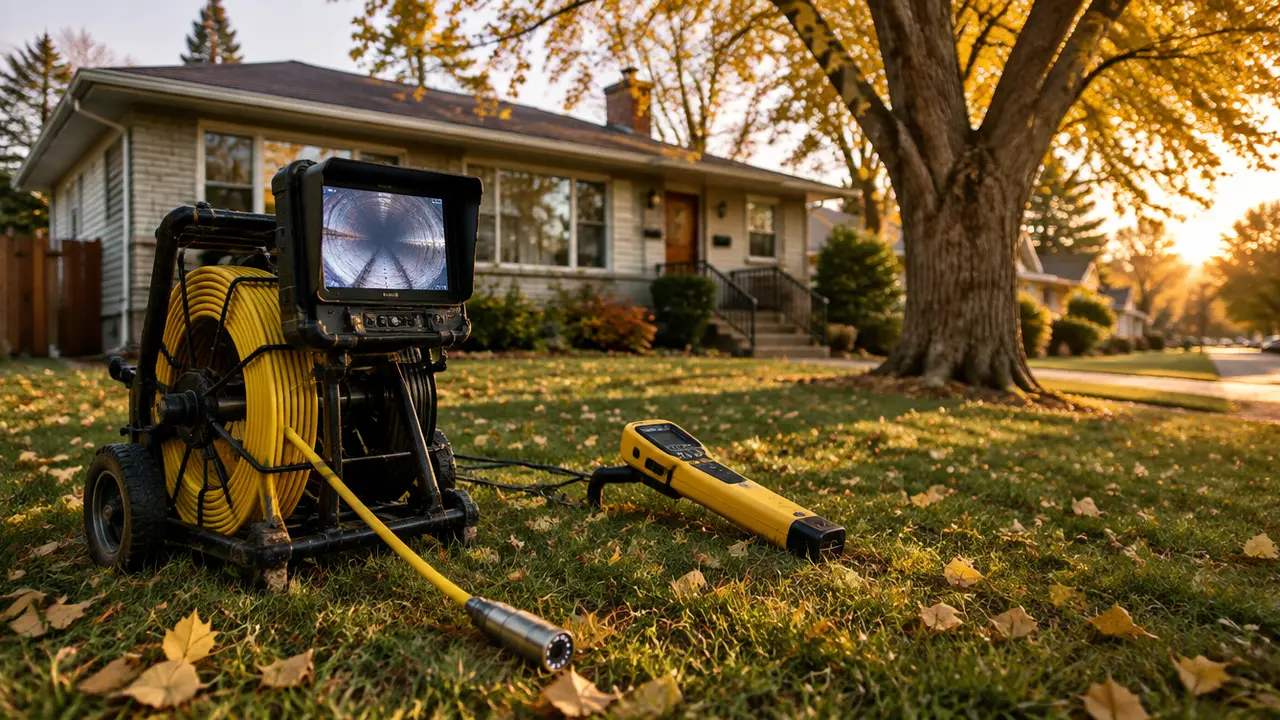
A scope gives leverage by turning a vague worry into a specific finding with a location and a price. Sellers respond to evidence: a video, a surface mark and a written contractor's quote are hard to argue with. What you ask for depends on what the camera found.
| Finding | Common request | Evidence to attach |
|---|---|---|
| Clear line | None; keep the video as a baseline | Full video |
| Roots in otherwise sound pipe | Professional cleaning before possession, or a small credit | Video clip at the root entry |
| Crack, offset or sag in one section | Seller-paid spot repair, or a credit equal to the quote | Locate mark, depth and written quote |
| Damage along much of the run | Price reduction or credit toward replacement | Replacement quote |
| Collapse or deformed pipe | Seller replaces the line, a major reduction, or walk away | Video, locate and quote |
Without the evidence, you inherit the problem the moment you take possession. After a bad sewer scope walks through each option, and the illustrative case studies show how they tend to play out.
05 /How does a sewer scope fit the condition timeline?
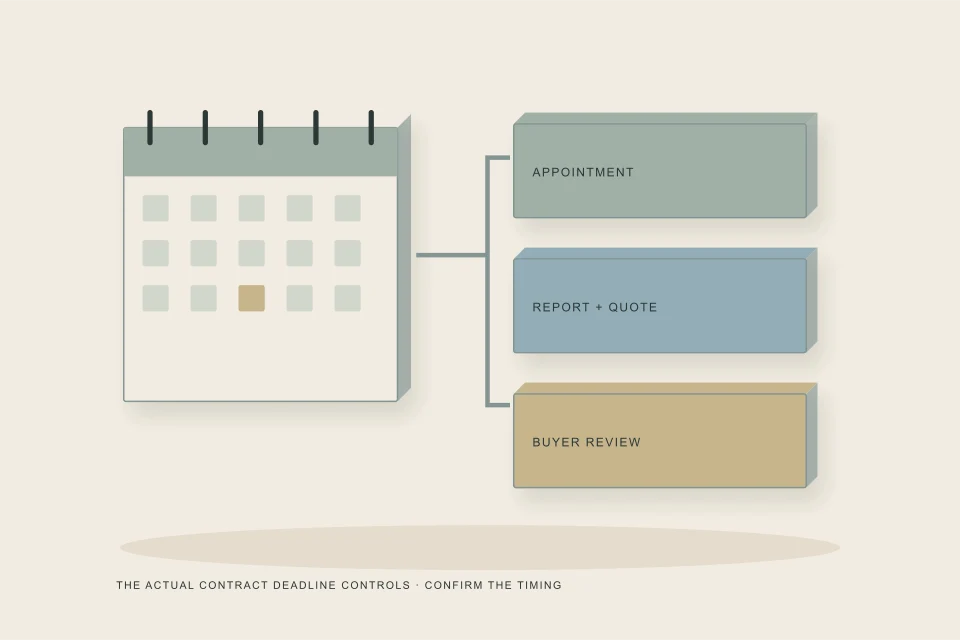
Condition periods in Calgary are often around a week to ten days, and the scope has to fit inside with room to spare. The sequence below assumes a seven-day window; tighten or loosen it to match your contract.
- Day 0 — acceptance
Request the scope with the deadline and access details. Run the Condition Deadline Scope Planner for a book-by date.
- Days 1 to 3 — inspect
Scope and locate, ideally the same day as the home inspection so one visit covers both.
- Days 3 to 5 — quote
If anything turned up, get a written quote based on the marks and footage.
- Days 5 to 7 — decide
Review with your Realtor and lawyer; waive, negotiate or let the condition lapse before the deadline.
06 /What should a buyer do on the day of the scope?
- Attend if you can. The live picture with the operator's commentary is easier to understand than a report alone.
- Ask where the camera stopped and whether it reached the City main.
- Ask what material the line is and where it changes.
- Ask for marks on the ground for anything significant, and photograph them with a tape from the foundation.
- Confirm when the report arrives, and that the full video comes with it.
Afterward, write down anything the operator said that is not in the report, with the time and the counter reading on screen when it was said. Comments made while watching the live picture are often the clearest explanation you will get, and they help when you later ask a contractor to quote the same spot.
What a buyer's scope report should contain lists the deliverables to request, and who pays explains what a City-side finding means. To start, request a scope.
FAQQuestions people ask
Do I need a sewer scope if the home inspection found no plumbing problems?
Yes, if the house is older. A home inspection examines readily accessible features and does not normally look inside the buried line, so it cannot see roots, cracks or sags underground.
Is a sewer scope worth it on a house built after 2000?
It is optional but often useful. PVC lines can still have sags or construction debris, and a clean video is a baseline if problems appear later.
Can I get a sewer scope after I waive conditions?
You can, but you lose the leverage. A defect found after waiving is generally the buyer's to fix unless the contract says otherwise.
What if the seller refuses to let me scope the sewer?
Access terms are part of the negotiation. A refusal on an older house is information in itself; discuss it with your Realtor before going further.
Can the home inspection and the sewer scope happen at the same time?
Often, yes. Booking both for the same visit saves a trip and leaves more of the condition period for quotes and decisions.
NETWORKGo deeper across the HAUSE Sewer network
Should you scope the sewer before buying a house?
When a sewer scope before buying a house is worth it, which homes need one most, how to fit it inside a condition period, and what to do with the result.
SewerRoots.caHow serious are roots in a sewer line, and what happens if you leave them?
How serious are roots in a sewer line? Whether roots are normal, how intrusion moves from fine roots to backups, sags and breaks, and how urgent yours is.
DrainAugering.caCan a drain snake damage your pipes? Where the real risks are
Can a drain snake damage pipes? How cables and cutters harm old clay, Orangeburg, cast iron, plastic traps, chrome fittings and toilets, and how to avoid it.