This glossary defines the words that come up when a Calgary buyer or Realtor books a sewer scope and reads the result: the parts of the line, the camera and locating equipment, the defects a report names, the City's material codes, and the real estate terms, such as condition, waiver, RPR and holdback, that decide what happens next.
- Lateral, service line and building sewer all describe the same buried pipe from the house to the main.
- The City's material codes describe only the City section; TIL is generally read as clay tile, and TP and OTHER are not explained in the metadata.
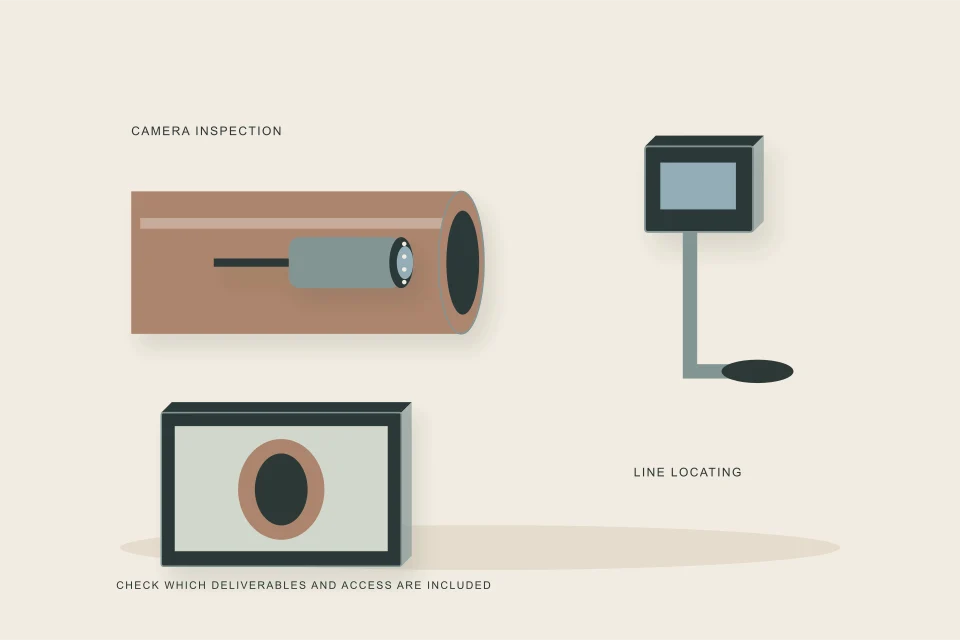
- A sonde locate marks a defect for quoting; it is not a utility locate for digging.
- Real estate terms such as condition, waiver and holdback decide what a scope finding can change.
01 /How is this glossary organized?
Terms are grouped by where you meet them: the pipe and its parts, the scope visit, the defects in a report, the City's records, and the purchase. Definitions are written for buyers and Realtors, not operators. For national defect codes and grading systems in depth, SewerInspector.ca goes further.
| These | Are not the same because |
|---|---|
| Sonde locate vs utility locate | A sonde locate marks a sewer defect for quoting; a utility locate marks registered buried utilities before digging, and neither marks every private line |
| Camera distance vs property line | The counter measures cable from the entry point; the boundary comes from a survey or RPR |
| Home inspection vs sewer scope | One is a largely non-invasive look at accessible features; the other puts a camera inside the buried line |
| Sewer backup coverage vs service line coverage | One covers water damage from a backup; the other, where sold, covers repairing the pipe |
| Relining date vs build year | A CIPP date on the City record is usually when that section was relined, not when the house was built |
02 /Where do these terms show up in a purchase?
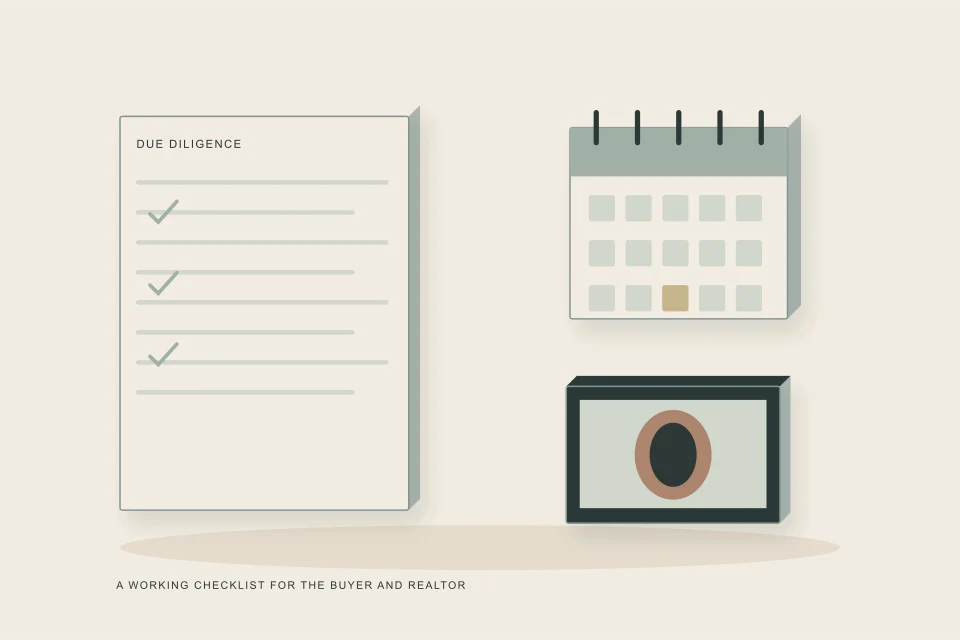
Most of the pipe and defect terms appear in the scope report; the City terms appear in the address lookup on the Buyer Sewer Risk Check; and the real estate terms appear in the offer, the due diligence checklist and the conversation after a finding. When a report uses a word not listed here, ask the operator to explain it in writing.
A word of caution on the City codes. They come from the City's records for its own section of each line, and the City's metadata does not define every code. This glossary gives the common reading where one exists and says so plainly where none does; a camera, not a code, identifies the private pipe.
A–ZTerms
- Backwater valve
- A valve on the building drain that closes if sewage flows backward from the main. It is the homeowner's to install and maintain.
- Belly (sag)
- A low section of pipe that holds water because it has settled below its designed grade.
- Building sewer
- Plumbing-code term for the drain pipe from just outside the foundation to the public sewer; in practice, the private part of the lateral.
- Cast iron pipe
- Heavy metal drain pipe, common in 1950s Calgary houses, that corrodes from the inside.
- Channelling
- Wear along the bottom of a cast iron pipe that can thin or open the floor.
- CIPP (cured-in-place pipe)
- A resin liner cured inside an existing pipe to form a new pipe within it; on City records the date is usually the relining date.
- Clay tile pipe
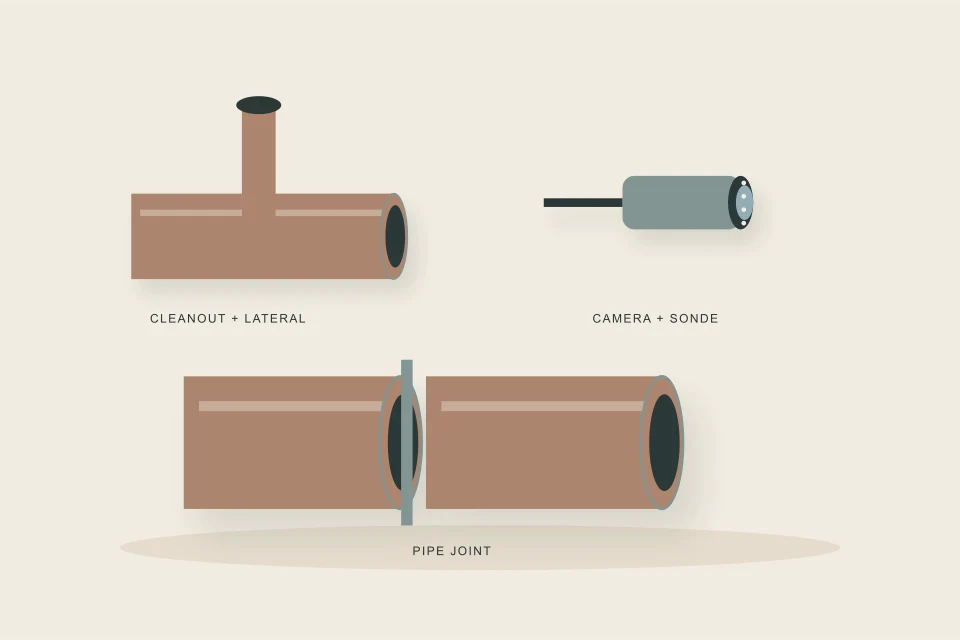
- Vitrified clay pipe laid in short sections with bell joints; common in Calgary laterals of the 1960s and 1970s.
- Cleanout
- A capped access fitting on the drain, usually in the basement floor or on the stack, where the scope camera goes in.
- Collapse
- A section where the pipe wall has fallen in; the camera often cannot pass.
- Condition (in an offer)
- A term the buyer must satisfy or waive by a deadline, such as a home inspection or sewer scope.
- Condition deadline
- The date and time by which conditions must be waived; if not, the offer becomes void.
- Crack or fracture
- A break in the pipe wall, from hairline to broken pieces.
- Credit or price adjustment
- A reduction agreed between buyer and seller to reflect a known repair.
- Deformation
- Pipe that has lost its round shape under soil load, typical of fibre pipe.
- Distance counter
- The on-screen reading of how much cable has gone into the pipe from the zero point.
- Estoppel certificate
- A condominium document summarizing a unit's fees and the corporation's position; reviewed alongside the reserve fund study.
- Extension
- A written agreement moving a condition deadline, made before the original deadline passes.
- Fibre (tar paper) pipe
- Mid-century pipe of fibre and coal-tar pitch that can blister and flatten; usually replaced rather than repaired.
- Grade
- The downhill slope a gravity sewer needs so waste keeps moving.
- Holdback
- Money held back from the sale proceeds until agreed work is done; terms are set by the lawyers.
- Lateral (sewer lateral)
- The buried pipe carrying wastewater from a house to the municipal sanitary main. In Calgary it is split into a private section and a City section at the property line.
- Locate and mark
- Finding the sonde from the surface at a defect and marking the spot with paint or a flag, with an estimated depth.
- Main stack
- The vertical drain and vent pipe that carries waste down through the house to the building drain.
- Offset joint
- Two pipe sections that have shifted so their ends no longer line up, leaving a lip.
- Private locate
- Marking of customer-owned lines, such as private sewer and water services, which the utility locate service does not cover.
- Property line
- The legal boundary of the lot and the point where sewer ownership changes. In Calgary it is often a few metres inside the curb or sidewalk.
- Push camera
- A camera head on a semi-rigid cable pushed along the pipe by hand from a reel.
- PVC
- Rigid plastic pipe used for Calgary laterals from the 1980s onward.
- Real Property Report (RPR)
- A document prepared by an Alberta Land Surveyor showing the lot's boundaries and structures; used to place a defect relative to the property line.
- Reserve fund study
- A condominium's plan for major repairs, which may mention shared sewer lines.
- Roof vent access
- Running the camera down the plumbing vent from the roof; possible on some houses, slower and weather-dependent.
- Root intrusion
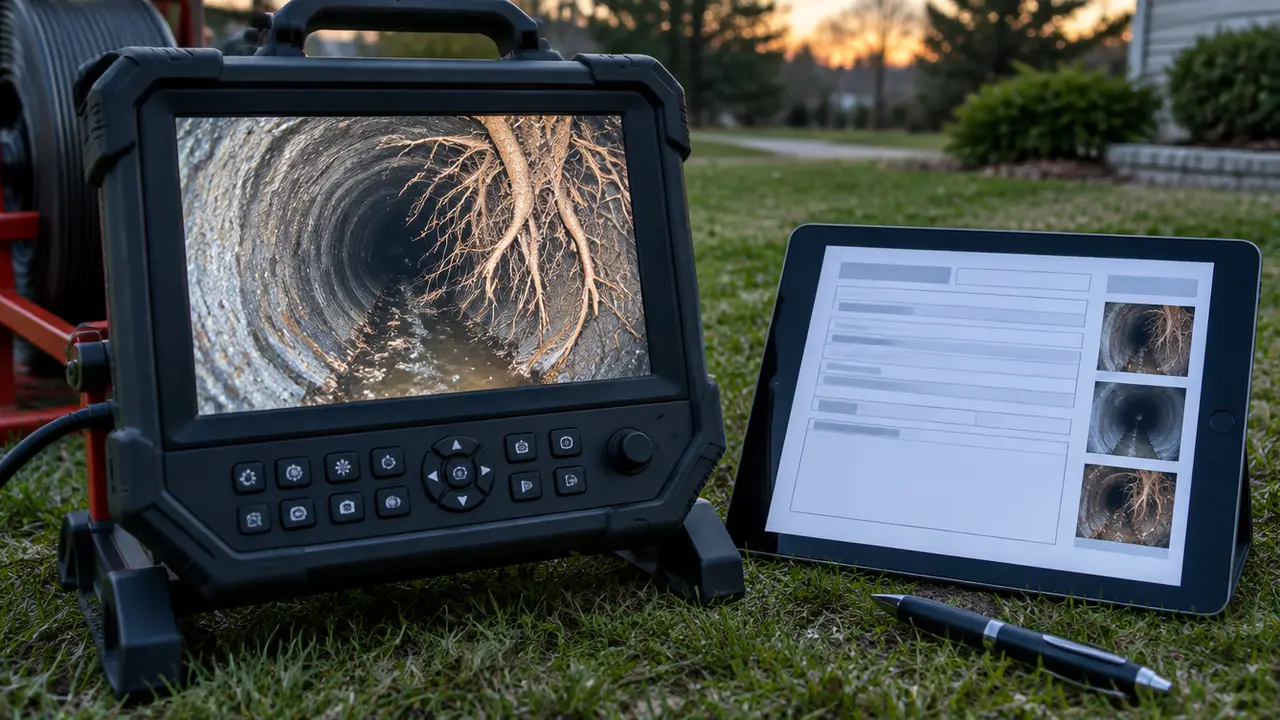
- Roots growing into the pipe through a joint or crack, often forming a mass that catches waste.
- Sanitary main
- The larger City pipe under the street or lane that collects wastewater from many laterals.
- Sanitary service line
- The City of Calgary's term for the lateral. The City owns and maintains it from the main to the property line; the homeowner from the property line to the house.
- Scale
- Rough corrosion deposits inside cast iron that narrow the bore.
- Self-levelling head
- A camera head that keeps the picture upright as it rotates, so sags and offsets read correctly.
- Separated joint
- A gap between two pipe sections that can let roots and soil in.
- Sewer scope
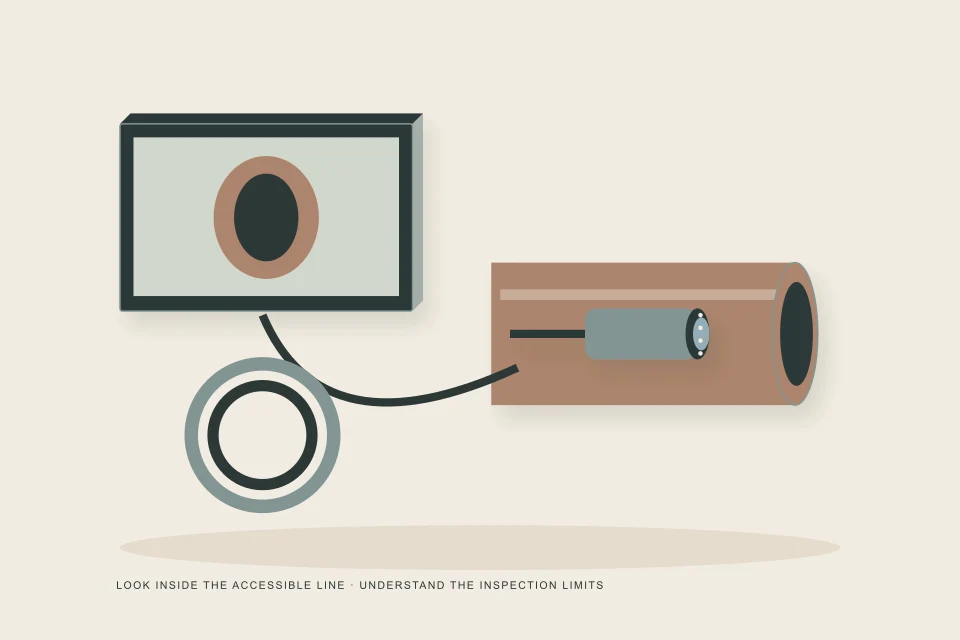
- A recorded video inspection of the lateral, booked by buyers during the condition period.
- Sonde
- A small radio transmitter behind the camera head whose signal can be found from the surface.
- Tap or wye
- The connection where a lateral joins the main. Scope reports often note whether the camera reached it.
- TIL
- The City's material code most often read as clay tile. Not defined in the City's metadata.
- Toilet pull
- Removing a toilet so the camera can enter through the flange when there is no usable cleanout; the toilet is reset with a new seal.
- TP and OTHER
- City material codes with no published definition; treat as unknown until a camera identifies the pipe.
- Utility locate
- Marking of registered buried utilities before digging, requested through Utility Safety Partners at least three full working days ahead.
- Waiver
- The buyer's written notice removing a condition, making the purchase firm on that point.
FAQQuestions people ask
What is the difference between a lateral and a main?
The lateral serves one property and runs from the house to the main. The main is the larger City pipe under the street or lane that collects many laterals.
What does TIL mean on the City of Calgary's sewer records?
It is the City's material code most often read as clay tile. The City's metadata does not define it, so confirm the material with a camera.
What does a sonde do during a sewer scope?
It transmits a signal from just behind the camera head so a receiver on the surface can find the head's position and estimate its depth.
Is a holdback the same as a price reduction?
No. A reduction lowers the price for good; a holdback keeps some funds back until agreed work is done. Lawyers set holdback terms.