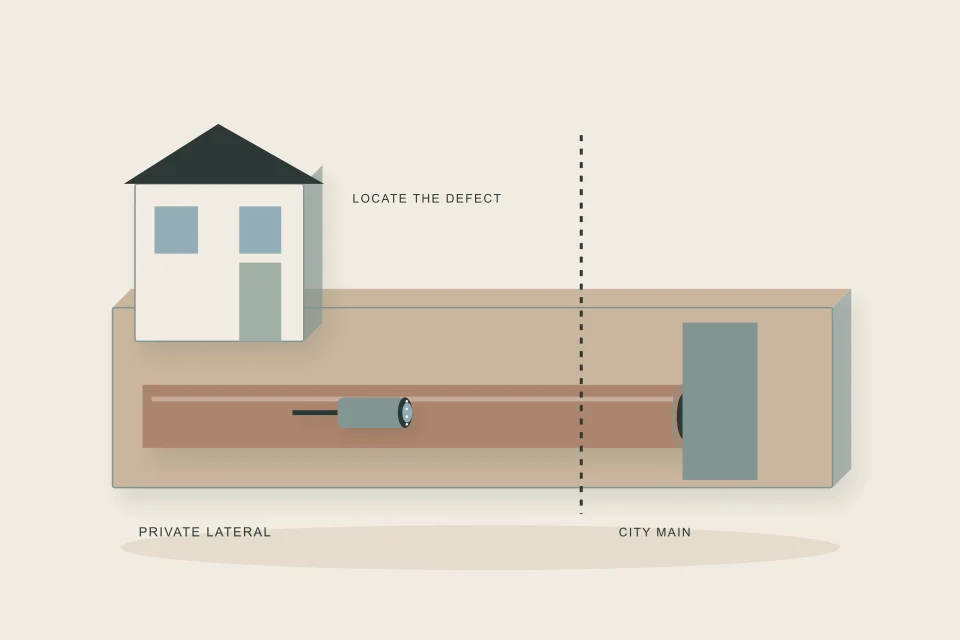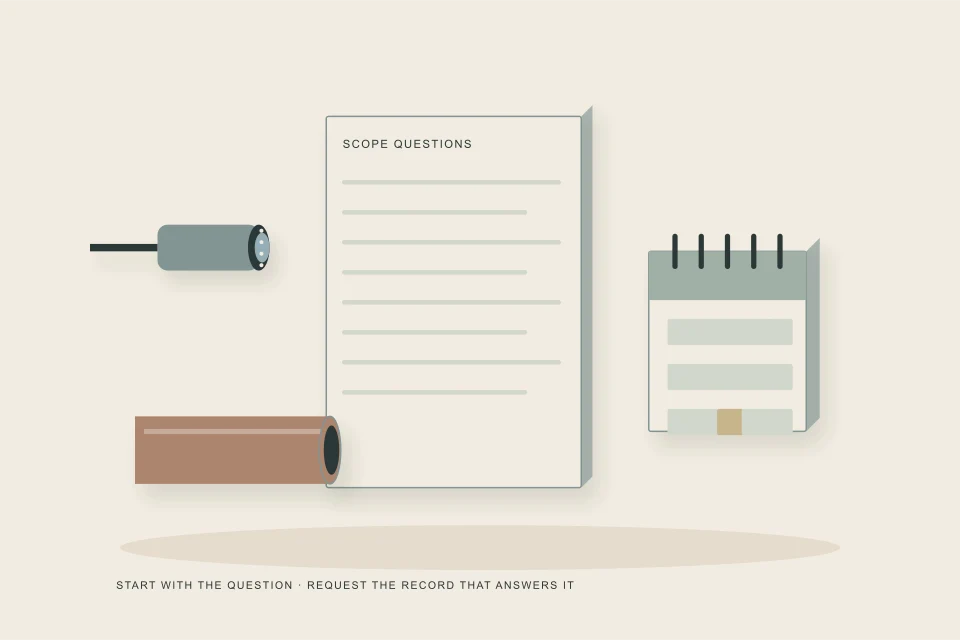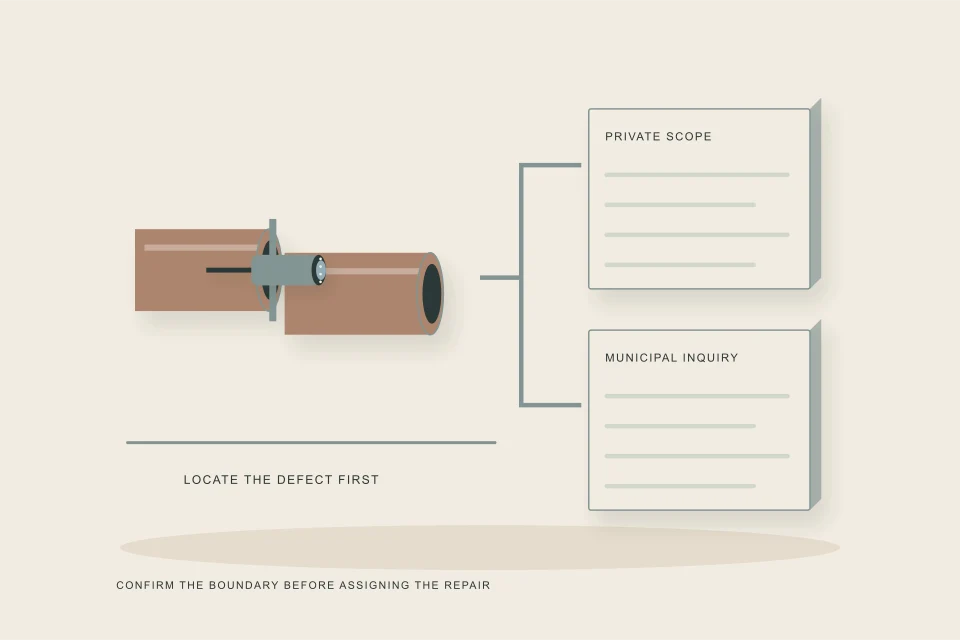
In Calgary, the City owns and maintains the sanitary service pipe from the main to the property line, and the homeowner owns and maintains it from the property line to the house. Who pays depends on the defect's location: a break on the private side is the owner's bill, one on the City side is the City's. Buyers can shift the private-side cost only by negotiating with the seller.
- The payer follows the defect's position relative to the property line, not what the ground above it looks like.
- The City asks residents to call 311 about a suspected backup, and its crew checks whether the blockage is on private or public property.
- A City-owned tree rooting into private pipe does not automatically make the repair the City's; ask before assuming.
- Home insurance covers sewer backup water damage only with optional coverage, and the pipe itself is a separate question.
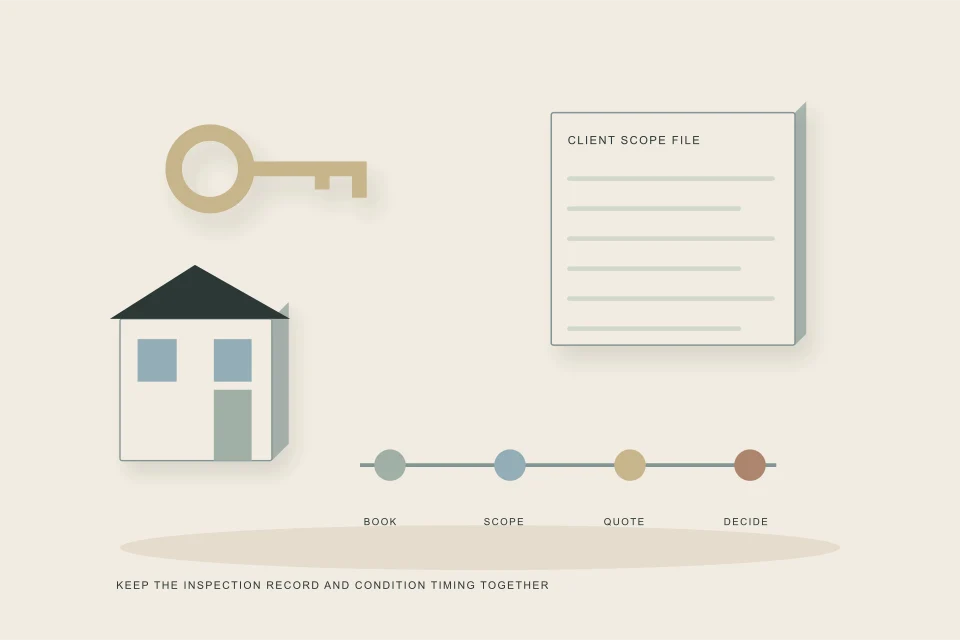
- During a purchase, the private-side cost is negotiable with the seller until conditions are waived; after that it is yours.
01 /Who is responsible for which part of a Calgary sewer line?
The City of Calgary is responsible for the part of the sanitary service pipe between the sanitary main and the property line; the homeowner is responsible for the part between the property line and the house. That split comes straight from the City's own description of its public sanitary service line data, which calls the first section owned and maintained by the City and the second owned and maintained by the homeowner.
The City's page on water service lines uses the same property-line split for water, adds that in most cases the property line ends a few metres from the edge of the curb or sidewalk, and states that the owner is responsible for repair costs on private property. Everything inside the house, from the plumbing fixtures to the floor drain and the backwater valve if there is one, is the owner's as well.
| Where the defect is | Usual owner | What to do first |
|---|---|---|
| Inside the house: fixtures, stack, floor drain, cleanout | Homeowner | Plumber or drain contractor |
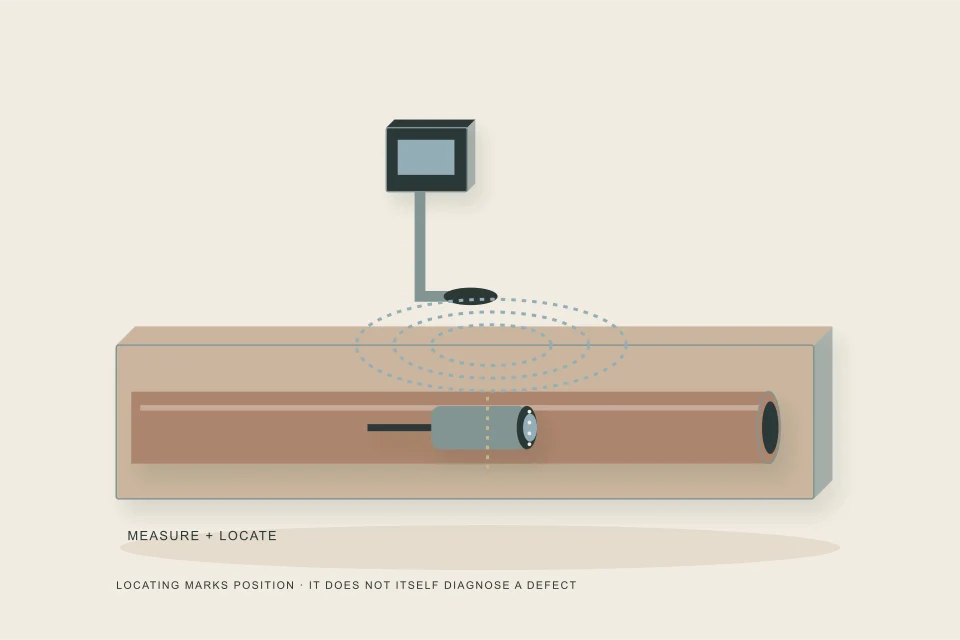
| Under the yard, house side of the property line | Homeowner | Locate it, get a written quote |
| Past the property line, under the boulevard or road | City | Call 311 with the scope evidence |
| At or very near the property line | Unclear until the boundary is confirmed | Compare the mark with property records, then call 311 |
| The main itself | City | Call 311 |
02 /What does the City do when I report a sewer problem?
When you report a suspected sewer backup, the City's guidance is to call 311. The agent asks questions to decide whether you need a plumber for an internal plumbing issue or whether City infrastructure might be involved. If a crew attends, the City says it runs a steel snake to the sewer main to determine whether the blockage is on private or public property. If the City says an inspection is not required, it suggests calling a plumber to check for an internal issue.
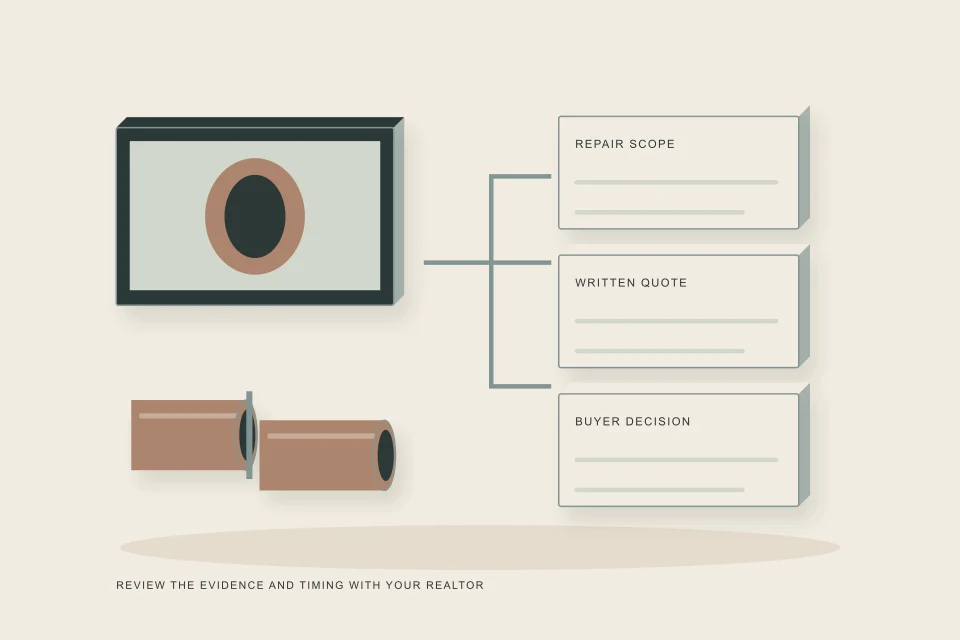
A buyer who finds a defect on the City side during a scope is in a different position: nothing is backing up, but the evidence is in hand. Call 311, describe what the scope found and where, and ask what the City needs to assess it. The video, the distance, the surface mark and the estimated depth are the most useful things to have ready. Do not assume a timeline or outcome; the City decides both.
03 /Who pays when a City tree's roots damage my private pipe?
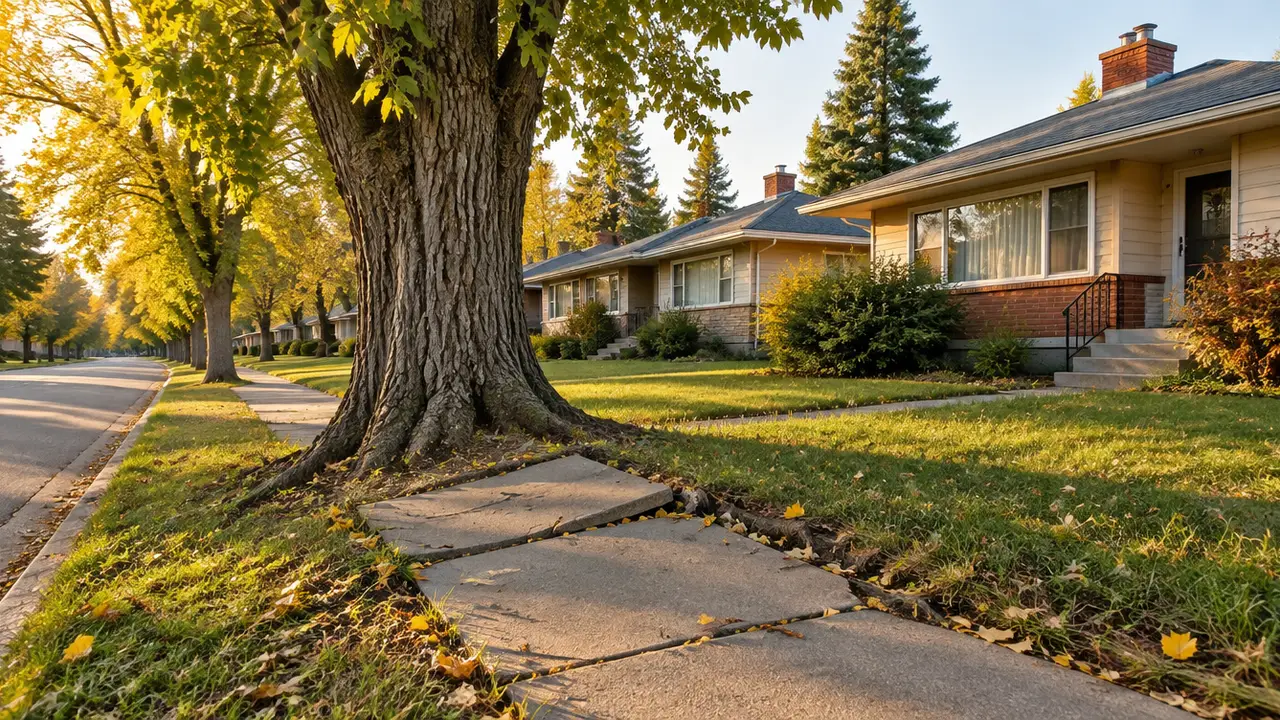
Usually the pipe's owner, not the tree's. Roots enter a lateral through an existing opening at a joint or crack, and maintaining the private stretch is the homeowner's job whatever tree the roots came from. Do not assume the City will pay because the tree stands on the boulevard; if you believe City work or a City tree caused the damage, ask through 311 and keep the evidence, but budget as if the private repair is yours.
04 /What are the grey areas in Calgary sewer responsibility?
- Shared or common lines. Some older houses, duplexes and semi-detached homes share part of a lateral. Title documents, easements and the City's records decide who owns what; the shared line questions start there.
- Easements and rights-of-way. A utility right-of-way over the lot can change who can dig where, even on the private side.
- Relined City sections. The City runs a sanitary lateral lining pilot in older communities that installs liners inside existing service pipes. A relined City side says nothing about the private side, which may still be original.
- Condos and townhouses. The corporation, not the unit owner, usually looks after shared lines; the bylaws and plan decide. See scopes for condos and townhouses.
- Defects straddling the line. A sag or crack that crosses the boundary needs the boundary confirmed before anyone agrees who pays.
05 /Does home insurance pay for a broken sewer line?
Home insurance and sewer lines are two separate questions. The Insurance Bureau of Canada says water damage in a basement from a sewer backup is covered only if you bought optional sewer backup coverage. Repairing or replacing the pipe itself is a different matter, and some insurers sell separate service line coverage. Read the policy wording, not the product name.
Insurance also rarely moves the line between City and owner. If a backup damages your basement, your policy responds, or does not, according to its wording, whichever side of the property line the blockage turned out to be on.
For a buyer, the practical step is to ask your insurer before possession whether sewer backup coverage is available for the property and on what terms, and to mention any backwater valve. CalgarySewerReplacement.com covers insurance after a bad scope in detail.
06 /Who pays between the buyer and the seller?
Between buyer and seller, the answer is whatever the parties agree before conditions are waived. The owner of the house on closing day owns the private lateral and its defects. A scope during the condition period is what gives the buyer a basis to ask the seller for a repair before closing, a credit, a price reduction or a holdback, and the seller can accept, counter or refuse.
| Arrangement | How it works | Watch for |
|---|---|---|
| Seller repairs before closing | Seller hires and pays the contractor | Proof of completion and a post-repair camera run |
| Price reduction | Purchase price lowered by an agreed amount | Lender and appraisal implications |
| Credit or adjustment | Money credited on the statement of adjustments | Lawyer confirms how it is documented |
| Holdback | Part of the funds held until work is done | Terms set by the lawyers |
| Buyer absorbs it | Buyer waives and budgets the repair | Get the quote first so the number is real |
To work out exactly where the line changes hands on a lot, read city vs. private: finding the property line. To get the evidence, request a scope with a locate.
FAQQuestions people ask
Does the City of Calgary pay to fix my sewer line?
Only the part it owns, from the main to the property line. The stretch from the property line to the house is the homeowner's to own, maintain and repair.
How do I report a sewer problem on the City side in Calgary?
Call 311. Describe what happened or what a scope found, where it is, and have the video and surface mark ready. The City decides whether and how to assess it.
Is the backwater valve the City's responsibility?
No. A backwater valve is part of the house plumbing, so installing and maintaining it is the owner's job. The City recommends one on below-grade fixtures to reduce backup damage.
Does the City share the cost if a break is right at the property line?
Do not assume so. Confirm the boundary from property records, then ask the City through 311 how it treats a defect at or across the line.
If I buy a house with a bad sewer line, can I make the seller pay after closing?
Generally that is a legal question with a difficult answer. The time to negotiate is before conditions are waived; after closing, speak to your lawyer.
NETWORKGo deeper across the HAUSE Sewer network
Does home insurance cover tree roots in a sewer line?
Does home insurance cover tree roots in a sewer line in Canada? Why root cutting and pipe repair are usually excluded, and what backup endorsements pay.
SewerQuotes.comSewer permits, inspections and who pays: owner or city?
Sewer line permits and who pays in Canada: the usual owner vs city split, permit and inspection costs, road cuts, city tree roots and what to confirm.
SewerInspector.caInspecting the sewer after a backup: finding out why it happened
Why a sewer camera inspection after a backup matters: private vs municipal causes, timing, what to record for insurance, and how to stop it happening again.