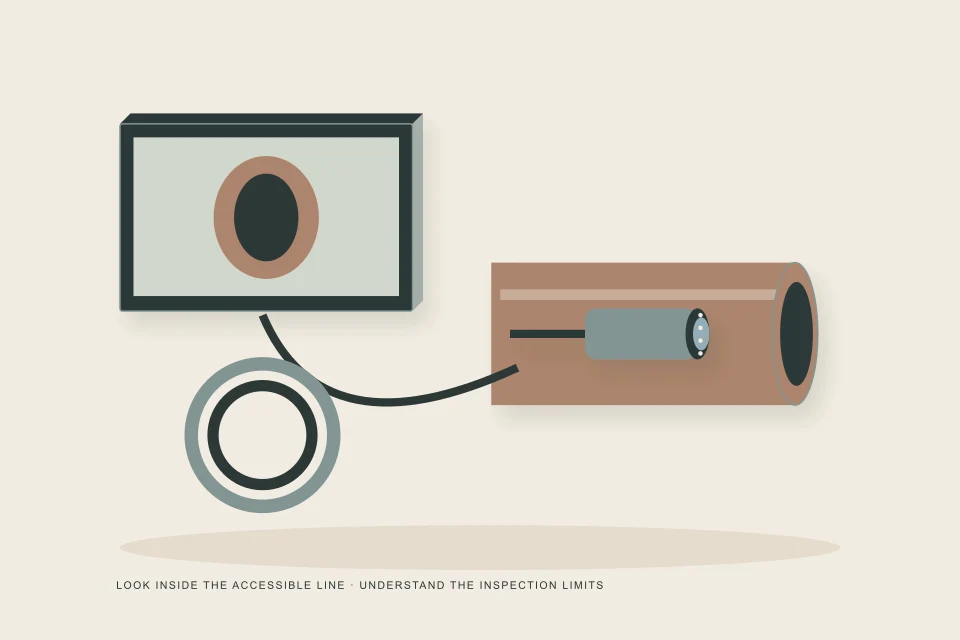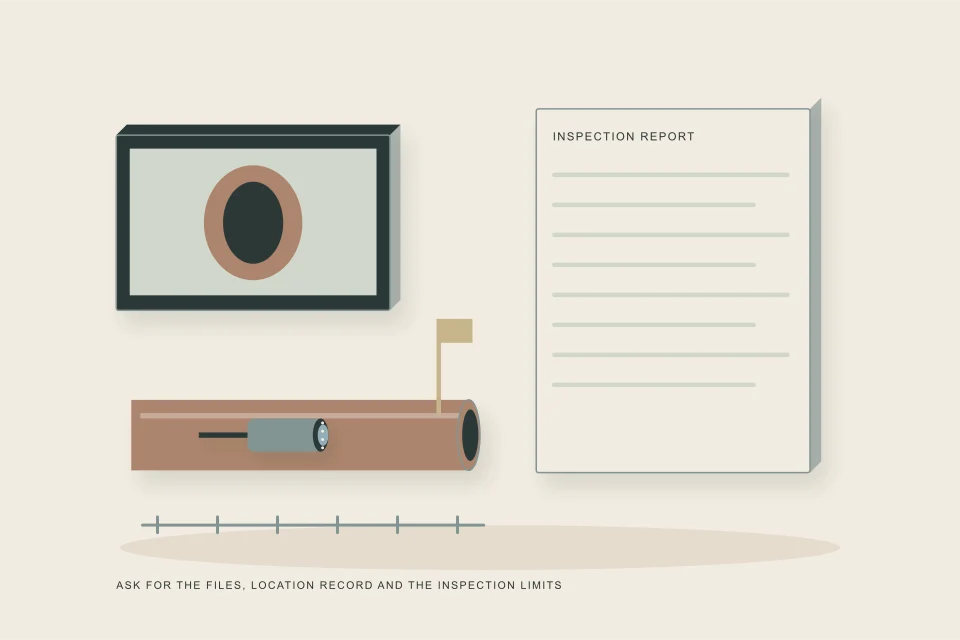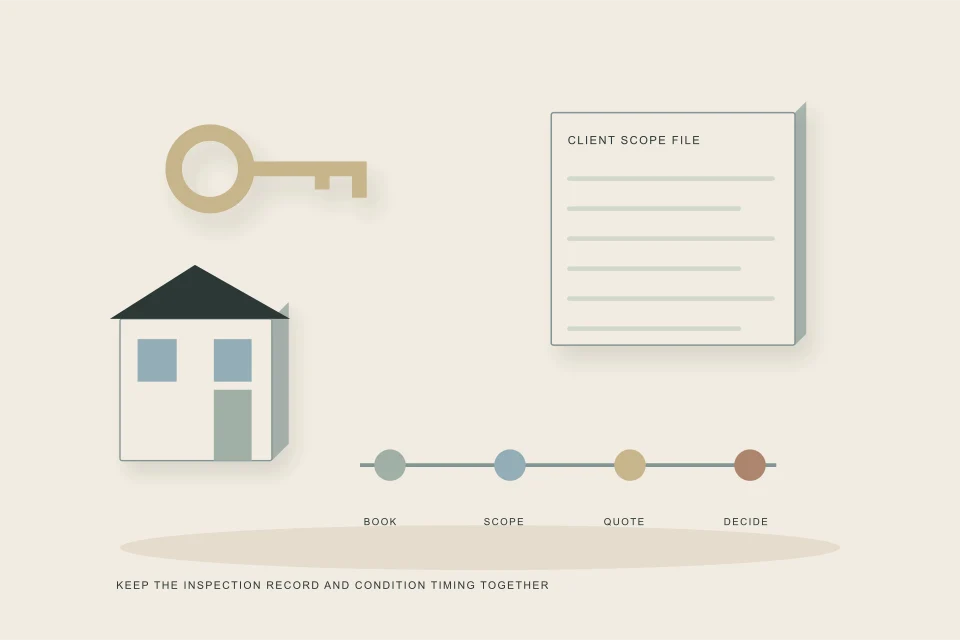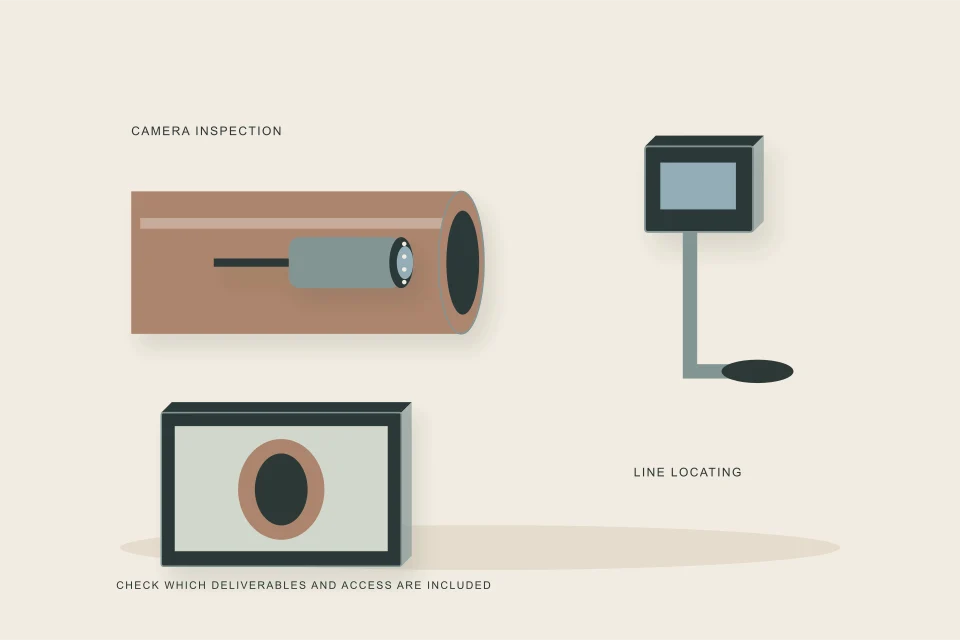
A Calgary sewer scope service has three parts: a camera run from the cleanout toward the City main, a locate that marks any defect's position and depth on the ground, and a report with video, distances and observations. Camera-only packages suit newer houses with no symptoms; scope-plus-locate packages suit older lines where a defect may need a repair quote.
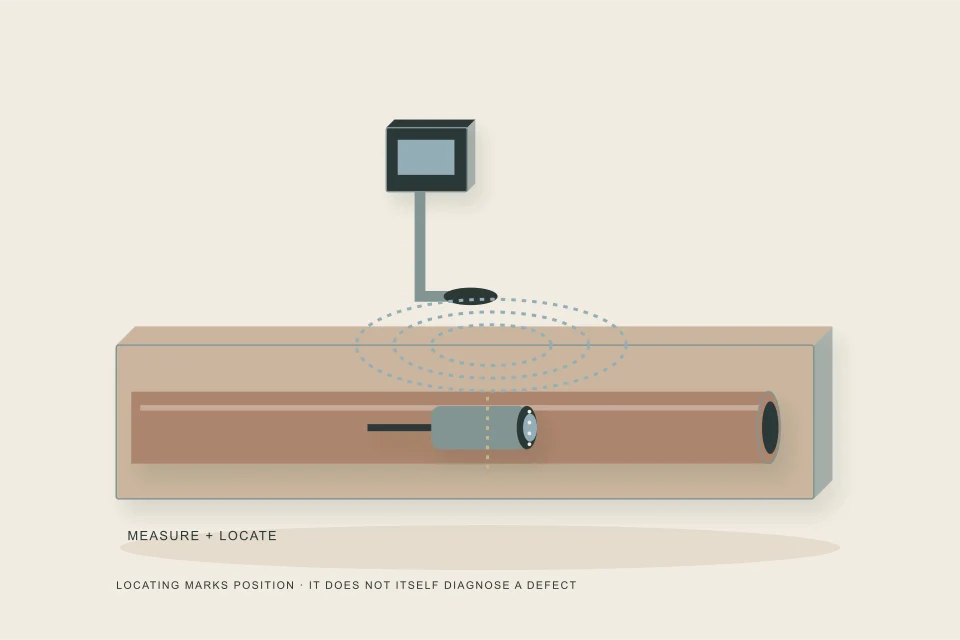
- The camera run records the whole accessible line; the locate turns a distance on screen into a mark on the ground.
- Marking matters because the same crack costs very different amounts to fix under a lawn, under a driveway, or past the property line.
- A sonde locate for inspection is not a utility locate; anyone digging must request locates first and hire a private locator for customer-owned lines.
- Camera-only packages suit newer PVC lines; scope-plus-locate packages suit clay, cast iron and unknown materials.
01 /What happens during the camera inspection?
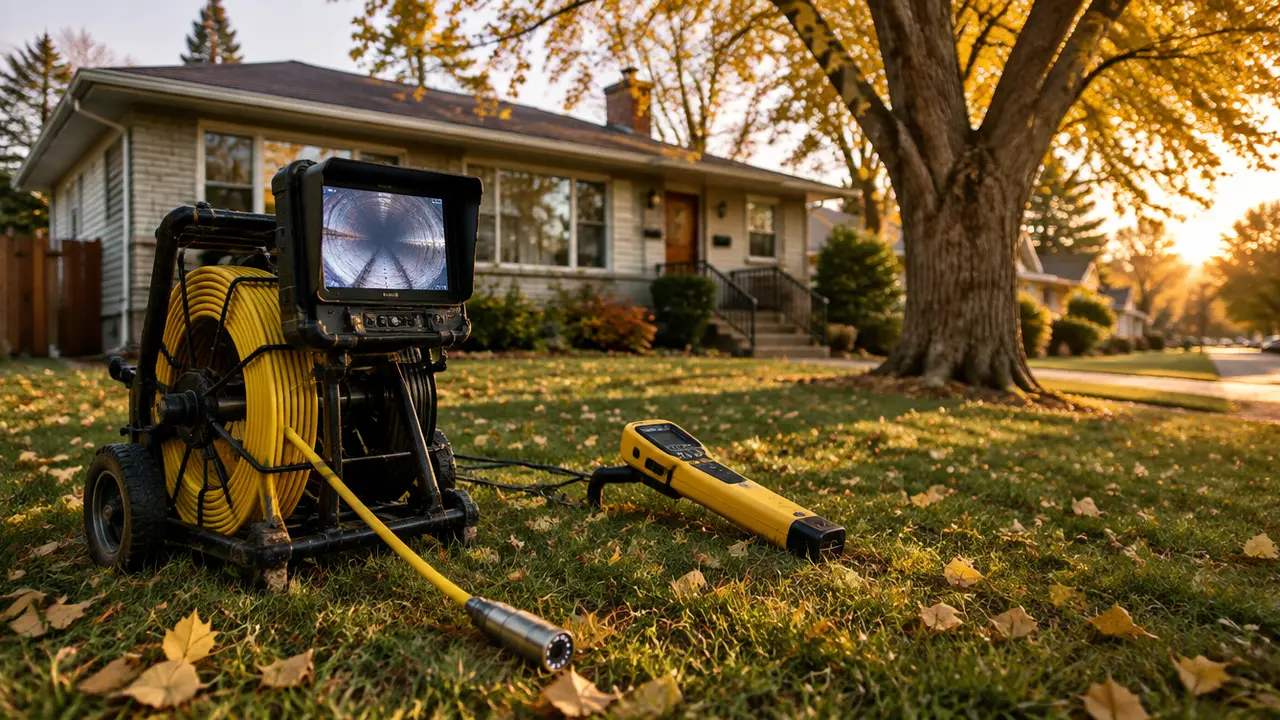
During the camera inspection, a waterproof camera head on a semi-rigid push cable goes into the main cleanout and travels along the private lateral toward the City's sanitary main, which in Calgary usually runs under the street in front or the lane behind. The operator watches a live picture as the camera goes out and records the run, with a distance counter on screen. Many operators run a little water first so the head slides and the flow pattern is visible.
Most self-levelling heads keep the picture upright, so a sag or offset reads correctly on the screen. The run ends at the connection to the main, at an obstruction the camera cannot pass, or at the limit of the cable. Where it ends matters: a report should say how far the camera got and why it stopped, because the untested stretch beyond that point is still unknown.
| Part | What happens | What you should end up holding |
|---|---|---|
| Camera run | Push camera from the cleanout toward the City main, recorded with a distance counter | The complete video file, not a highlight clip |
| Locate and mark | A sonde transmitter behind the camera head is found from the surface with a receiver at each defect worth pricing | Paint or flag marks on the ground and an estimated depth for each |
| Report | Written observations with distances, pipe material, still images and any limits | A document a contractor, Realtor or lawyer can read without watching the whole video |
02 /What does locating and marking add?
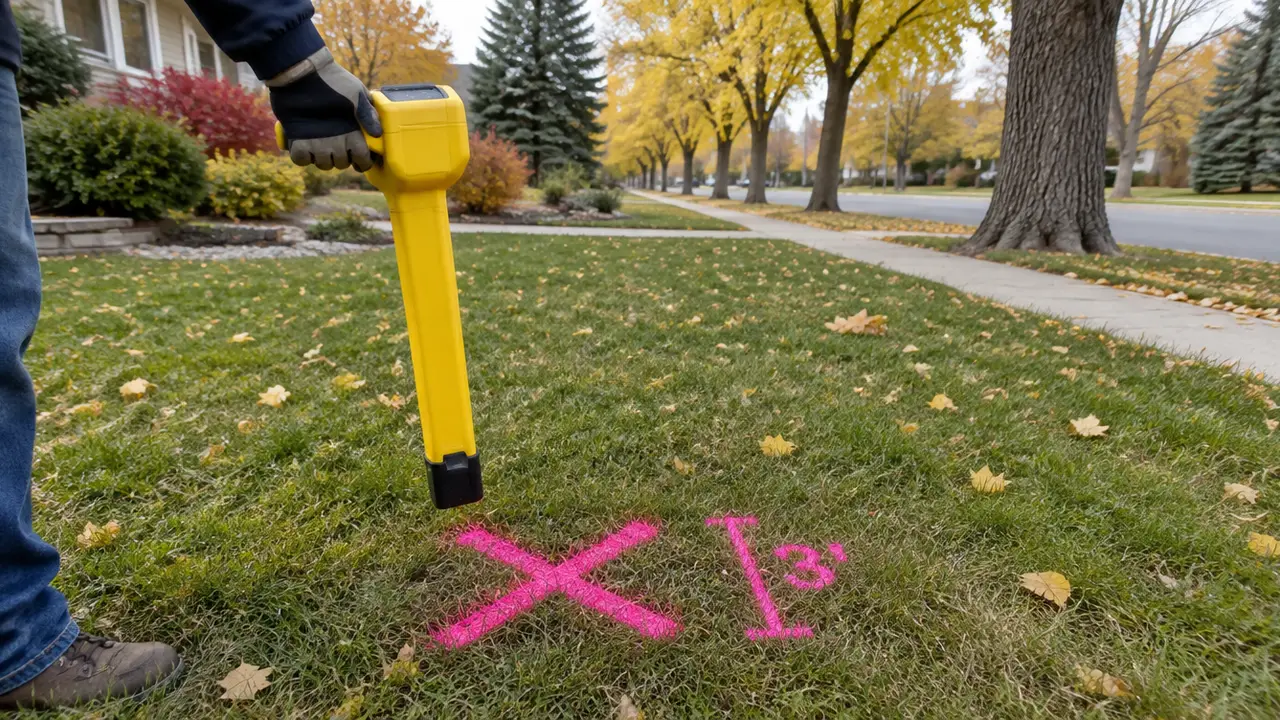
Locating and marking adds a physical position to a defect. The camera can say a root mass sits 18.5 metres from the cleanout, but that number alone does not tell anyone whether the spot is under the front lawn, beneath a concrete driveway, under a City sidewalk or past the property line. With a sonde locate, the operator parks the camera head at the defect, walks the yard with a receiver until the signal peaks, and marks the spot with paint or a flag along with an estimated depth.
That mark changes the next conversation. A contractor quoting an excavated spot repair needs to know what surface they are cutting through and how deep they are digging, and a Calgary buyer needs to know whether the defect even sits on the private side. A repair under sod and a repair under a poured driveway can differ by thousands of dollars before any pipe is touched.
03 /What is in the written report?
The written report is the part that travels. It normally records the property, date, access point, direction of travel and total distance inspected, then lists each observation with its distance from the entry point and a still image. Better reports separate what was seen, such as a 20 mm offset at 9.4 metres, from what the operator recommends, such as a spot repair or a cleaning and re-scope, so a reader can weigh the evidence apart from the advice.
Reports also note the pipe material where it can be identified, changes in material along the run, and any point where water, debris or a blockage hid the pipe wall. The buyer's report guide lists what to ask for in writing when you book, and SewerInspector.ca explains defect codes and grades in depth.
04 /Which package fits which house?
Providers commonly sell two shapes of service: a camera-only scope with video and a short report, and a fuller package that adds sonde locating, surface marks, defect annotation and a view on whether each defect is likely on the City or the private side. Neither is right for every house; the build era and what the buyer will do with the answer decide it.
The sewer scope cost guide breaks down what moves the price, from toilet pulls to travel outside the city.
If the house was built before about 1980 or the material is unknown, the fuller package usually saves a second appointment in the middle of a condition period, which is the one thing a buyer cannot buy back.
05 /What defects can the service locate?
The service can locate any defect the camera head can reach and stop beside. In Calgary's older communities the usual list is short and familiar.
| Defect | How often it turns up | Why its location matters |
|---|---|---|
| Root mass at a joint | Very common near large trees | Decides whether cleaning, lining or a dig is practical |
| Sag or belly | Common where soil settled | Length and depth set the size of an excavated repair |
| Offset or separated joint | Common in clay tile | A single offset may suit a spot repair |
| Crack or fracture | Common in older clay and cast iron | Position decides City or private responsibility |
| Collapse or deformed pipe | Less common, most serious | Often the camera cannot pass, so the locate marks the last reachable point |
Common sewer line problems in Calgary explains why each one shows up in local housing stock and what it tends to mean for a purchase.
06 /How do I book a service through SewerScope.ca?
Send the address, the condition deadline, the package you want and what you know about access through the scope request form. The HAUSE desk passes the request to independent providers; the appointment is confirmed only when a provider confirms it. If the deadline is close, run the Condition Deadline Scope Planner first so the request carries a realistic book-by date.
FAQQuestions people ask
What is the difference between a sewer scope and a line locate?
The scope is the camera run and recording. The locate finds the camera head from the surface and marks the position and depth of a defect, so a contractor can quote the repair at the right spot.
Is a sonde mark the same as calling before you dig?
No. Sonde marks help diagnose and quote. Anyone digging must request utility locates at least three full working days ahead and use a private locator for customer-owned lines.
Can the scope be done if the camera cannot reach the City main?
Yes, but the report should say where the camera stopped and why. The stretch beyond is still unknown, and a second access point, cleaning or a return visit may be needed to finish it.
Do I need the locate package for a newer house?
Often not. A camera-only scope suits a PVC line with no trees and no history. If a defect turns up, it can be located on a return visit.
Does the service include repairs?
A scope gathers evidence only. Cleaning, lining or excavation are separate services with their own quotes, ideally from a contractor who can show how the footage supports the work.
NETWORKGo deeper across the HAUSE Sewer network
Sewer line locating and depth: how the mark on your lawn is made
How sewer line locating and depth readings work: the sonde, the hand-held locator, peak and null readings, marking, accuracy, and calling before you dig.
PipeCleaning.caWhat pipe do I have? Identify your drain pipe material
What pipe do I have? Identify a drain pipe from its look, joints, markings and house age, with a confidence rating, safe cleaning methods and camera advice.
SewerRoots.caPlanting Distance Checker
Planting Distance Checker: pick a tree, shrub or perennial group, enter its distance from the sewer lateral, and see if the spot meets the guideline.