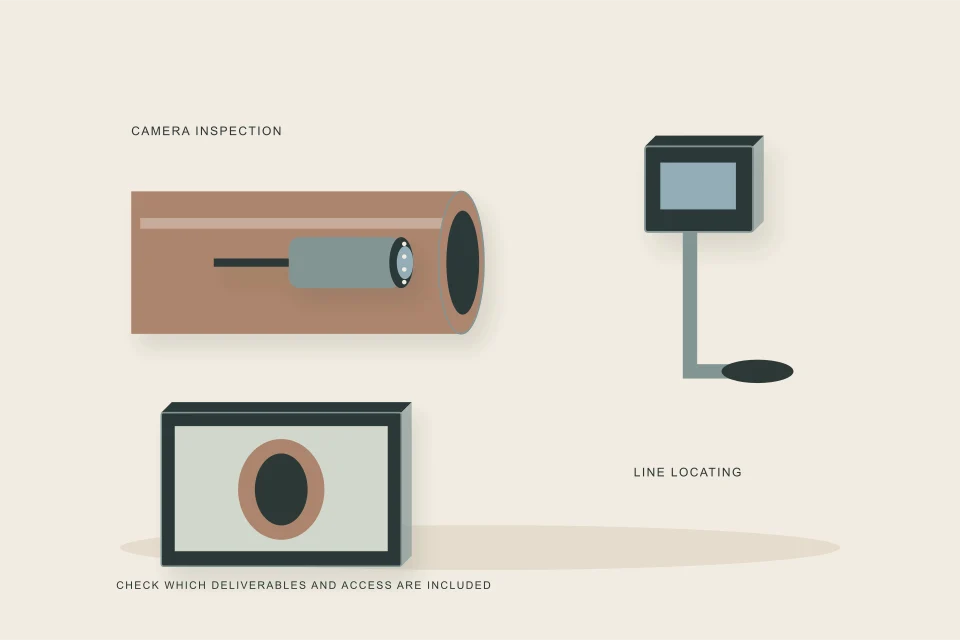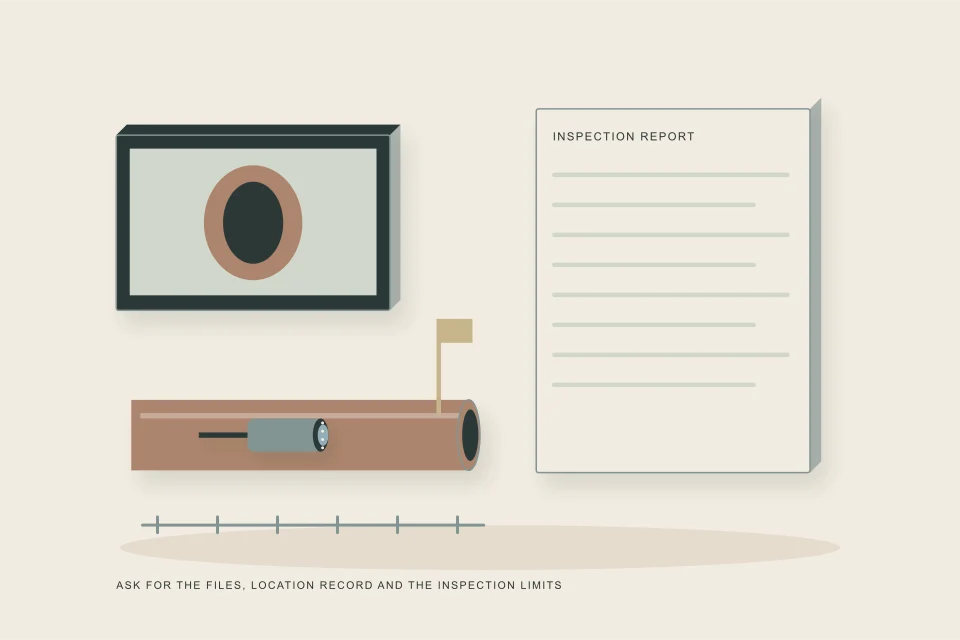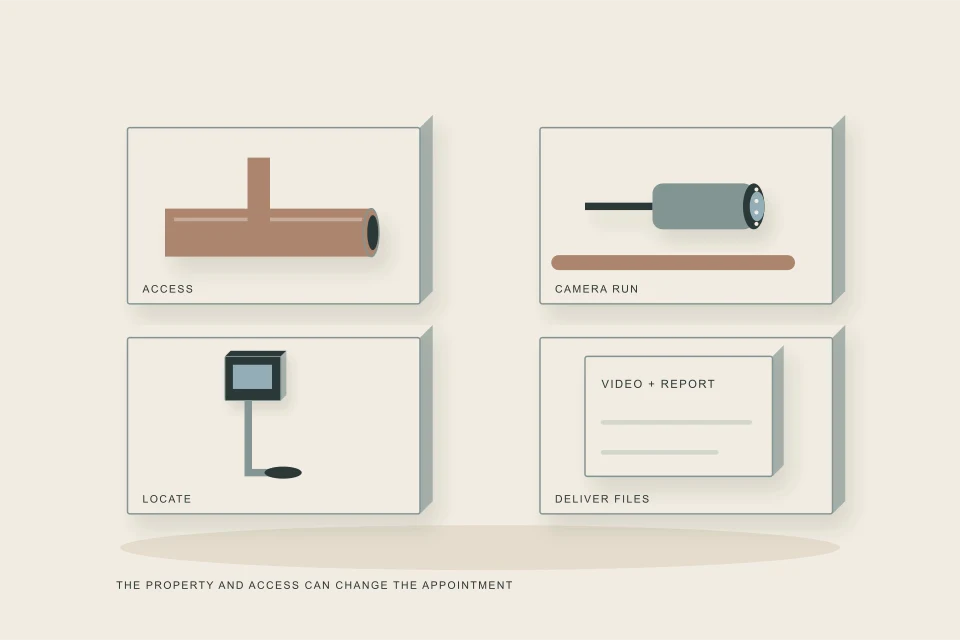
On sewer scope day the operator opens a cleanout, sets the distance counter to zero, pushes a camera from the house to the City main while recording, stops at each finding, and locates and paints the surface above anything worth pricing. With easy access the visit is often about an hour. You leave with a verbal walk-through, then the full video and a written report.
- Most of what goes wrong on scope day is access: a buried, seized or unknown cleanout costs time and sometimes a second visit.
- Ask the operator where the counter was zeroed; every distance in the report depends on it.
- Watch the monitor for material changes, standing water and anywhere the camera slows or stops.
- A painted mark shows a defect's position; it is not a utility locate and does not clear anyone to dig.
- Before the operator leaves, confirm how far the camera reached and when the video and report will arrive.
01 /What happens on sewer scope day, in order?
A scope visit follows the same basic sequence whether the house is a 1950s bungalow or a newer infill. The operator gets into the line, sends the camera to the main, records what it sees, marks what matters on the ground and hands over the evidence. Knowing the order helps a buyer or Realtor spot a step that has been skipped.
- Arrival and walk-through
The operator confirms the address, the scope of work agreed at booking and who will receive the report.
- Access
The main cleanout is found and opened, or another entry point is chosen if there is no usable cleanout.
- Set-up and zero
The reel, monitor and recorder are set up and the distance counter is zeroed at the entry point.
- Camera in
The head goes into the line and a little water is run to help it along.
- The run to the main
The camera travels out slowly, recording continuously, until it reaches the City main or cannot go further.
- Findings
The operator stops at each observation, captures a still and notes the distance.
- Locate and mark
For findings worth pricing, a receiver above ground finds the camera head and the spot is painted or flagged with an estimated depth.
- Wrap-up
The camera comes out, the cleanout is closed, and the operator explains what was seen and when the report will follow.
02 /How does the operator get into the line?
The operator gets in through a cleanout: a capped opening on the building drain, usually in the basement floor, near the base of the main stack or in the furnace room. It is the cleanest route because the camera enters the main line directly, without passing through a toilet or a trap.
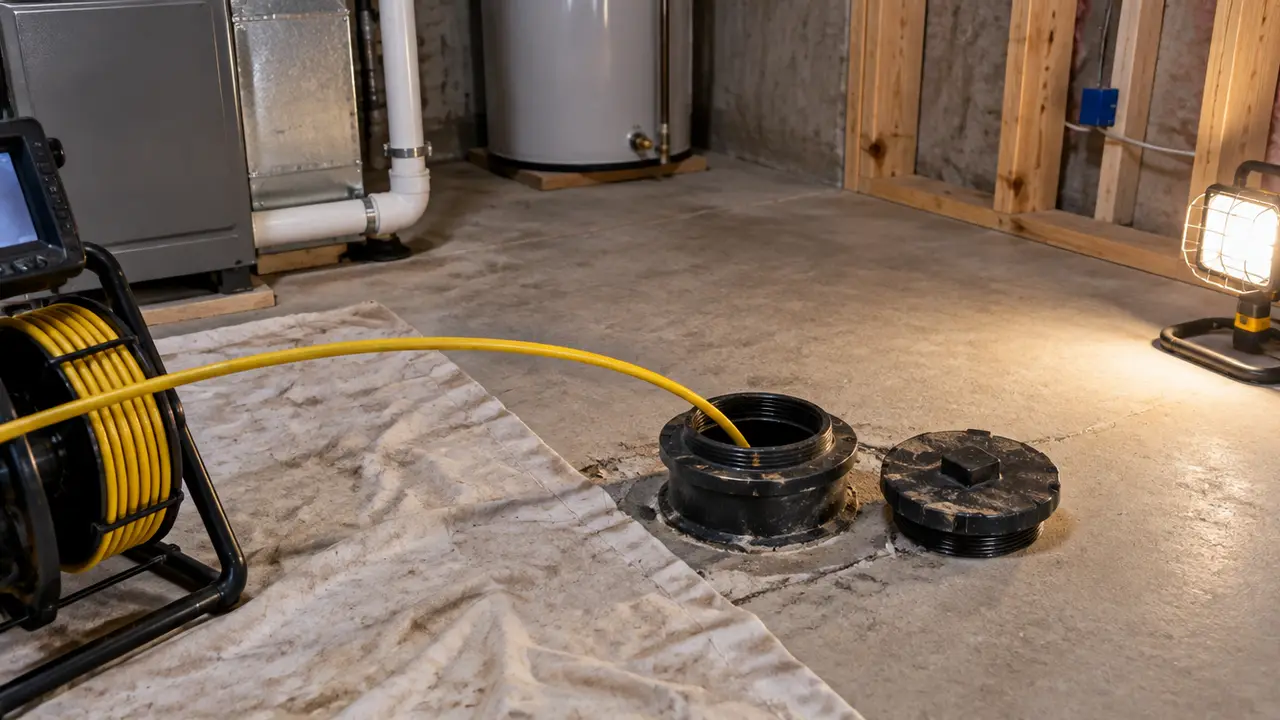
Access is where most scope days go sideways. A cleanout can be buried under flooring, boxed in behind a finished wall, or sealed with a cap that has seized after decades. When there is no usable cleanout, the operator may pull a toilet and enter through the flange, or go in from a roof vent. Both take longer, and a toilet pull usually costs extra.
- Clear the path. Storage boxes, a laundry pile or a finished closet in front of the cleanout slow everything down. The listing side can clear it before the visit if asked.
- Keep the water off upstairs. Nobody in the house should run a dishwasher, laundry or shower while the camera is in the line; the flow can flood the lens and hide defects.
- Vacant houses need utilities. The operator needs water to run through the line and usually power for the equipment. Confirm both for an empty or winterized property.
- Tenants need notice. If the house is rented, the listing side arranges access with the tenant ahead of time.
03 /What happens when the camera goes in?
Before the head goes in, the operator sets the distance counter to zero at the entry point. Every distance in the report is measured from here, so it is worth asking exactly where zero was set. A report that says a crack is at 14 metres means little if nobody knows whether that was measured from the floor cleanout or a toilet flange two metres away.
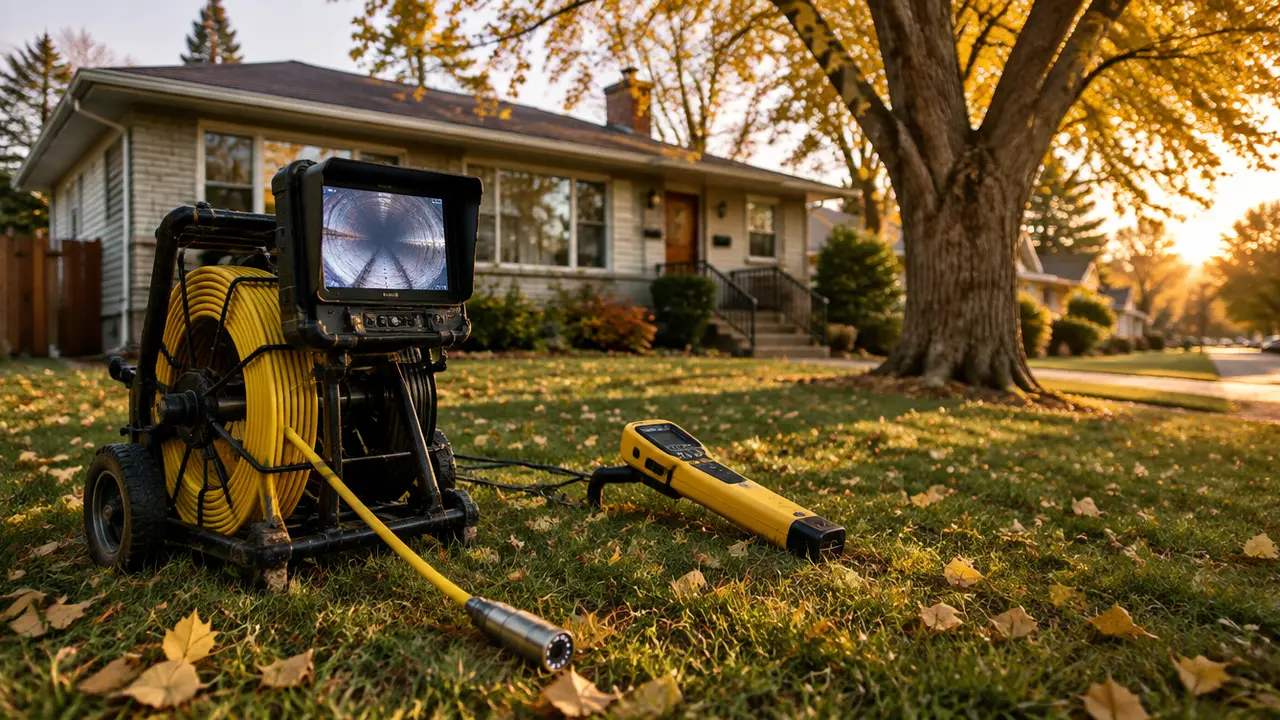
The camera sits on the end of a stiff push cable wound on a reel. A small transmitter called a sonde sits just behind the head, so the camera's position can be found from above. The operator usually runs a little water to help the head slide and to show how the line drains. Some cameras level themselves so the picture stays upright, which makes sags and offsets easier to read.
04 /What does the run to the City main look like?
The run is a slow, steady push from the house toward the street or lane, with the picture and the counter on screen the whole time. A careful operator moves slowly enough to see each joint and slows further at anything unusual. Speeding through the run to save time is how small defects get missed.
Along the way the operator watches for the pipe material and any point where it changes, joints, standing water, roots, cracks and anything that makes the head catch or stop. In Calgary the private portion runs from the house to the property line, and the City's portion runs from the property line to the main. The camera usually sees both, which is why a scope can show whose side a defect is on.
The run ends in one of two ways. Either the camera reaches the tie-in at the City main, and the whole line has been seen, or something stops it: a collapse, a heavy root mass, a sharp bend, deep water or the end of the cable. When the run stops short, the distance and reason are part of the result, not a footnote.
05 /How are findings stopped on and recorded?
At each finding the operator halts the camera, holds the picture long enough to see it clearly, captures a still image and notes the distance on the counter. A good operator also says out loud what they are looking at, which helps anyone watching the monitor and anyone listening to the recording later.
- The distance from the zero point, read off the counter at the moment the head is at the finding.
- A still image that can go into the written report and be shared with a contractor.
- A plain description, such as roots at a joint filling about a quarter of the pipe, rather than a one-word label.
- Any limits, such as water covering the pipe floor or debris hiding the wall.
If you want to know what the common findings look like before the visit, what a sewer scope finds walks through 14 of them with illustrations and the usual next step for each.
06 /How does the locate and mark work?
The locate turns a distance down a pipe into a spot on the ground. With the camera parked at the finding, the operator walks the yard with a receiver that picks up the signal from the sonde behind the camera head. Where the signal peaks, they mark the surface with paint or a flag, and the receiver gives an estimated depth.
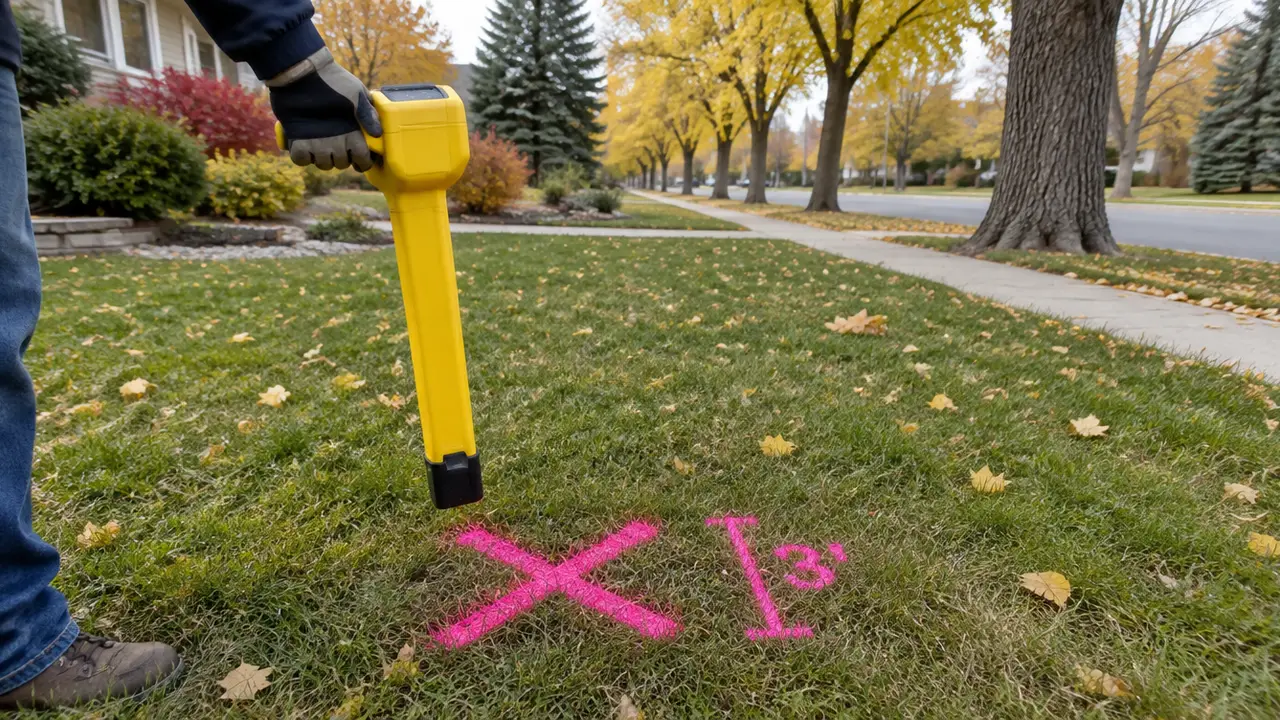
The mark answers the questions that drive a repair quote: is the defect under lawn, a driveway, a deck, a tree or the boulevard, and how deep is it? Compared with the property boundary on a Real Property Report, it also shows whether the finding sits on the owner's portion or the City's. Some buyers also ask for the route of the line to be traced, which locating a private sewer line covers in detail.
07 /What should a buyer or Realtor watch for on the monitor?
Watch the monitor for the things that change the decision, not for every speck on the pipe wall. Being present is optional, but a buyer who watches can ask questions while the camera is still at the finding, which is much easier than trying to reconstruct it from the video later.
- Where zero was set, so the distances make sense.
- Material changes, such as plastic giving way to cast iron or clay partway out, and the distance where it happens.
- Standing water, which can hide the floor of the pipe and suggests a sag.
- Every stop, and whether the operator captures a still and reads out the distance.
- Where the camera ended: at the City main, or short of it, and why.
- Which findings get marked on the surface, and whether any finding worth pricing was left unmarked.
Keep questions short and factual while the camera is running: what is that, how far out is it, will it be in the report, and will you mark it? Leave the what-does-it-cost conversation for after the run, and for a contractor's written quote.
08 /How long does a sewer scope visit take?
With an open, easy-to-reach cleanout and a clear line, the visit is often about an hour on site. It runs longer when a toilet has to be pulled, the line has to be cleared before the camera can pass, several findings need locating, or the run is unusually long. Clearing a blocked line can also turn one visit into two.
Plan the day around the report, not the visit. The video and written report may arrive the same day or later, and you need them with enough time left to get a quote and talk it through before the condition deadline. The condition deadline planner works back from your deadline to a book-by date.
09 /What do you leave with at the end of the day?
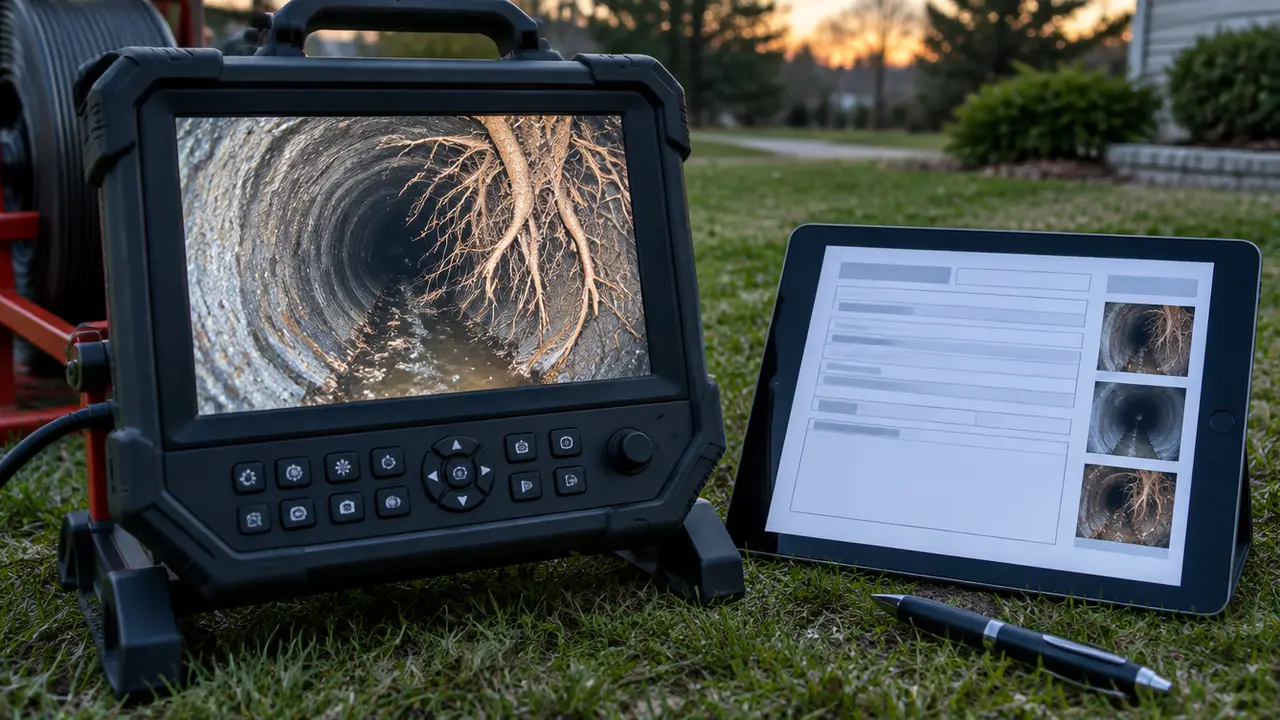
Before the operator packs up, you should have a verbal summary of what was found, paint or flags on the ground at any finding worth pricing, and a clear answer about how far the camera reached. The full video and the written report follow, on the timing agreed at booking.
- The complete, unedited video from entry point to the main or the stopping point, with the counter visible.
- A written list of findings, each with a distance, a still and a plain description.
- The pipe material, and the distance of any change.
- Surface marks and estimated depths for findings worth pricing.
- The stopping point and reason, if the camera did not reach the main.
Rename the files with the address and date when they arrive, and send them to your Realtor. For what a strong report looks like, see what a sewer scope report should give a Calgary buyer. To set the day up well, go through questions to ask before booking, then send your request to the HAUSE desk.
FAQQuestions people ask
Does the buyer need to be at the house during the sewer camera inspection?
No, but it helps. A buyer or Realtor watching the monitor can ask about each finding while the camera is still there. If you cannot attend, make sure the full video and written report are agreed at booking.
Can the seller's household use water while the sewer camera is in the line?
They should not. Showers, laundry and dishwashers send water down the line that can flood the camera lens and hide defects. Ask the listing side to keep water use off for the visit.
Why does the sewer scope operator run water before pushing the camera?
A little water helps the camera head slide along the pipe and shows how the line drains, including where water pools in a sag.
What does the paint mark on the lawn after a sewer scope mean?
It marks the spot above a finding, usually with an estimated depth, so a contractor can quote the repair. It is not a utility locate, and nobody should dig based on it alone.
NETWORKGo deeper across the HAUSE Sewer network
How long a sewer scope takes, from booking to the report
How long a sewer scope inspection takes: typical time on site, what adds time, how far ahead to book, and when to expect the video and the written report.
SewerCleaners.caWhat happens during a professional sewer cleaning visit
A step-by-step look at a professional sewer cleaning visit: arrival, questions, access, cleaning, flow testing, camera verification and the paperwork you keep.
SewerJetting.caHydro jetting cost in Canada: typical quoted ranges and what drives them
Hydro jetting cost in Canada for 2026: typical quoted ranges for main lines, kitchen lines, camera add-ons, roots, after-hours and commercial work.