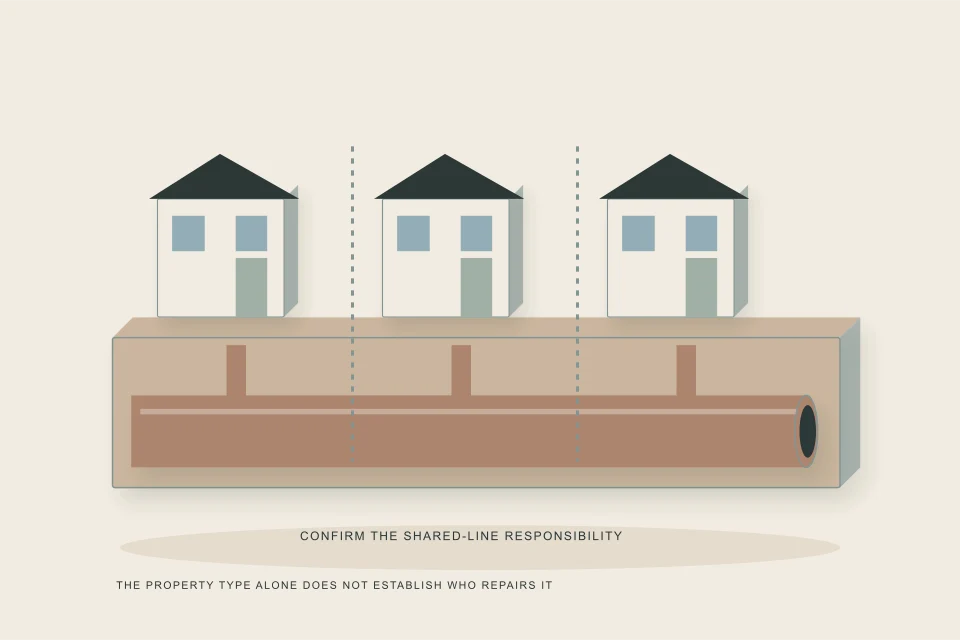
In a Calgary condo or townhouse, the sewer lines outside the unit are usually common property managed by the condominium corporation, so a unit buyer's first step is the documents: bylaws, the plan, the reserve fund study and any board footage. A buyer's own scope makes most sense in bare-land condos and townhouses where the unit has its own lateral or the documents show recurring drain trouble.
- Who owns a condo's sewer lines depends on the corporation's plan and bylaws, not on where the pipe runs.
- CMHC's resale condo checklist points buyers to the reserve fund study and the estoppel certificate; both can reveal sewer issues.
- The City's service line data excludes large multi-family services, so the address lookup often returns nothing for a condo building.
- In bare-land condos and some townhouse complexes, each home may have its own lateral, and a unit scope works much as it does for a house.
01 /Who owns the sewer lines in a Calgary condo or townhouse?
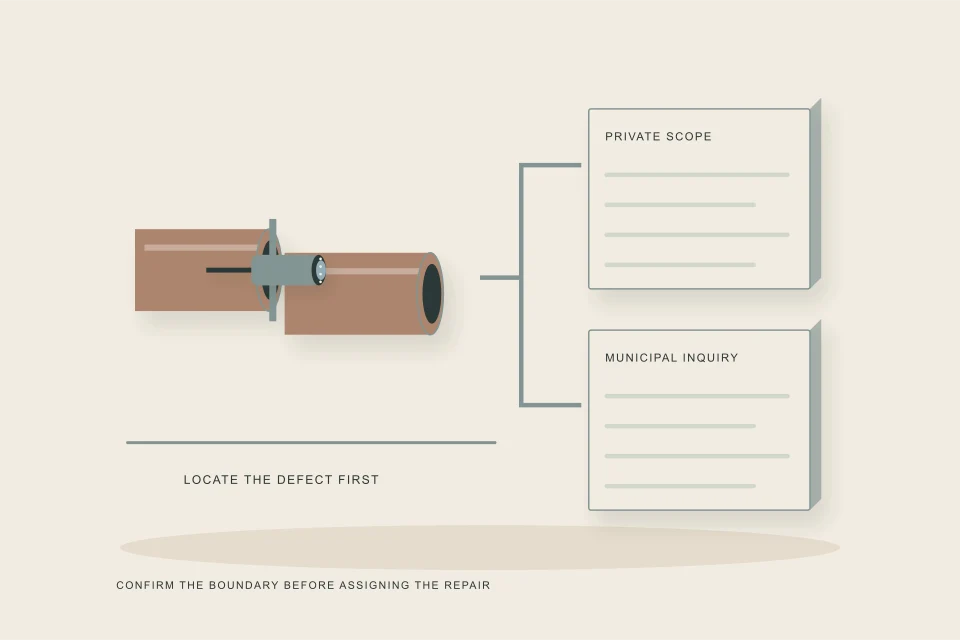
The condominium corporation usually owns or manages the sewer lines outside the unit, and the plan and bylaws decide exactly where the unit owner's responsibility stops. In a conventional apartment-style condo, the lines in the walls and under the building are typically common property. In townhouse complexes, a single private line often collects several units before it reaches the City's main, and that shared line is usually the corporation's.
Bare-land condominiums work differently. Each owner may own the house and the land under it, and the plan may treat the lateral from each home as part of that unit. The same street of townhouses can therefore sit under two very different sets of rules, which is why the documents come before the camera.
| Building type | Line from the unit | Shared line to the City | Who usually decides on repairs |
|---|---|---|---|
| Apartment-style condo | Common property from the unit's fixtures outward | Common property | The board |
| Conventional townhouse condo | Often common property below the slab | Common property | The board |
| Bare-land condo townhouse | May belong to the unit | Often common property | Depends on the plan and bylaws |
| Freehold row or semi-detached | Owner's | May be shared by agreement or easement | The owners involved |
02 /What should a buyer ask the condo board or manager for?
Ask for the documents that show whether sewer problems are known, planned for or recurring. CMHC's checklist for buying a resale condominium tells buyers to consult the technical audit or reserve fund study to judge the building and common property, to review the budget, financial statements and estoppel certificate, and to hire an inspector to evaluate the unit and the building as a whole.
- Reserve fund study. Does it list sanitary lines, a replacement date or a relining project?
- Board minutes. Look for backups, drain cleaning contracts, camera inspections or complaints from ground-floor units.
- Existing footage. Many boards commission camera inspections of shared lines; ask whether one exists and how old it is.
- Special assessments. Any planned or recent assessment tied to plumbing or site services.
- Bylaws and plan. Where the unit boundary sits, and who pays for a line that serves only one unit.
- Insurance. Whether the corporation's policy includes sewer backup coverage, and the deductible that might be charged back to a unit.
The Insurance Bureau of Canada says basement water damage from a sewer backup is covered only with optional sewer backup coverage. For a ground-floor or walkout unit, knowing whether the corporation carries it, and how the deductible is allocated, can matter as much as the pipe.
03 /When should a condo or townhouse buyer book their own scope?
A unit buyer should book their own scope when the unit has its own lateral, when the documents are silent on an older complex, or when minutes show recurring drain trouble that nobody has investigated. In an apartment-style building, a single buyer rarely has the access or the right to scope common lines, and the board's records carry more weight.
| Situation | Own scope? | Why |
|---|---|---|
| Bare-land townhouse with its own lateral | Usually yes | Works like a house; the buyer may own the line |
| Townhouse on a shared line, board has recent footage | Often no | Review the board's footage and plans instead |
| Townhouse on a shared line, older complex, no footage | Ask the board first | Access and permission are the corporation's to give |
| Ground-floor apartment unit with past backups in minutes | Rarely possible alone | Press the board for its investigation and plan |
| Apartment unit on an upper floor | Rarely useful | The unit's drains join common stacks; the building's records matter more |
A general home inspection of the unit will not settle it either. Alberta's licensing page describes a home inspection as a largely non-invasive look at readily accessible features, and it lists condominium common areas among the inspections that fall outside the licensing requirement, so ask who inspected any common lines and on what basis.
04 /Why does the City's address lookup often return nothing for condos?
The City's public sanitary service line dataset states that it does not include large commercial and multi-family service lines, so an apartment building or larger complex often has no record. Smaller townhouse sites may appear, but a single record may describe the City section serving a whole group of units, not any one home.
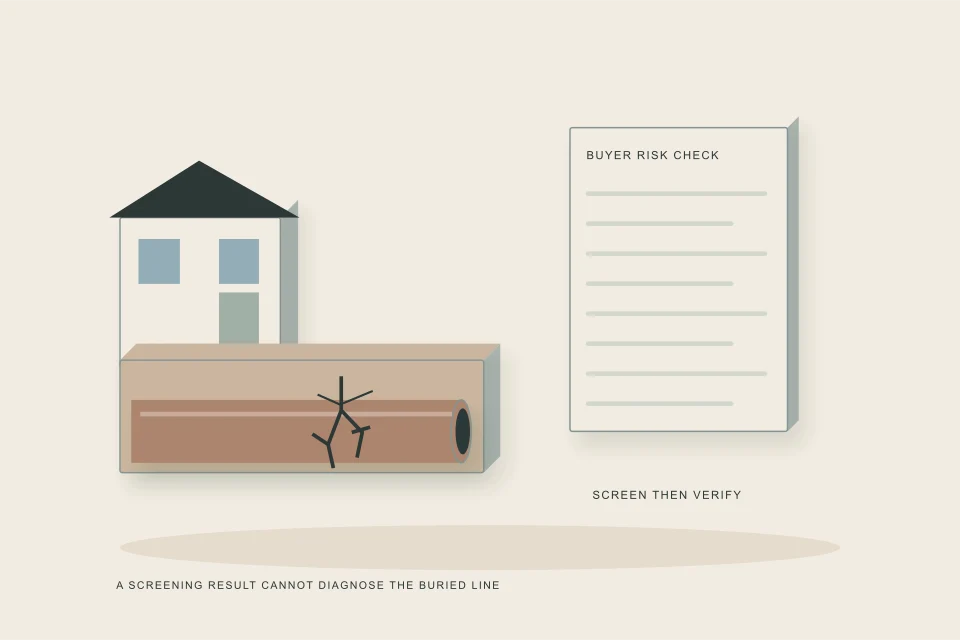
Where a record does appear, the same caution applies as for a house: it describes only the City-owned section from the main to the property line. The Buyer Sewer Risk Check still works with the material and year entered by hand, but for most condos the documents are the better guide.
05 /How is a scope booked in a condo complex?
- Check the documents first
Confirm from the plan and bylaws whether the line you want to scope belongs to the unit or the corporation.
- Get permission for common property
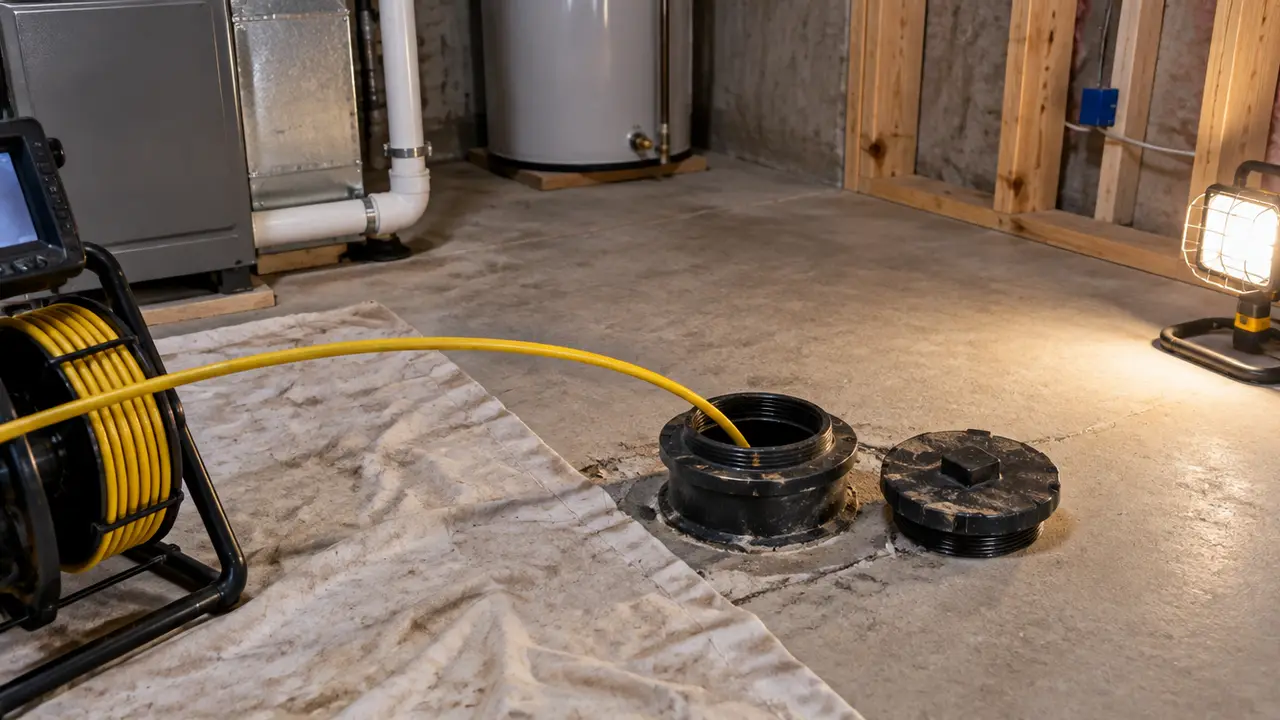
Scoping a shared line or opening a common cleanout usually needs the manager's consent.
- Find the access point
Townhouse units may have their own cleanout; shared lines may be reached from a common cleanout or manhole on site.
- Ask for the right package
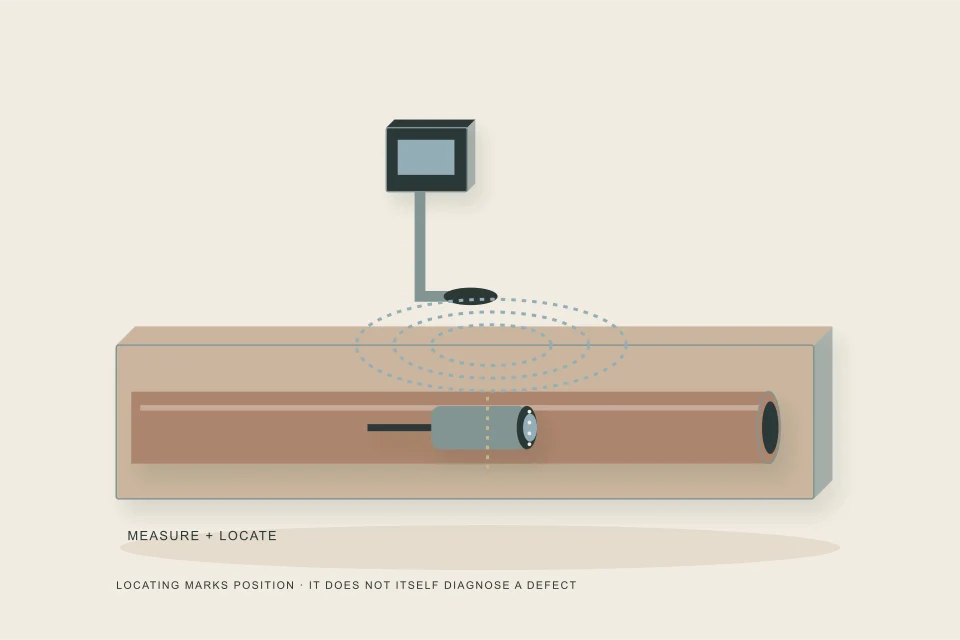
A locate is especially useful where a shared line runs under driveways and other units' yards.
- Share with care
If the scope shows a problem on common property, the board will want the footage; agree with your Realtor how and when it is shared.
06 /What should happen if a problem is found on common property?
If the problem is on common property, the repair is normally the corporation's decision and cost, shared through condo fees, the reserve fund or a special assessment. For a buyer, the questions become financial: is the repair planned and funded, and is an assessment coming? Those go to the manager, the estoppel certificate and your lawyer.
If the problem is on a line the documents assign to the unit, it is treated like a house: locate it, quote it and negotiate. Who pays explains the City and private split, and after a bad sewer scope walks through the options. For national guidance on inspecting multi-unit buildings, SewerInspector.ca covers board-level programs. To send a request for a townhouse or bare-land unit, use the request form.
FAQQuestions people ask
Do I need a sewer scope when buying a condo apartment?
Usually not on your own. The lines are typically common property, so review the reserve fund study, minutes and any board footage instead, and ask about sewer backup insurance.
Who pays for a sewer backup in a Calgary condo?
It depends on where the cause is and what the bylaws and insurance say. The corporation's policy and its deductible allocation rules are central; ask the manager and your lawyer.
Can a townhouse buyer scope a shared sewer line?
Only with the corporation's permission if the line is common property. Many boards already have footage, which is a better starting point.
What is a bare-land condominium, in sewer terms?
A condo where each owner holds a defined piece of land and the home on it. The plan may make the lateral from each home part of the unit, so a scope works much like it does for a house.
What condo documents mention sewer lines?
The reserve fund study, board minutes, budgets, special assessment notices and sometimes a technical audit. The estoppel certificate shows fees and the corporation's position on the unit.
NETWORKGo deeper across the HAUSE Sewer network
Condo and multi-family sewer cleaning programs
How condo boards build a sewer cleaning program: stack cleaning, building drains, camera baselines, reserve fund planning, bylaws and resident notices.
SewerInspector.caCondo and multi-unit sewer inspections: who scopes what
Condo and multi-unit sewer inspections: shared vs unit piping, what boards should scope, what buyers should ask for, and access in occupied buildings.
SewerQuotes.comWho pays for sewer repair: buyers, sellers, landlords, tenants and condo owners
Who pays for sewer repair in Canada: buyer vs seller, landlord vs tenant, condo corporation vs unit owner, and neighbours who share one sewer lateral.