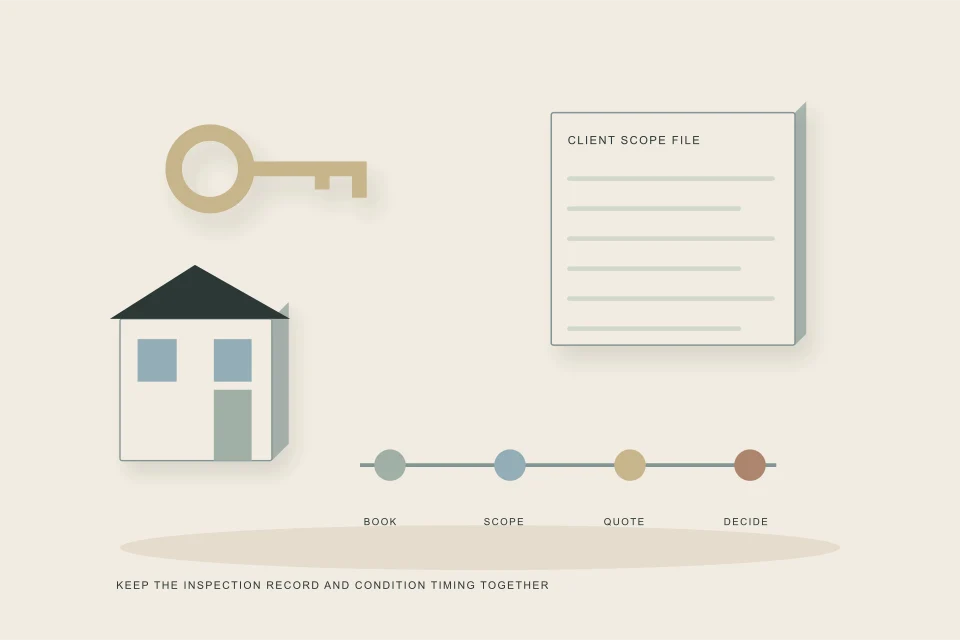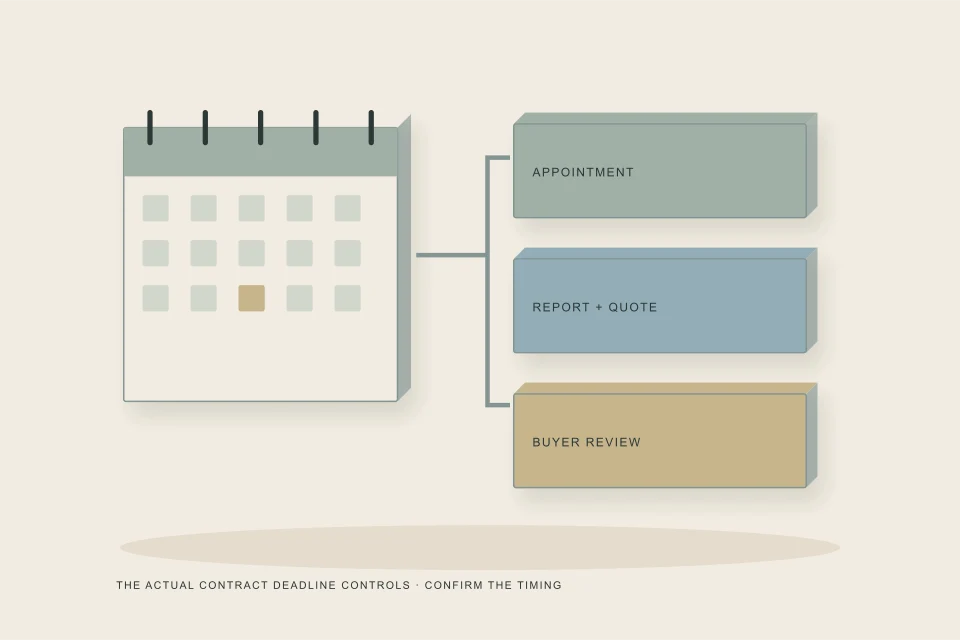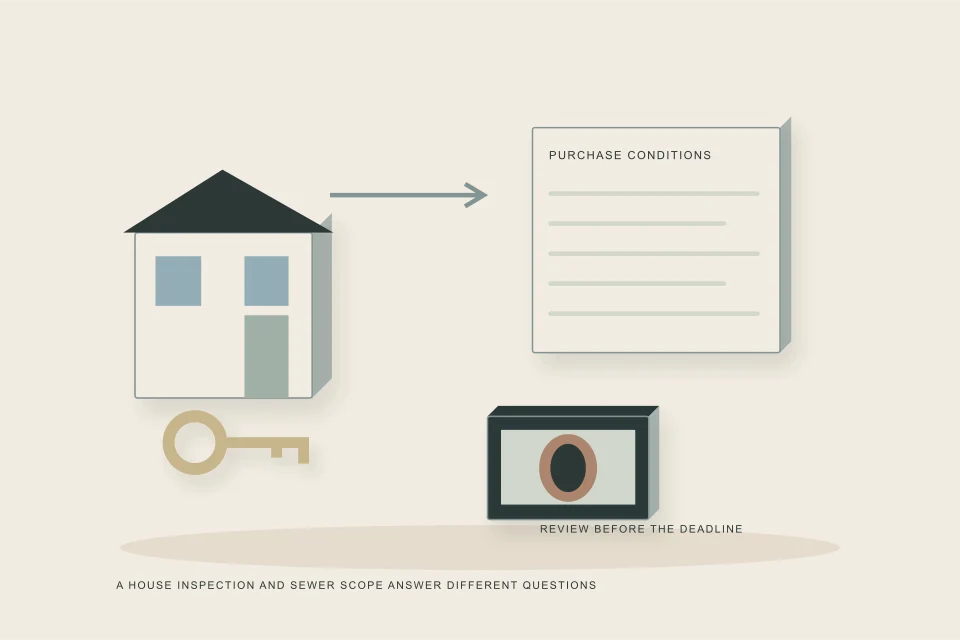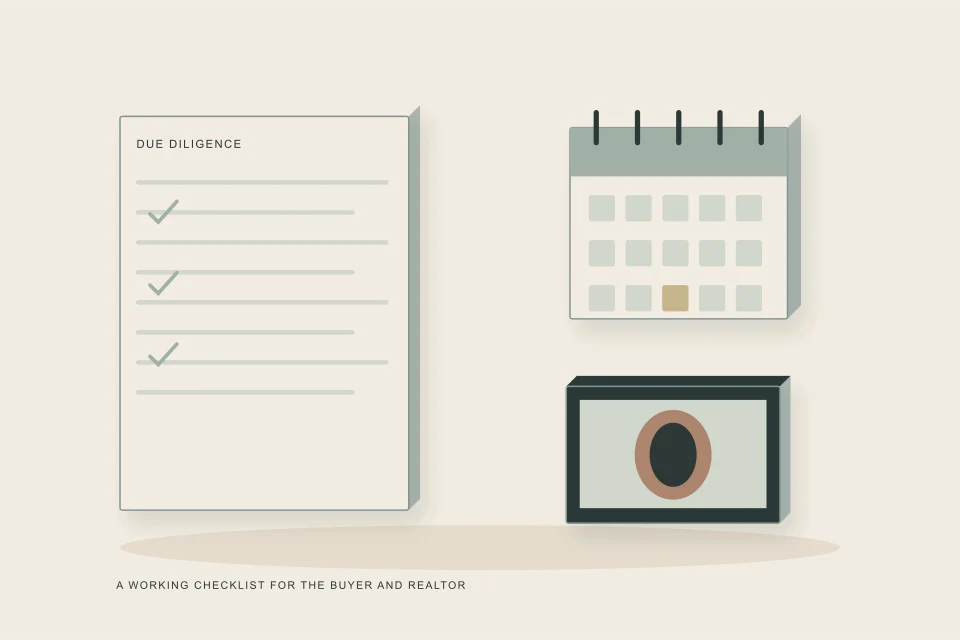
The sewer scope due diligence checklist tracks one purchase from acceptance to condition removal: the property and deadline, who booked and who receives the report, access and water, the scope's findings on material, defects and location, and the action items that follow, from getting quotes to notifying the other side and waiving or negotiating. Print it or copy it into the deal file.
- Fill in the condition deadline and book-by date first; everything else is scheduled backward from them.
- Confirm access and water on before the appointment so the visit is not wasted.
- Record material, defects and location separately; they drive different decisions.
- Close every item before the deadline, including recording the client's decision in writing.
01 /How should this checklist be used?
Use this checklist as the single place where the sewer part of a transaction lives. Start it the day the offer is accepted, fill in each section as it happens, and keep it with the rest of the file. It does not replace your brokerage's forms or the client's legal advice; it simply keeps the scope from being the loose end on condition day.
The sections follow the order things happen: details, people, logistics, findings, actions. Everything is written so a colleague could pick up the file halfway through and know exactly where it stands.
02 /What transaction details go at the top?
| Field | Entry | Notes |
|---|---|---|
| Property address | Include the quadrant (NW, NE, SW, SE) | |
| MLS listing number | For cross-reference | |
| Year built | From the listing or RPR | |
| Offer accepted (date) | Day zero for the planner | |
| Condition deadline (date and time) | From the signed contract | |
| Book-by date | From the Condition Deadline Scope Planner | |
| Seller | As on title | |
| City record for the address | Material and year on the City side, if looked up |
Looking up the City record is optional but useful. The City's public service line data shows the material and install date for the City-owned portion of the line only; the private portion may be different. The Buyer Sewer Risk Check runs the lookup and scores the house in one step.
03 /Who needs to be on the contact list?
| Role | Name | Phone / email |
|---|---|---|
| Buyer's agent and brokerage | ||
| Client name(s) | ||
| Listing agent | ||
| Scope provider (once confirmed) | ||
| Client's lawyer | ||
| Repair contractor (if needed) |
Record who receives the video and report. The client paid for it and should receive it directly; you can then share it with the listing side or a contractor with the client's agreement.
04 /What logistics need confirming before the scope?
| Item | Done | Detail |
|---|---|---|
| Scope request sent | ☐ | Date sent and to whom |
| Appointment confirmed by provider | ☐ | Date, time and written confirmation saved |
| Main cleanout located and reachable | ☐ | Location; boxes or finishes moved if needed |
| No cleanout: toilet pull or roof vent agreed | ☐ | Seller consent to pull and reset a toilet |
| Water on at the property | ☐ | Vacant homes are sometimes winterized |
| Locate and mark requested | ☐ | Included, optional, or on a return visit |
| Client attending | ☐ | Yes or no |
| Report delivery time confirmed | ☐ | At least two business days before the deadline |
Vacant or estate properties need special care. Water may be shut off or lines winterized, and a scope on a dry line tells less about flow. Ask the listing side to arrange water before the appointment.
05 /How should the findings be recorded?
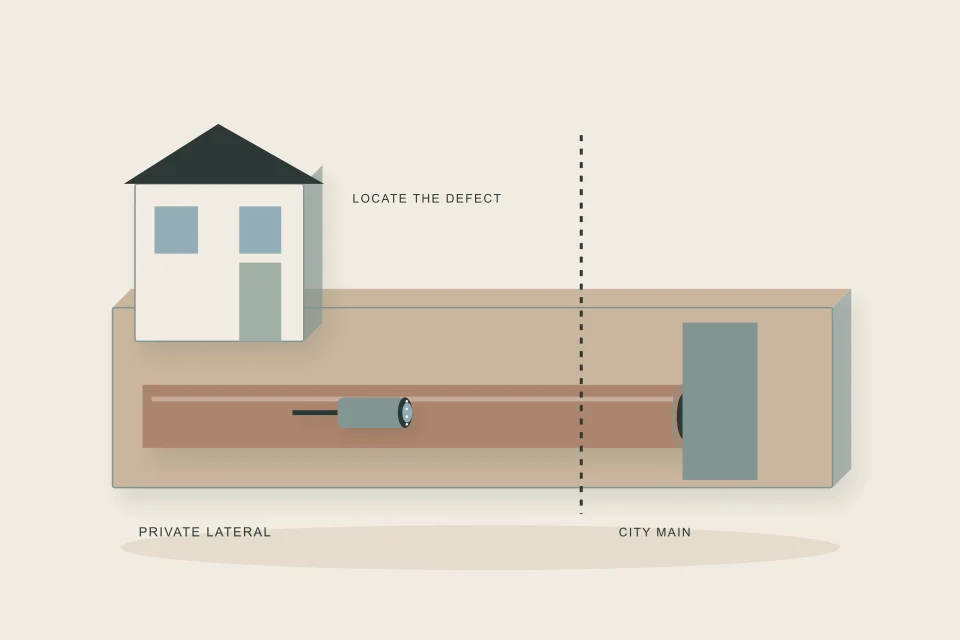
Record findings in three separate groups, because each drives a different part of the decision: material says what kind of line it is, defects say what is wrong, and location says whose problem it is.
| Group | Tick all that apply | Distance / depth |
|---|---|---|
| Material | ☐ PVC or ABS ☐ Clay tile ☐ Cast iron ☐ Fibre (tar paper) ☐ Concrete ☐ Liner ☐ Mixed | Where material changes |
| Defects | ☐ Clear ☐ Roots ☐ Sag / standing water ☐ Offset / separated joint ☐ Crack ☐ Collapse / blockage ☐ Scale | Counter reading for each |
| Camera reached the main | ☐ Yes ☐ No — stopped at | Reason it stopped |
| Located and marked | ☐ Yes ☐ No | Estimated depth at each mark |
| Location vs property line | ☐ Private side ☐ City side ☐ Too close to call | Measured against the RPR |
For measuring a mark against the boundary, follow city vs. private: finding where the line changes hands. For what each defect usually means, see common sewer line problems in Calgary.
06 /What action items close out the condition?
- Review the full video and written report with the client.
- Check the location of each defect against the property line using the marks and the RPR.
- If defects were found, get at least one written quote from a qualified contractor, with the footage attached.
- Discuss the findings, the quotes and the client's risk tolerance.
- Decide the ask: waive, request cleaning, request repair, price reduction, credit or holdback.
- Notify the listing side of findings if the contract requires it, and share evidence as agreed with the client.
- Paper any amendment or extension on the brokerage's forms before the deadline.
- Waive, satisfy or let the condition lapse, and record the client's decision in writing.
07 /How does the checklist change for different property types?
The checklist works for any resale home, but a few lines change weight depending on what the client is buying. Adjust it at the start of the file rather than discovering the difference on inspection day.
| Property type | Lines that matter most | Extra step |
|---|---|---|
| Pre-1960 detached house | Material, locate and mark, quote contact | Book the locate package; expect clay, cast iron or older pipe |
| 1960s to 1970s detached house | Roots, joint findings, trees | Note trees between the house and the main when booking |
| Newer detached house | Report delivery, baseline video | Record the client's decision if they choose to skip |
| Duplex or semi-detached | Route and possible shared line | Ask whether each side has its own lateral; check title |
| Townhouse or bare-land condo | Who owns the line | Review the plan, bylaws and board records first |
| Estate or vacant home | Water on, access, history unknown | Arrange water and access through the listing side |
| Lane-served lot | Rear property line, garage over the line | Use the rear setback on the RPR when measuring |
For condo and townhouse purchases, most of the evidence comes from documents rather than a camera; sewer scopes for condos and townhouses lists what to request from the board. For duplexes and older lots, locating a private sewer line explains how to confirm whether a line is shared.
08 /What should go in the file after the deal closes?
After closing, the sewer part of the file should hold the final report, the full video or a note of where the client keeps it, any quotes, the signed amendment or waiver, and proof of any repair the seller agreed to complete. If a holdback was used, add the lawyer's confirmation that it was released or applied.
Encourage the client to keep their own copy with the house records. The next time a drain slows, or when they sell, a dated baseline video answers questions that would otherwise need a new scope, and a buyer's Realtor on the next sale will ask for it.
09 /What mistakes does this checklist prevent?
- The last-day scope that leaves no time for a quote.
- The wasted visit because the cleanout was behind drywall or the water was off.
- The distance mistaken for a boundary, leading a client to assume the City will pay.
- The unrecorded waiver, where nobody can later show the client chose to skip the scope or accept the risk.
The full Realtor workflow, including sample clause wording, is on sewer scopes for Realtors. To start the booking, send a request.
FAQQuestions people ask
Is there a printable version of the sewer scope checklist?
This page is laid out to print from your browser. Each table is a section of the checklist, with blank fields for the entries.
Should the client sign the sewer scope checklist?
Not usually, but recording the client's final decision in writing, especially a decision to waive despite findings, is good practice. Your brokerage may have a form for it.
What if the water is off at a vacant listing?
Ask the listing side to have it turned on before the scope. A camera run on a dry, winterized line shows less about how the line drains.
Does a seller have to allow a toilet to be pulled for a sewer scope?
Access is by agreement. If there is no cleanout, ask the listing side for consent to pull and reset a toilet before the appointment.
NETWORKGo deeper across the HAUSE Sewer network
How long a sewer scope takes, from booking to the report
How long a sewer scope inspection takes: typical time on site, what adds time, how far ahead to book, and when to expect the video and the written report.
SewerRoots.caSewer root removal cost in Canada: cutting, chemicals and permanent fixes
Sewer root removal cost in Canada for 2026: planning ranges for cable cutting, jetting, camera, lining, bursting and replacement, plus cycle-versus-fix math.
SewerCleaners.caHow to hire a sewer cleaner: the checklist, the questions and the paperwork
How to hire a sewer cleaner in Canada: questions to ask, insurance and WCB coverage in Alberta, a written scope template, red flags, and how to compare quotes.