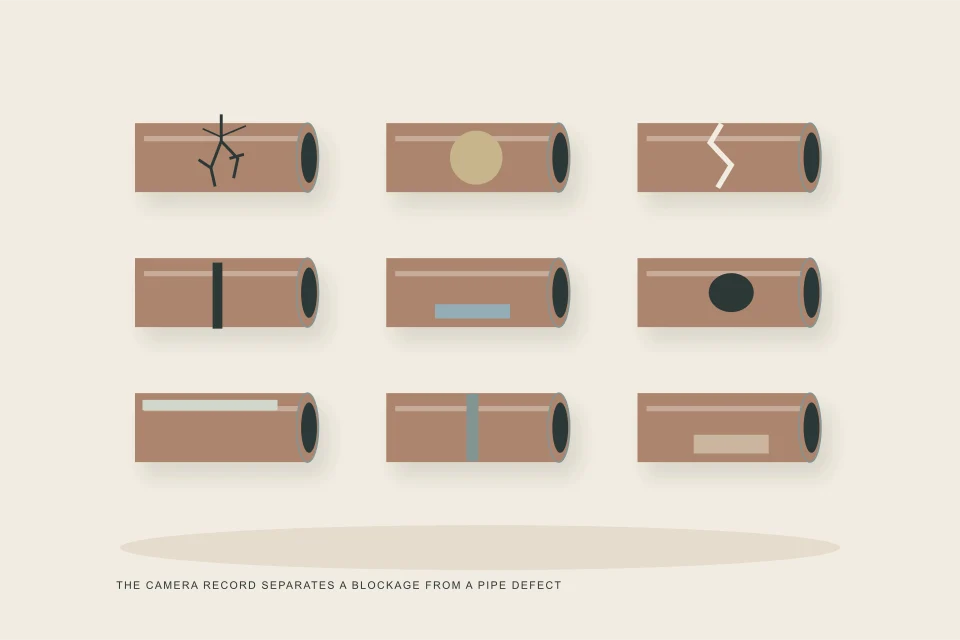
The sewer line problems a Calgary scope finds most often are tree roots at joints, offset or separated joints in clay tile, sags that hold water, scaling and channelling in cast iron, and in some older houses a deformed fibre pipe. Which one you meet depends mostly on when the house was built, what trees stand near the line and how the ground has settled.
- Roots are the most common finding in mature communities, and they return after cleaning unless the joint is sealed by lining or replacement.
- Clay tile has a joint roughly every metre, and every joint is a place where roots, offsets and separations can start.
- A sag is a grade problem, not a crack; its length and the depth of standing water decide whether it can be lived with.
- Cast iron fails from the inside, and a scoured-out pipe floor can let waste reach the soil long before the line blocks.
- Deformed fibre pipe usually means replacement, not repair.
01 /Why do Calgary houses have these sewer problems?
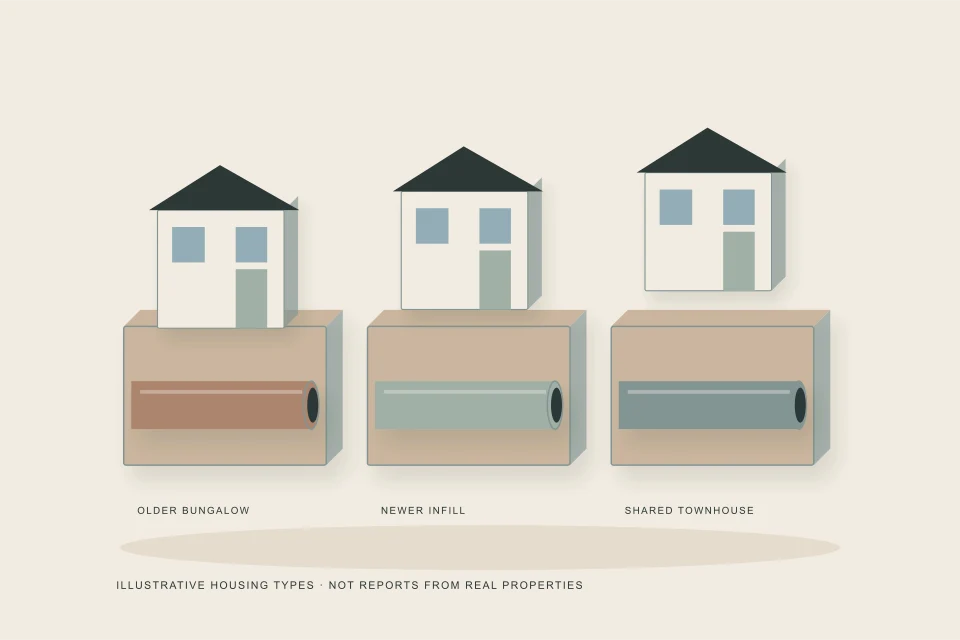
Calgary houses have these problems because of when most of the city was built and what was in the ground at the time. The City's own records for the public portion of each service line show clay tile dominating installs through the 1960s and 1970s, cast iron common in the 1950s, and PVC taking over in the 1980s. The private portion under the yard was usually laid at the same time as the house, so the same eras apply there, though the City notes the private side can be a different material and age.
| Problem | Most common in | What it usually means for a buyer |
|---|---|---|
| Root intrusion | Clay and cast iron lines near mature trees | Cleaning now, recurring cost, lining or replacement later |
| Deformed fibre pipe | Some 1940s to 1950s houses | Replacement of the affected run |
| Offset or separated joint | Clay tile, any era with settlement | Spot repair if isolated; more if repeated |
| Sag or belly | Any material where bedding settled | Monitor, clean periodically, or excavate the low section |
| Scaling and channelling | Cast iron, 1950s to 1970s | Descaling and lining, or replacement if the floor is gone |
02 /Why are tree roots the most common problem?
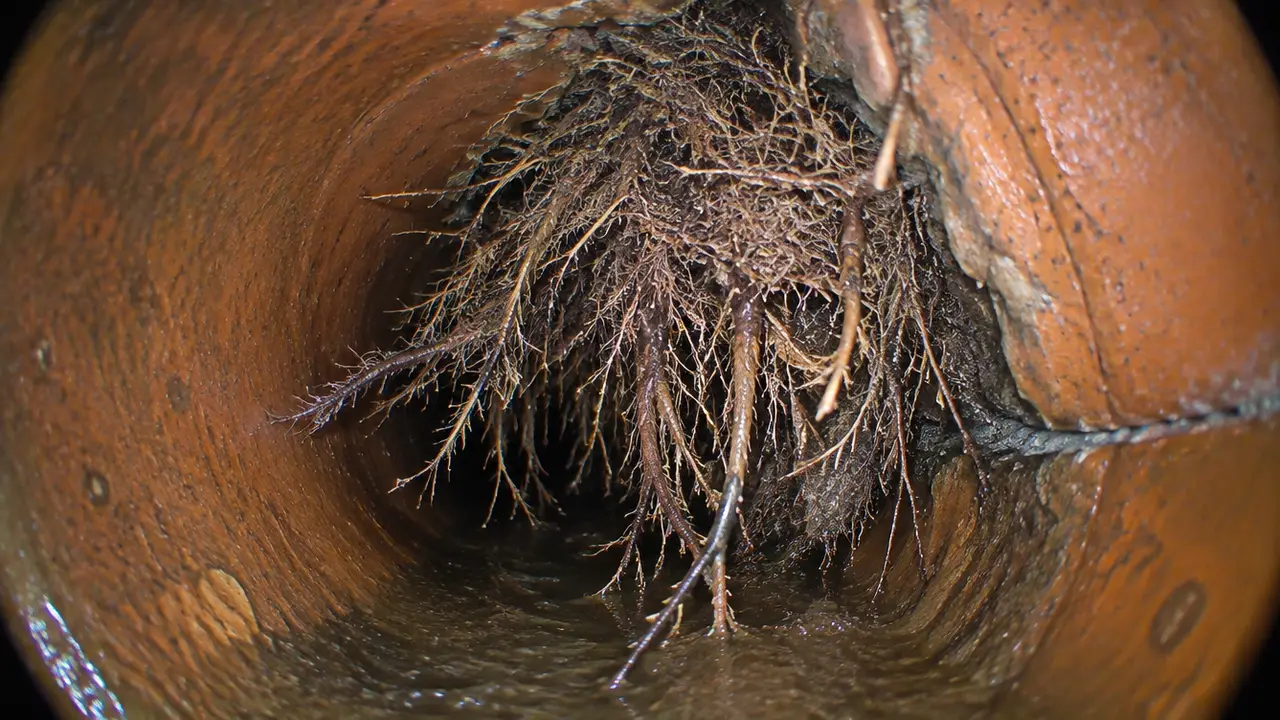
Tree roots are the most common problem because a sewer lateral is a warm, moist, nutrient-rich line running through the root zone of every tree between the house and the main. Fine roots find the smallest opening at a joint or crack, grow inside where there is water and food, and thicken into a mat that catches toilet paper and grease. In mature communities with boulevard trees and big backyard poplars and spruce, roots are the finding buyers should expect rather than the exception.
Cutting or jetting clears the bore, but the opening that let the roots in is still there, so they return, often thicker. That is why a buyer's decision rests less on the root mass itself and more on how many joints are affected and whether the pipe around them is sound. One root entry in otherwise good clay may suit a cleaning schedule; roots at every joint point toward lining or replacement.
A tree's owner does not change the pipe's owner. If a City boulevard tree sends roots into the private stretch, the private pipe is still the homeowner's to maintain; who pays explains why position, not the tree, decides it. For roots in depth, SewerRoots.ca covers causes, cutting and prevention.
03 /What is fibre (tar paper) sewer pipe and why does it matter?
Fibre sewer pipe, often called tar paper or pitch-fibre pipe, is a mid-twentieth-century pipe made from wood or paper fibre bound with coal-tar pitch. It was used across North America when metal and clay were scarce or costly, and some houses of that era in Calgary may have it on the private side. Under soil load it can blister, delaminate and slowly deform from round to oval to flat.
Once it has deformed, there is little to repair: lining needs a round host pipe, and a spot repair on one flattened section leaves the rest of the run the same age. A buyer who finds it should assume replacement of the affected run and price accordingly. The City's records use codes such as TP and OTHER that it has not defined, so do not read fibre pipe into a City code; only the camera identifies it.
04 /What causes offset and separated joints?
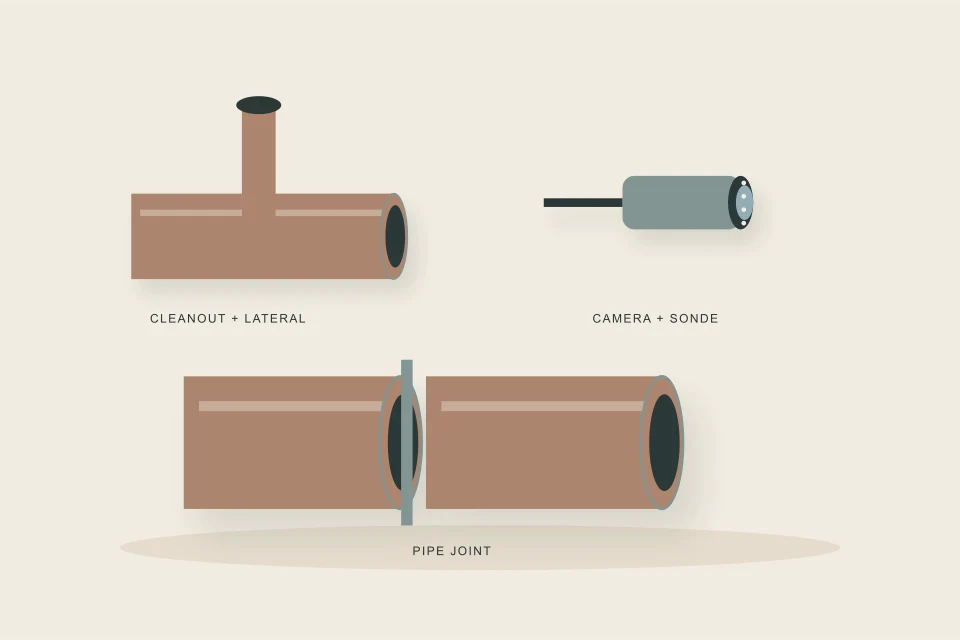
Offset and separated joints come from ground movement acting on a pipe made of many short pieces. Clay tile laterals are assembled from sections roughly a metre long, each joined at a bell. Settlement of backfill, construction traffic, tree roots levering at the joints and moisture changes in clay soils can shift one section up, down or sideways against its neighbour, leaving a lip or a gap.
A lip catches paper and solids and becomes a recurring clog point; a gap lets roots in and can let soil wash into the pipe, sometimes leaving a void or depression above. For a buyer, a single offset in otherwise sound pipe is often a candidate for an excavated spot repair once its location is marked. Several offsets along the run tell a different story about the whole line.
05 /When is a sag in the line a serious defect?
A sag is serious when it is long, deep, or already collecting solids. Sewer laterals depend on steady downhill grade; where the bedding under a section settles, that section dips and holds water after every flush. Water there slows, solids and grease drop out, and a clog forms at the downstream end. Many inspectors treat standing water covering a large share of the pipe's diameter as significant, but the practical test is whether the footage shows buildup in the low stretch.
A short, shallow sag in PVC might be managed with periodic cleaning. A long belly in clay, especially near an offset, usually becomes a dig. Because water hides the pipe floor, ask the report to state the length of the pooled section and whether the camera saw the wall beneath it.
06 /How does cast iron fail?
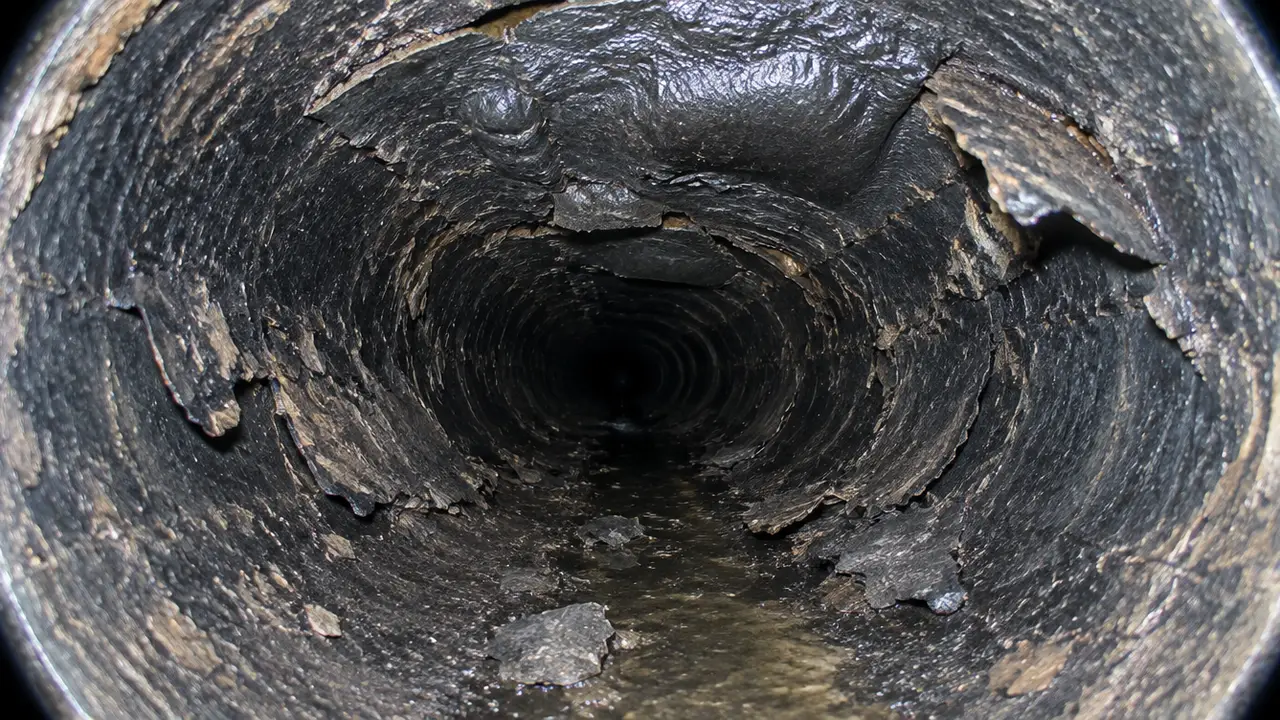
Cast iron fails from the inside out. Over decades, corrosion builds rough scale that narrows the bore and snags paper, and flow along the bottom of the pipe can wear the invert thin until it cracks or opens, a pattern called channelling. The top of the pipe may still look solid while the floor has gone, which is why a camera matters more than tapping on the exposed stack in the basement.
In the City's records, cast iron is concentrated in 1950s communities such as Rosscarrock and St. Andrews Heights, where more than half of public-side lines are coded CI. A scope that shows heavy scale may lead to descaling and lining; one that shows an open floor usually leads to replacement of that run. SewerInspector.ca explains how inspectors grade scale and channelling.
07 /What should a buyer do with a finding?
- Get it located
A surface mark and depth turn a finding into a repair location a contractor can price.
- Check which side it is on
Compare the mark with property records; see city vs. private.
- Get a written quote
Cleaning, spot repair, lining or replacement, with the footage attached.
- Decide before the deadline
Waive, negotiate or walk; after a bad sewer scope sets out the options.
Not sure how worried to be before booking? Run the Buyer Sewer Risk Check, or read the illustrative case studies to see how each problem plays out in a purchase.
FAQQuestions people ask
Are tree roots in a sewer line a reason not to buy a house?
Not by themselves. Roots at one joint in sound pipe are often managed with cleaning. Roots at many joints, or roots with cracks and offsets, point to lining or replacement and belong in the negotiation.
Can fibre sewer pipe be relined?
Rarely once it has deformed, because a liner needs a reasonably round host pipe. Most deformed fibre pipe is replaced.
Do Calgary winters cause sewer line problems?
Laterals are normally buried below frost, so freezing is uncommon, but shallow lines under cleared driveways can be at risk. Ground movement and settlement matter more than cold for most defects.
Is a sag in a new PVC line a defect?
It can be. Poor bedding during construction can leave a low spot. A short, shallow sag may only need monitoring; a long one holding solids may need correcting.
Which Calgary communities have the most clay tile sewer lines?
On the City's public-side records, communities built in the 1960s and 1970s, such as Maple Ridge, Rundle, Marlborough Park and Willow Park, are over 95 percent coded TIL, generally read as clay tile. The private side may differ.
NETWORKGo deeper across the HAUSE Sewer network
Common sewer defects, explained by what they do to the pipe
Common sewer defects explained: roots, cracks, fractures, offset and separated joints, sags, deposits, holes and collapse, with severity and usual next steps.
SewerRoots.caRoots in clay and concrete sewer pipe: why older neighbourhoods suffer most
Why roots invade clay and concrete sewer pipe in older Canadian neighbourhoods: joint spacing, mortar and jute seals, mature trees, and how to plan repairs.
PipeCleaning.caHow long cast iron drain pipes last, and when to repair, line or replace
How long do cast iron drain pipes last? Why they rust and crack, how to judge remaining life, and when a repair sleeve, lining or replacement is right.