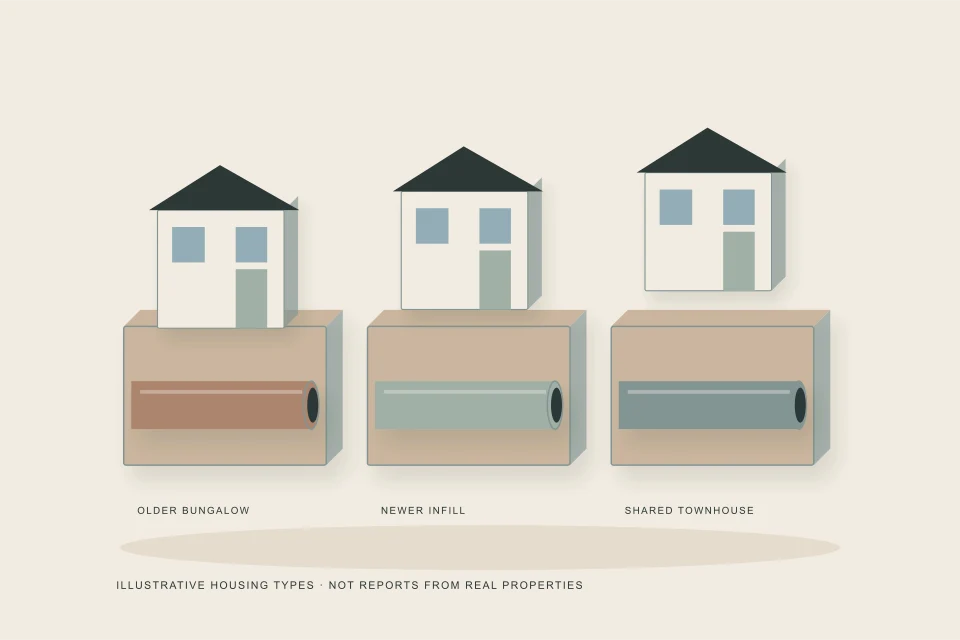
A sewer scope usually finds one of three things: a sound line worth noting, a defect worth watching, or a defect worth pricing before the condition deadline. The 14 findings below cover what Calgary buyers most often see on the monitor, from smooth ABS and scaled cast iron to roots, bellies, fibre pipe, collapses and earlier repairs, with the usual next step for each.
- Sort every finding into price it, watch it or note it; that decision matters more than the defect's name.
- Collapses, holes, channelled cast iron and deformed fibre pipe usually need a contractor's quote before the deadline.
- Roots, bellies and offsets range from minor to serious, so the size, the distance and the surface mark decide the priority.
- A finding past the property line sits on the City's portion of the service pipe; confirm through 311.
- Earlier repairs such as a liner or burst HDPE pipe are good news only when the whole run, including both ends, looks sound.
01 /How should a buyer read this gallery?
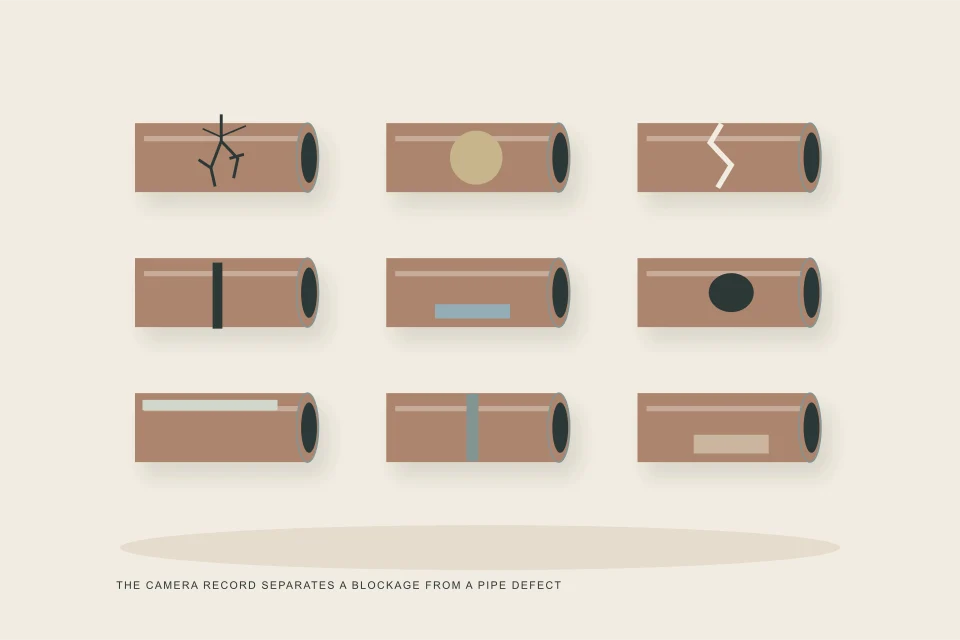
Read each entry as a translation from what the camera shows into what a buyer does next. Every finding below has three parts: what it is in plain words, why it matters when you are about to own the pipe, and the usual next step. The images are illustrations drawn to show what each finding typically looks like on a monitor; they are not footage from any real house.
The next steps use three labels. Price it means ask a contractor for a written quote based on the located defect before your condition deadline, because the answer may change your offer. Watch it means the line works today but needs a maintenance plan or a repeat scope, and the cost of that plan belongs in your thinking. Note it means record the observation with the house papers and move on.
These labels are a starting point for a conversation with your Realtor and a contractor, not a grading system. Formal defect codes and severity grades are a separate discipline, covered in depth by SewerInspector.ca. What follows stays with the decision a Calgary buyer has to make inside a short condition period.
02 /What does a sound plastic line look like? (Finding 1)
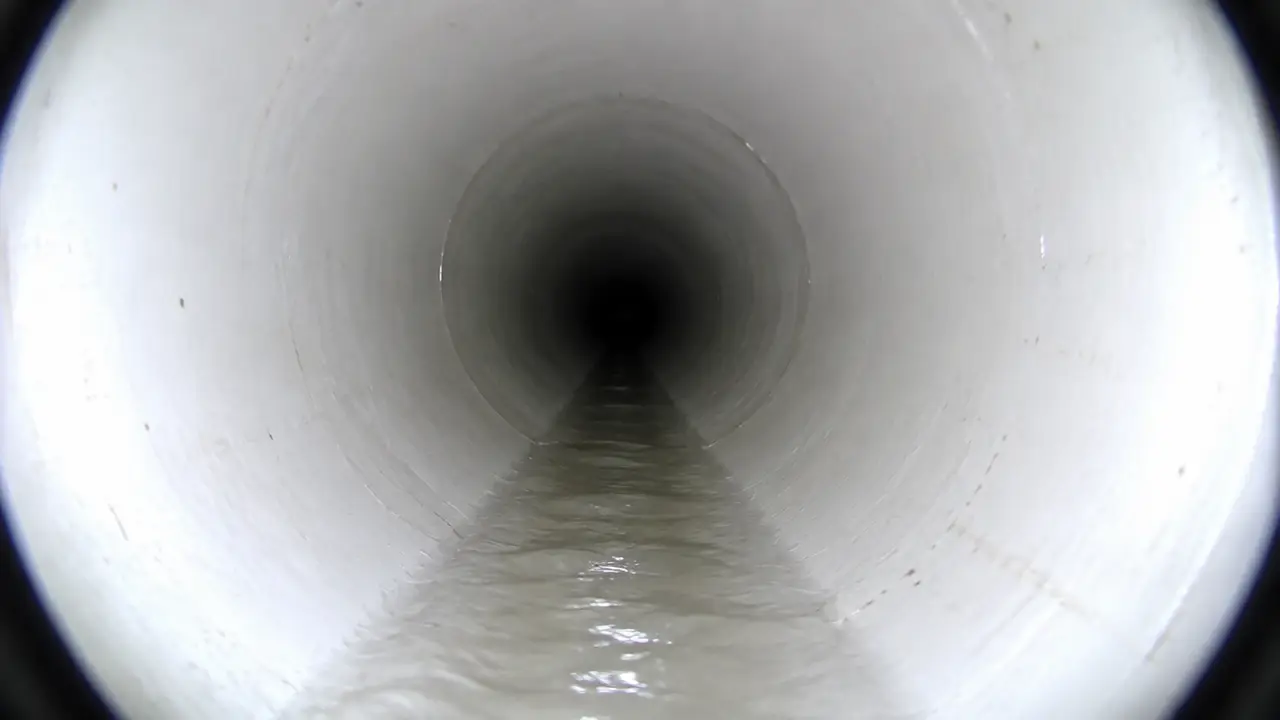
- What it is. A smooth white, cream, black or grey plastic pipe, usually ABS or PVC, with glued or gasketed joints and water running in a thin, even stream along the bottom.
- Why it matters to a buyer. Plastic does not scale or rot, and its joints resist roots far better than older materials. A sound plastic run all the way to the main is the best result a scope can give, though it still says nothing about how the line will behave in future years.
- What to check. Whether the plastic runs the whole way or changes to an older material partway out; any standing water that hints at a sag; and whether the camera actually reached the main.
- Usual next step: note it. Keep the video as a baseline for the day a drain slows.
03 /What do cast iron findings mean? (Findings 2 and 3)
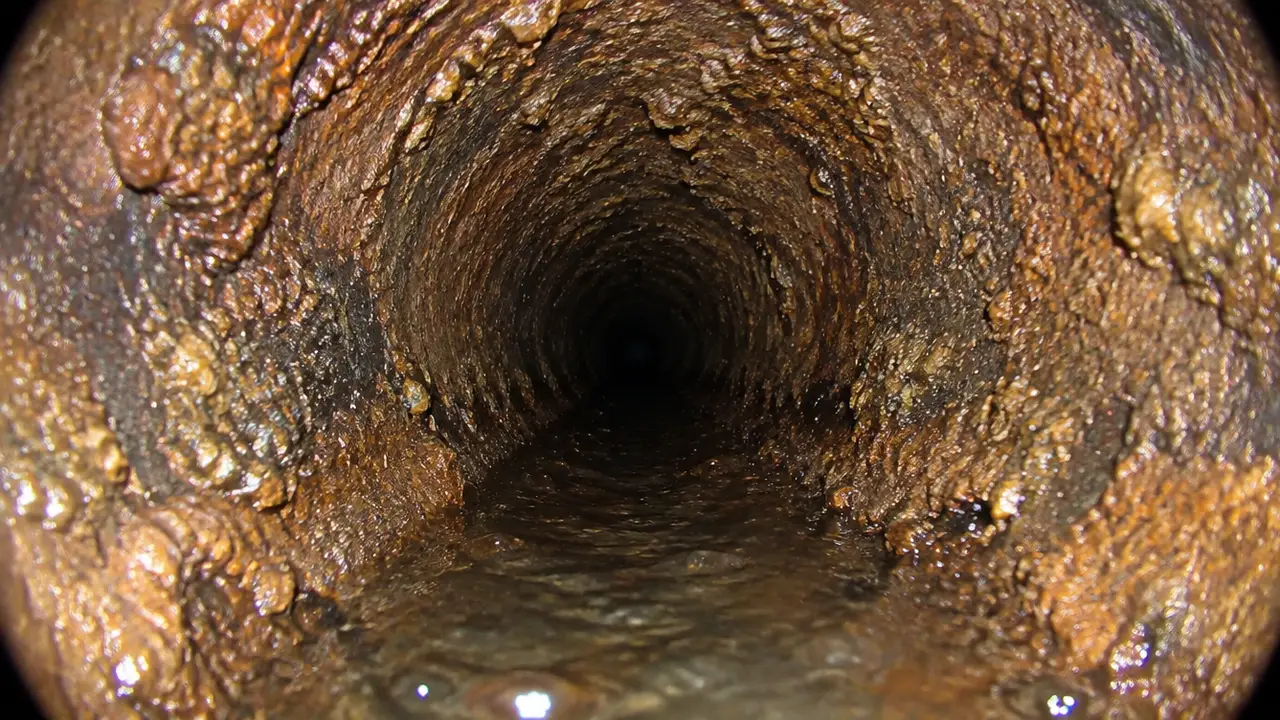
- What it is. Cast iron corrodes from the inside. The rust builds up as hard, knobbly deposits called tuberculation, and the pipe's usable opening gets smaller.
- Why it matters to a buyer. Heavy scale catches paper and solids, which shows up as slow drains and repeat clogs. It also hides the wall behind it, so the camera cannot confirm how thick the remaining iron is.
- Usual next step: watch it, or price it when heavy. Light scale is a maintenance item. Heavy scale is worth a quote that compares descaling with lining or replacement, because descaling can expose thin spots.
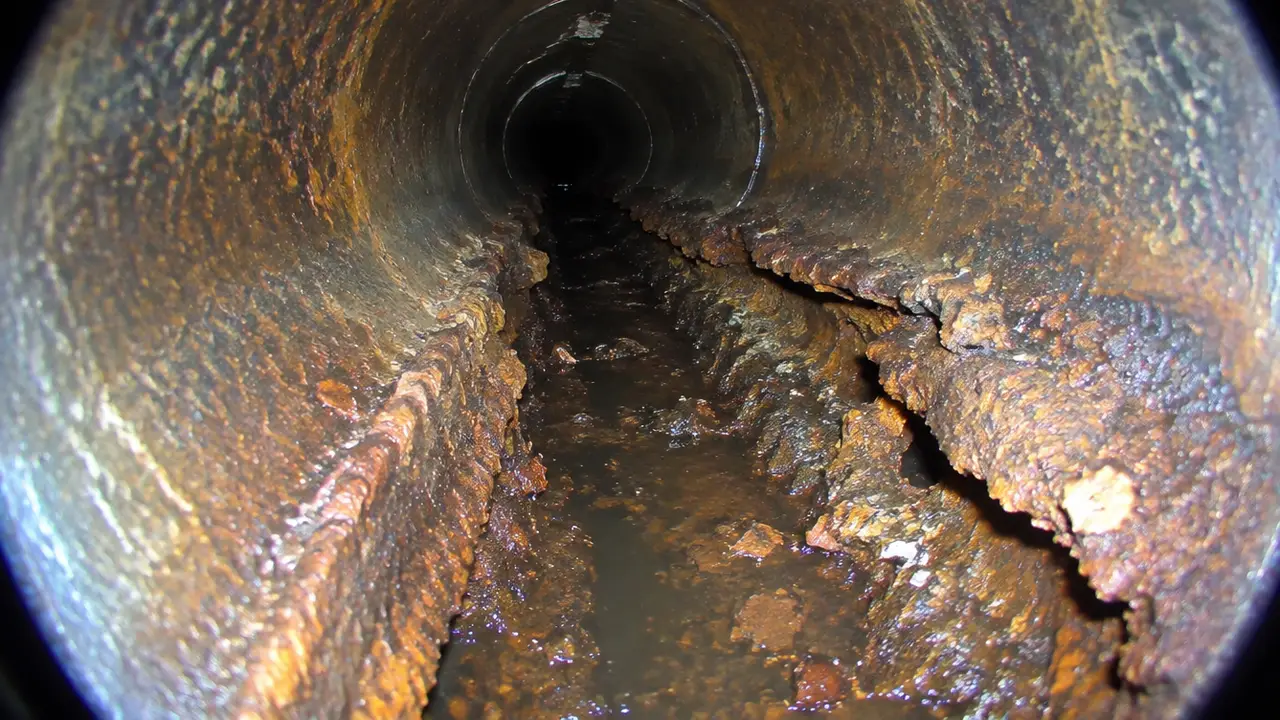
- What it is. The invert, meaning the bottom of the pipe where water always runs, has corroded away into a groove or open channel. The crown can look fine while the floor is failing.
- Why it matters to a buyer. A channelled pipe leaks into the soil beneath it, and the soil can wash out and let the pipe settle. It is one of the clearer signs that a cast iron section is near the end of its life.
- Usual next step: price it. Ask for a quote that covers the channelled length, and ask whether the rest of the iron is the same age.
04 /What does it mean when the camera finds roots? (Finding 4)
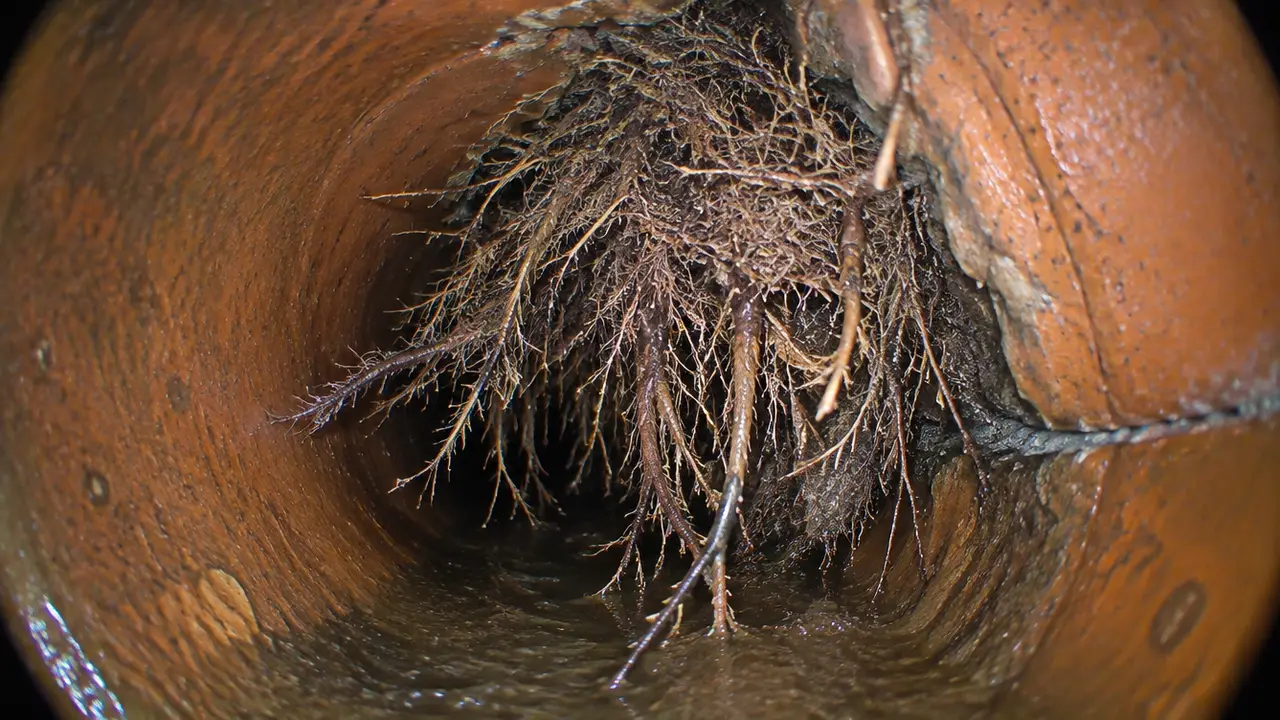
- What it is. Roots enter through a joint, crack or gap, drawn by moisture and nutrients, and grow into anything from a few hair-like strands to a mat that fills the pipe.
- Why it matters to a buyer. Roots are a symptom of an opening in the pipe. Cutting them clears the line for a while, but the opening stays, so roots tend to come back, especially near large trees. Calgary's mature neighbourhoods have plenty of those.
- Priority depends on size. A few fine strands at one joint is a maintenance note. A dense mass, roots at many joints, or roots alongside an offset or crack usually means the joints themselves need attention.
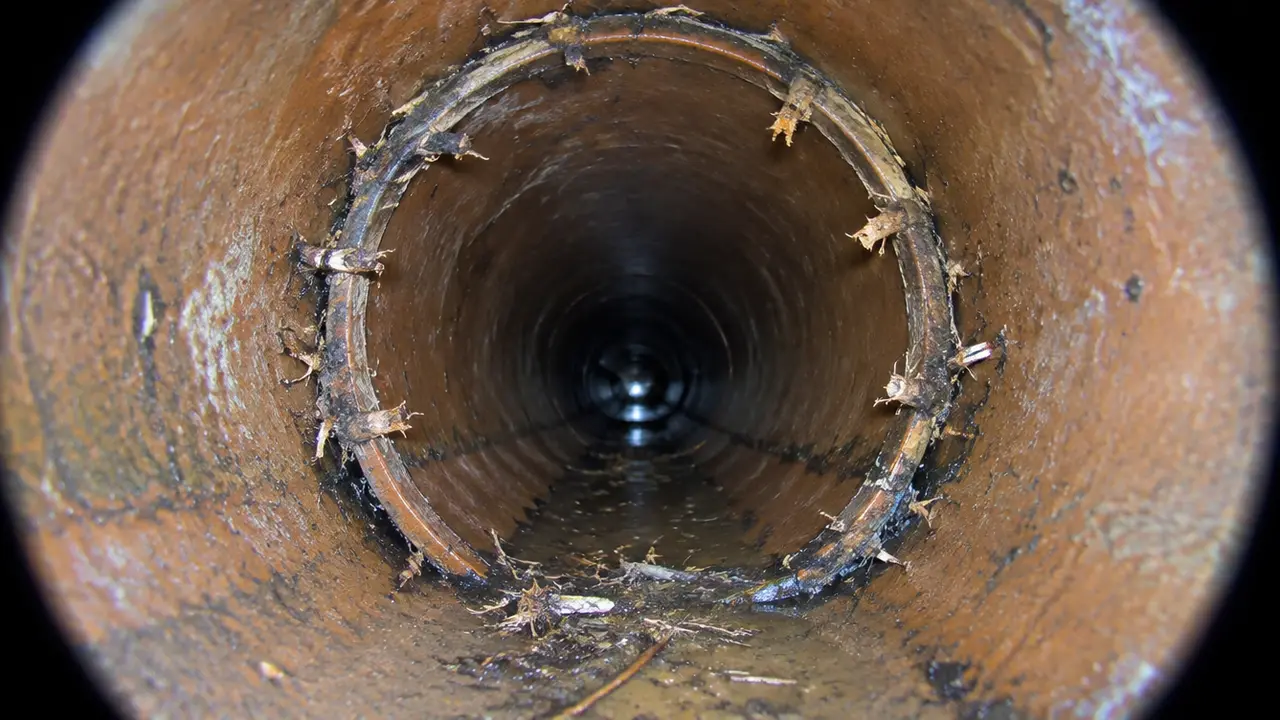
- What it looks like after cutting. A clean-looking pipe with scraped or stubbled joints, sometimes with bits of root still caught at the edges. This is evidence of past maintenance, not of a problem solved.
- What to ask. Whether the seller has a record of root cutting and how often it has been done. A line that needs regular cutting carries an ongoing cost the buyer inherits.
- Usual next step: watch it for light roots; price it for heavy or repeat roots. A quote that compares a cutting schedule with lining or replacement gives you something to weigh.
05 /What do offsets and bellies mean? (Findings 5 and 6)
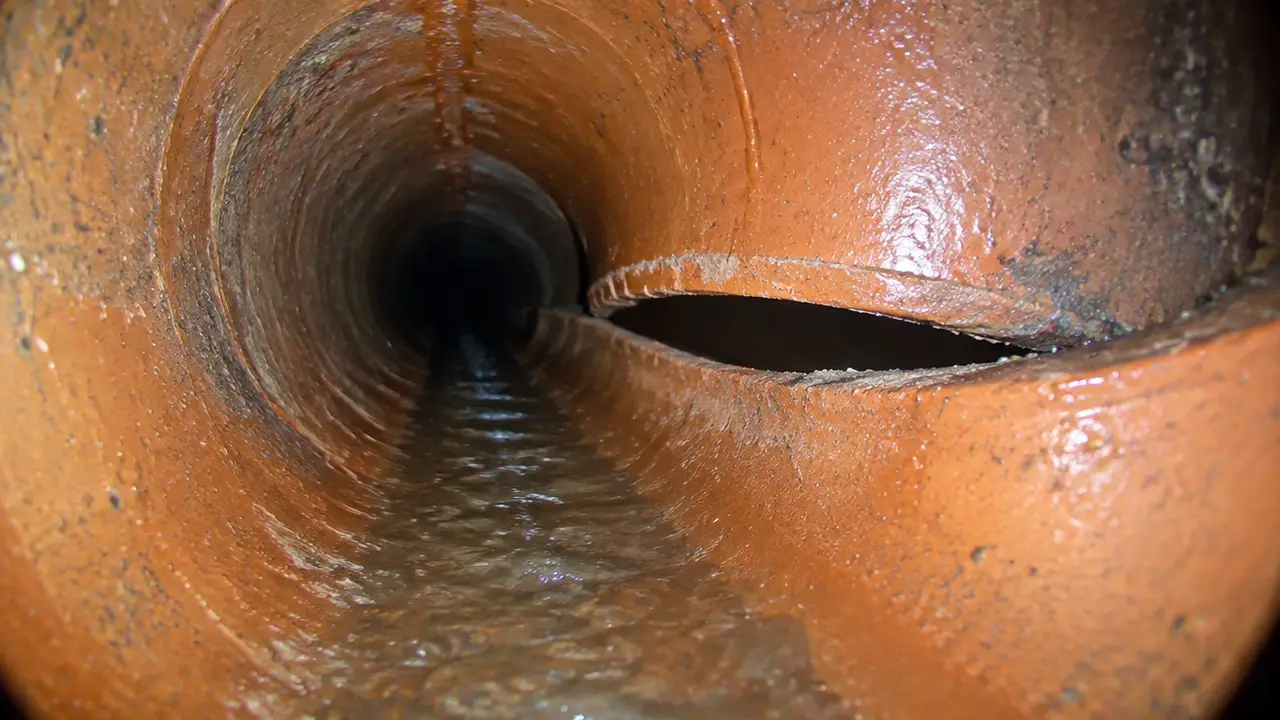
- What it is. Two pipe sections no longer line up. One has dropped or shifted sideways, leaving a lip where they meet.
- Why it matters to a buyer. The lip catches paper and solids, and a gap at the joint lets roots and soil in. A small offset may never cause trouble; a large one can block the camera and the flow.
- Usual next step: watch it when small and clean; price it when the step is large, soil is visible, or roots are coming through. Ask the operator to estimate the size of the step and to mark it on the surface.
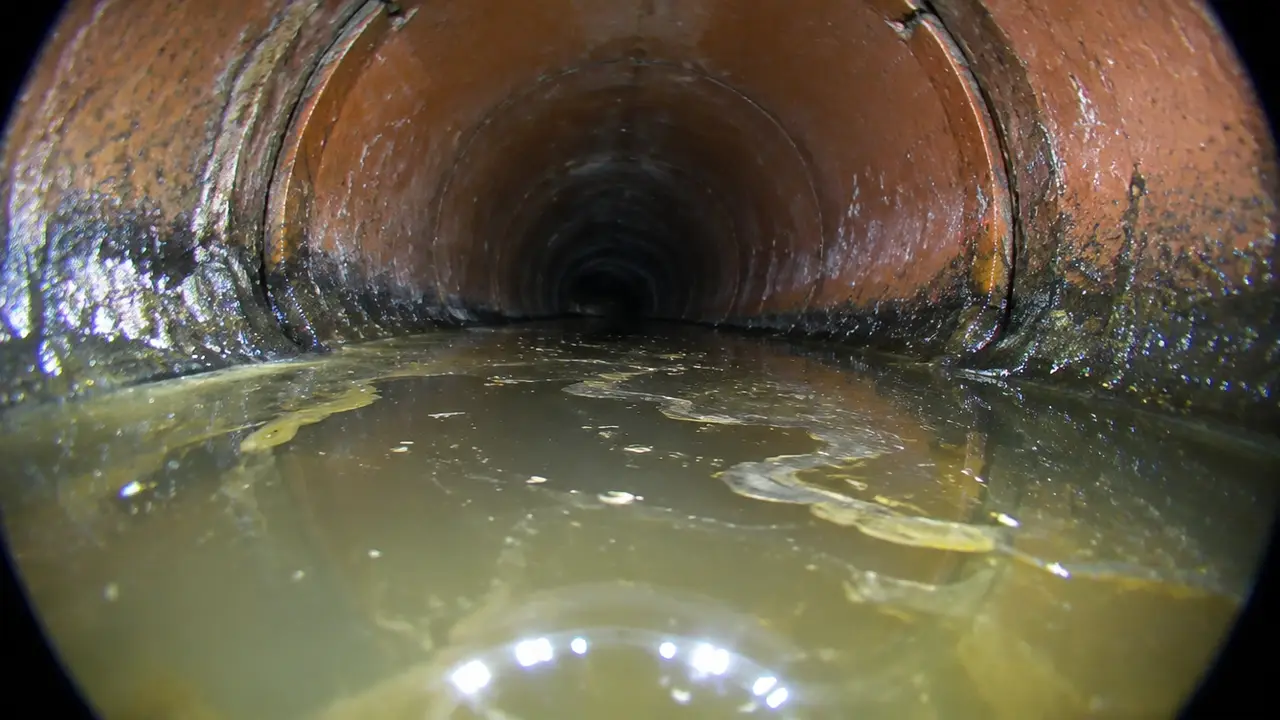
- What it is. A section of the line has sunk below the grade it was laid at, so water collects in the low spot. On screen, the camera dips into standing water and the lens may go under.
- Why it matters to a buyer. Solids and grease settle in the pooled water and build up over time. Water also hides the floor of the pipe, so a belly can conceal other defects. How long it is and how deep the water gets both matter.
- Usual next step: watch it for a short, shallow dip; price it for a long or deep belly, or one with debris in it. The report should give the start and end distances of the pooled stretch.
06 /How serious are cracks, holes and collapses? (Findings 7 to 9)
These three findings form a scale of wall damage. A crack is a warning, a hole is a failure in progress, and a collapse is a failure that has happened. The further along the scale, the more likely a buyer needs a quote before the deadline.
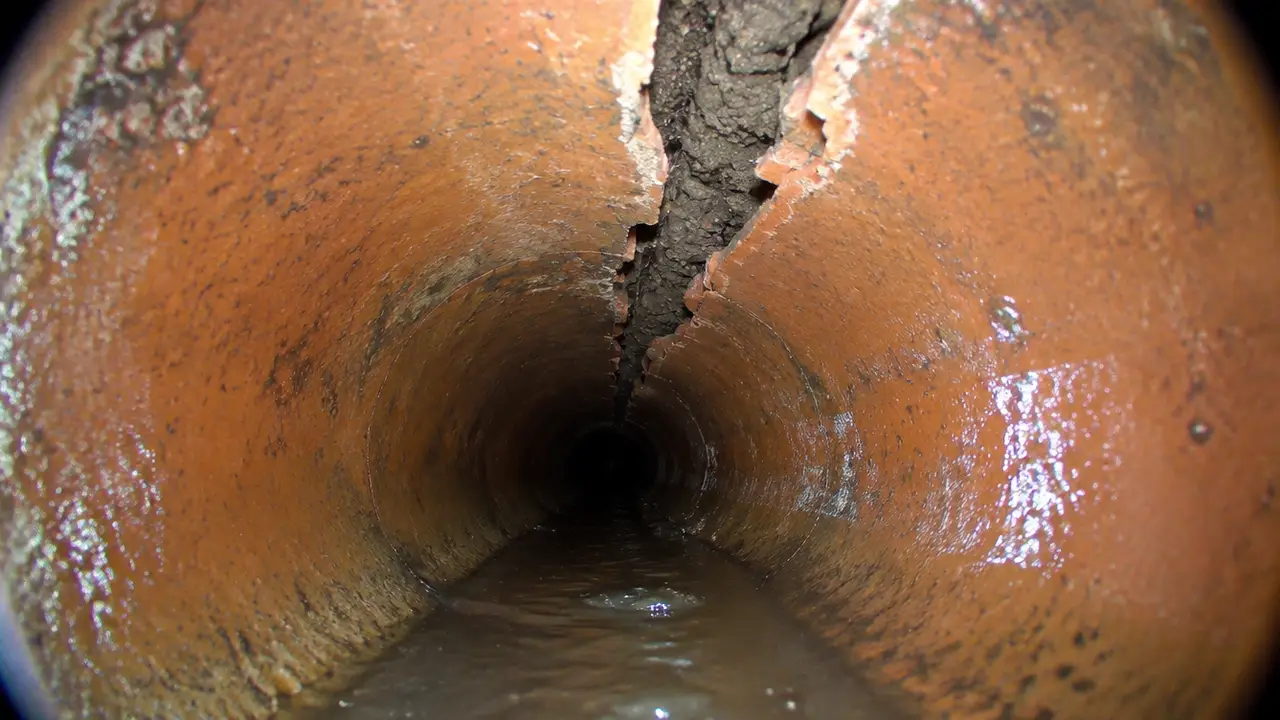
- What it is. A split in the pipe wall. It can run along the pipe or around it, and it can be a hairline or an open fracture with soil behind it.
- Why it matters to a buyer. Tight cracks can stay stable for years. Open cracks let in roots and soil and can grow into holes, particularly in brittle clay pipe under traffic or frost movement.
- Usual next step: watch it for a single tight crack; price it for open, multiple or spreading cracks.
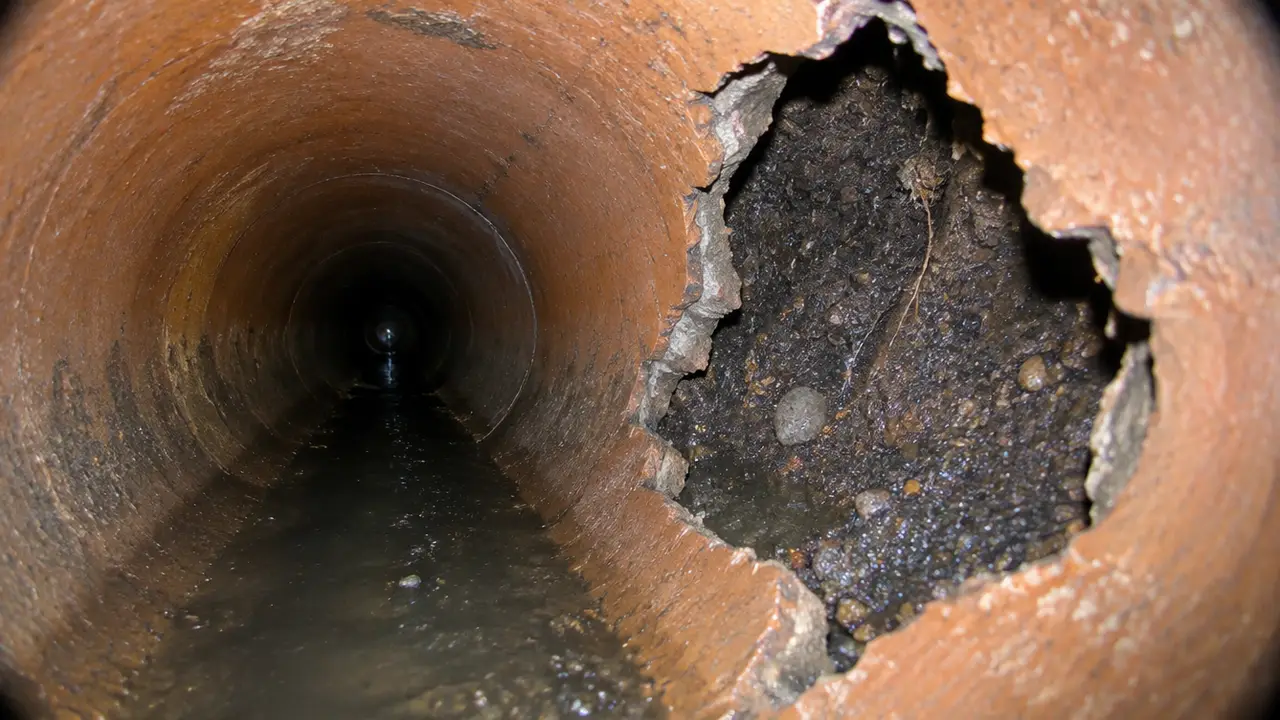
- What it is. A piece of the pipe wall has broken out and is missing, leaving a gap straight into the ground.
- Why it matters to a buyer. Wastewater leaves the pipe and soil comes in. The void around the pipe can grow, and the pipe can settle into it and break further.
- Usual next step: price it. Have the hole located and marked so a contractor can quote the actual spot.
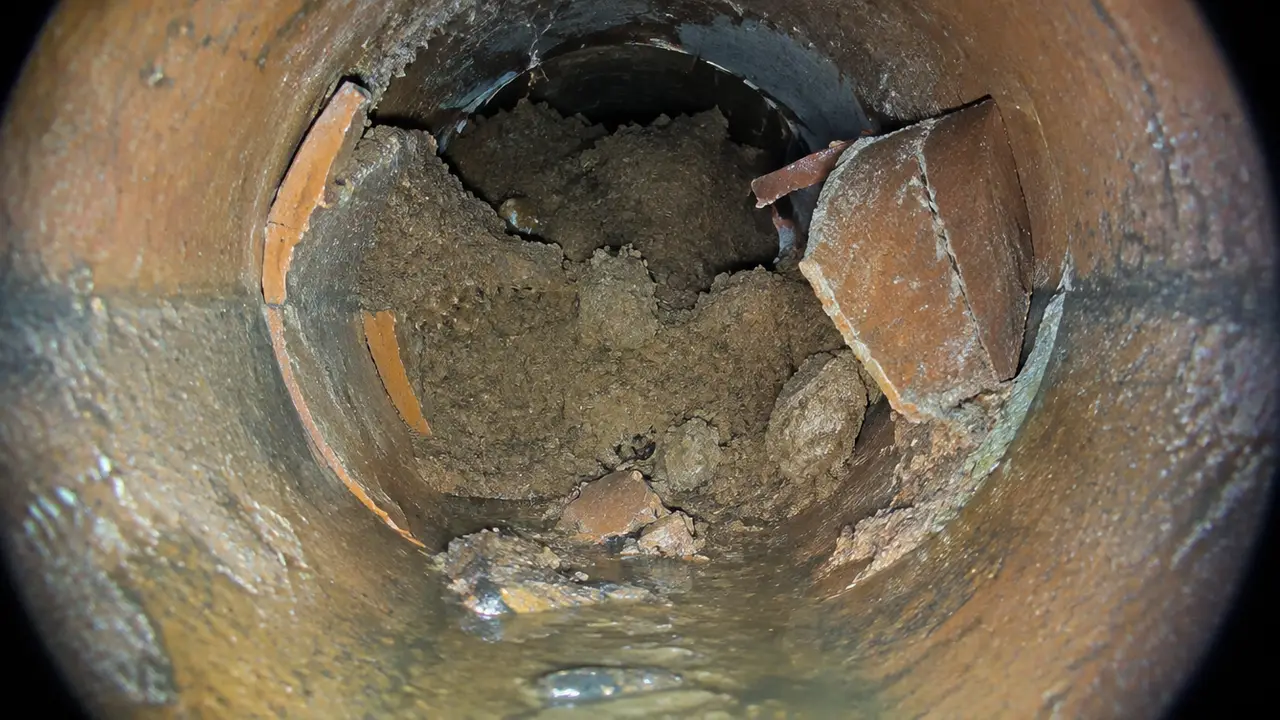
- What it is. The pipe has broken and caved in, and soil has filled some or all of the opening.
- Why it matters to a buyer. Flow may already be restricted, and the camera usually cannot pass, so everything beyond this point is unknown. Expect the collapsed section to need replacing, and treat the unseen remainder as a question mark.
- Usual next step: price it. Ask for the collapse to be located and marked, and ask whether the rest of the line can be reached from another access point.
07 /What is bituminous fibre pipe and why does it deform? (Finding 10)
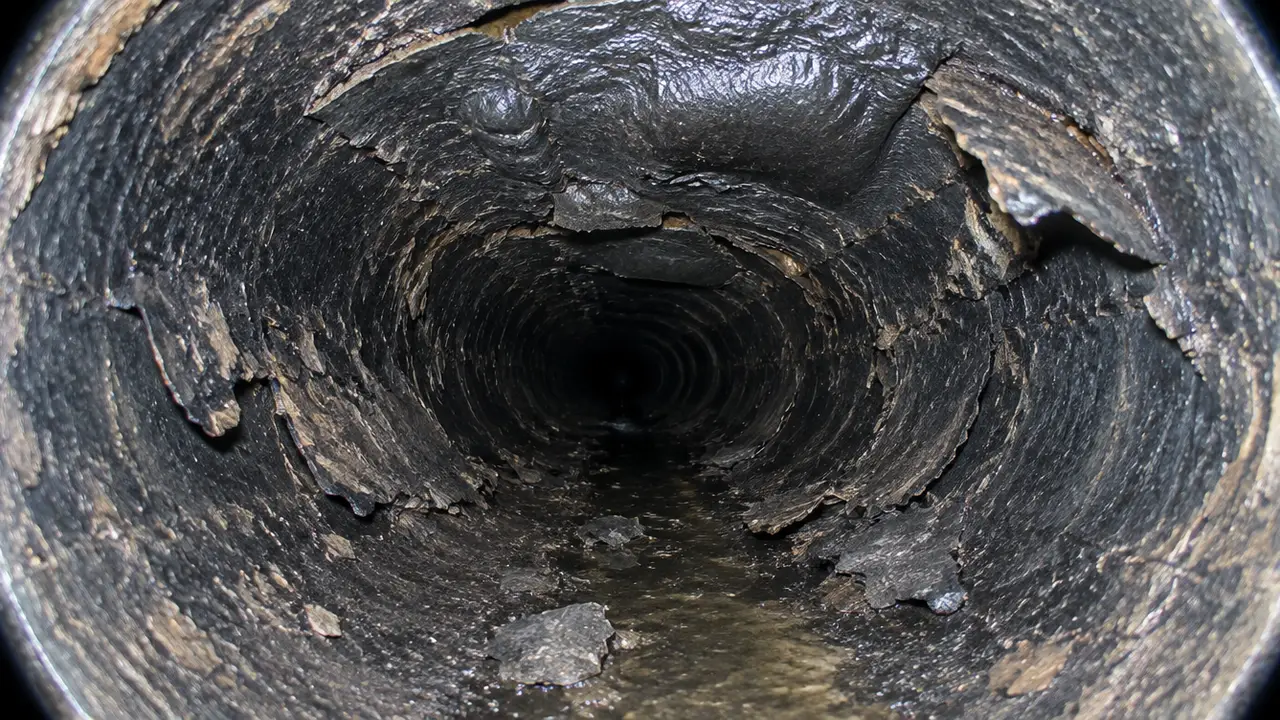
- What it is. Pipe made from wood or paper fibre soaked in coal tar pitch, sold under names such as No-Corode and Orangeburg and often called tar paper pipe. It turns up in some older houses. Over time it softens, blisters and flattens under the weight of the soil above.
- Why it matters to a buyer. Once fibre pipe has gone oval, the deformation tends to continue, and a flattened section can block the camera and the flow. Root cutting or jetting may tear the softened walls, so maintenance options are limited.
- Usual next step: price it. Any deformed fibre pipe is worth a replacement quote. Where fibre is present but still round, ask the operator how much of the run it covers.
The City's open data on public sanitary service lines includes material codes it does not define, which is one reason the camera is the practical way to identify this material on a given property. For a Calgary-focused explanation of how fibre pipe fails, see common sewer line problems in Calgary.
08 /What do grease and infiltration tell a buyer? (Findings 11 and 12)
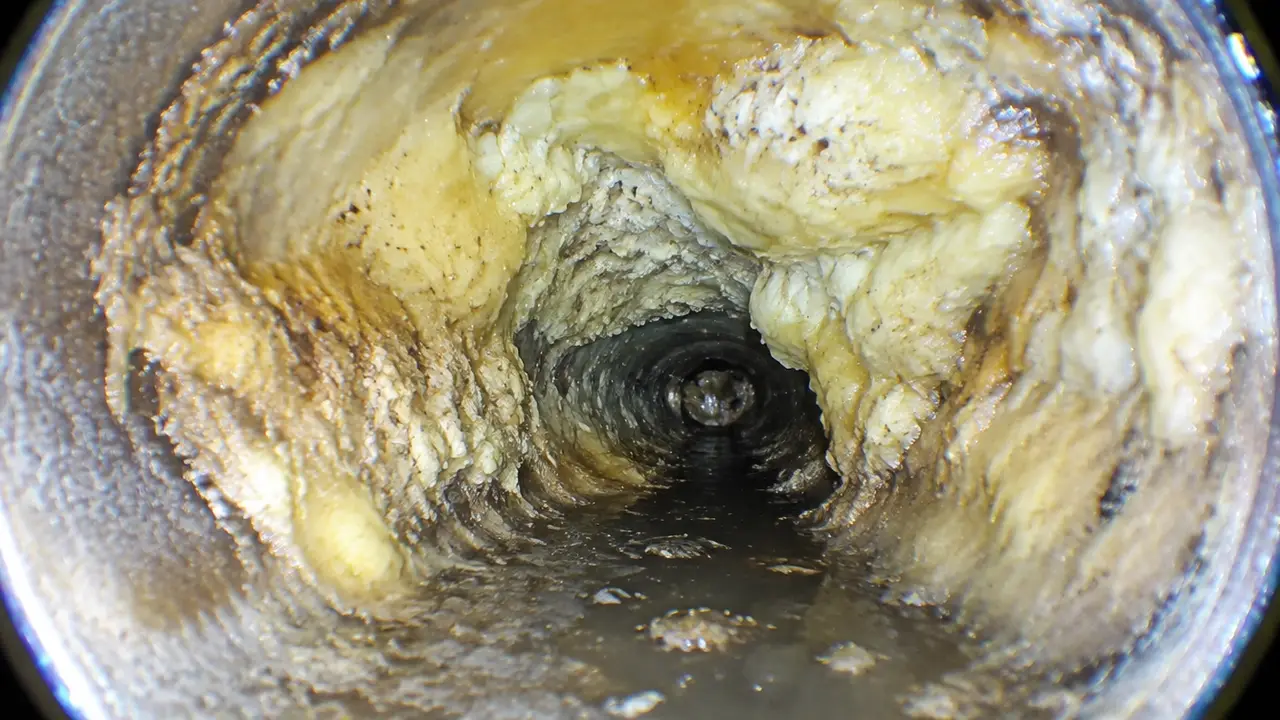
- What it is. Fats, oils and grease poured down the kitchen drain cool and cling to the pipe, gathering food and paper into a thickening layer.
- Why it matters to a buyer. Grease is mostly a sign of how the house has been used, not of a broken pipe. It can hide defects underneath, and heavy buildup causes the same slow drains and backups as a physical defect.
- Usual next step: note it, or watch it if heavy. A cleaning followed by a second camera run shows what the walls look like underneath. Changing kitchen habits after you move in usually keeps it from returning.
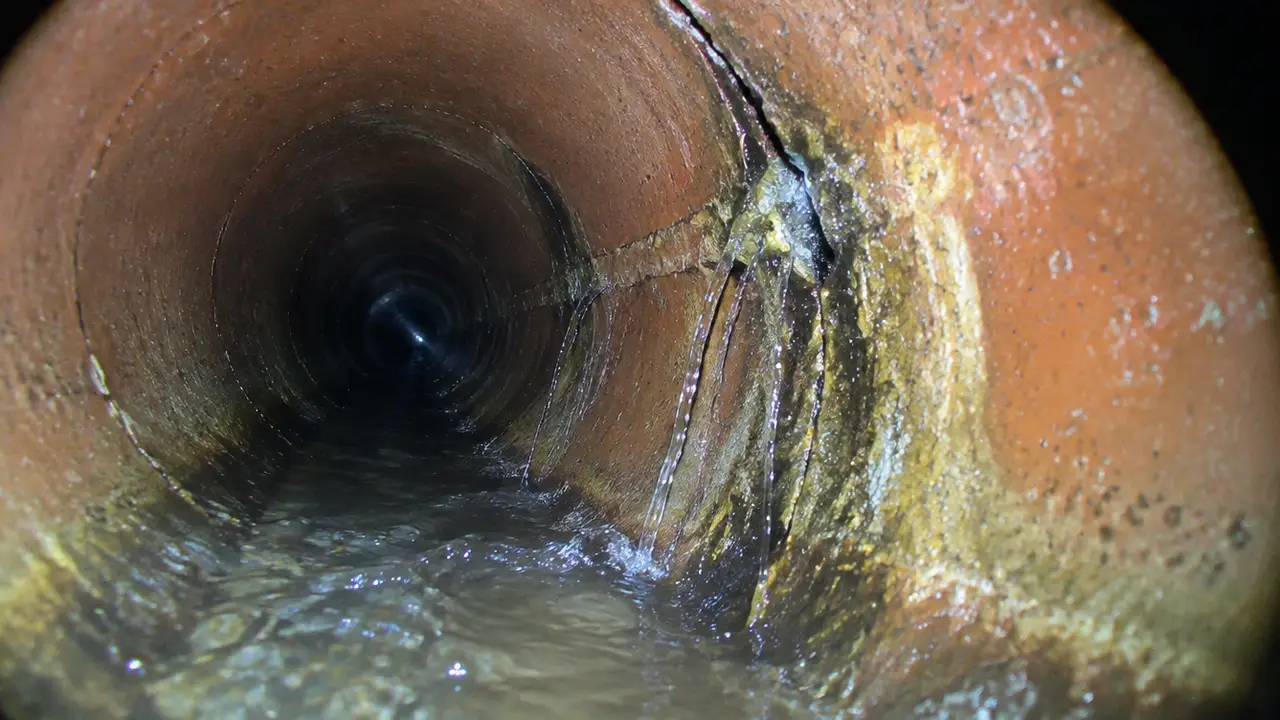
- What it is. Groundwater entering the pipe from outside, usually at a leaking joint or crack. It may drip, trickle or run, and mineral deposits often stain the wall around the entry point.
- Why it matters to a buyer. Water getting in means the joint is open, which usually means roots or soil can get in too. The amount can change with the season, so a dry-season scope may understate it.
- Usual next step: watch it for a light seep; price it when water is running or soil is entering with it.
09 /What do connection findings at the City main mean? (Finding 13)
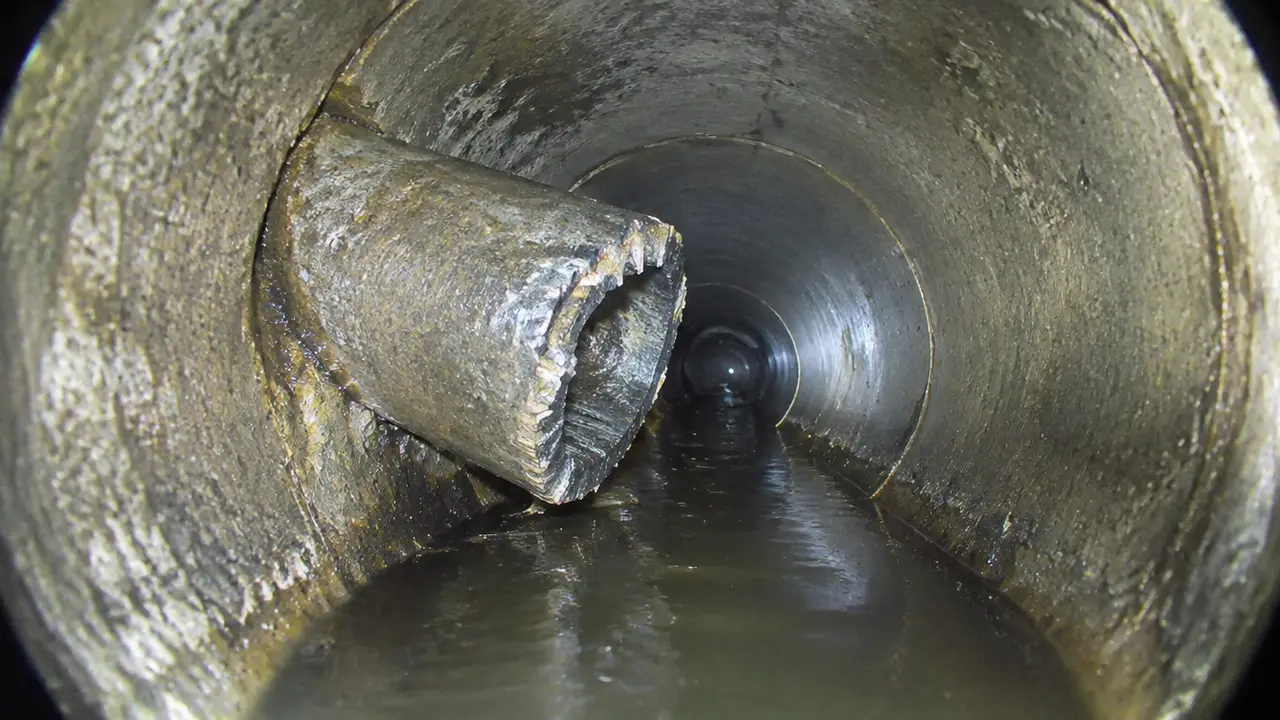
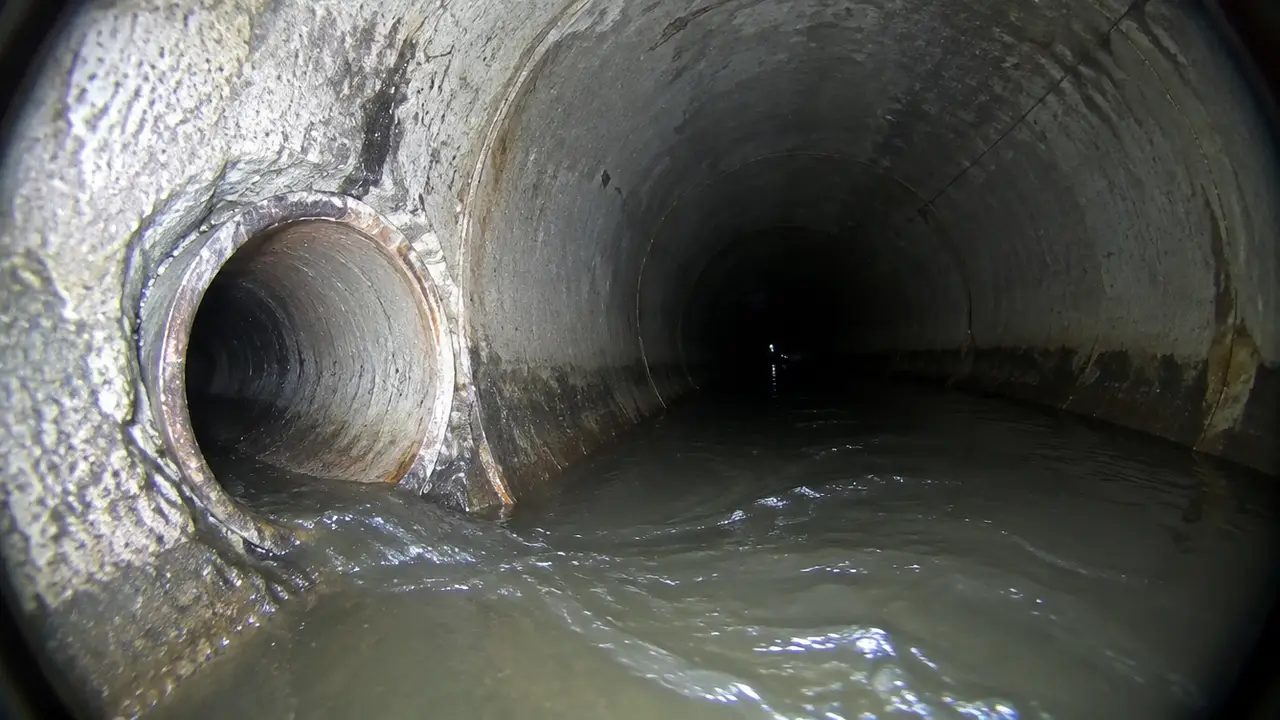
- What it is. A connection where one pipe joins another and was not finished flush. The pipe end sticks into the line it joins and catches paper, grease and roots. The same term covers how the house lateral meets the City main at the end of the run.
- Why it matters to a buyer. A protrusion is a snag point that can cause recurring blockages. Where it sits decides who deals with it. In Calgary, the City owns and maintains the sanitary service pipe from the main to the property line; the homeowner owns and maintains it from the property line to the house.
- Usual next step: note it, and report it if it sits on the City's portion. Keep the still and the distance, and contact the City through 311 if the camera shows a problem at the main or between the main and the property line.
Seeing the camera reach the main is itself a finding worth recording. It tells you the whole run was inspected. A report that ends short of the main should say where and why, and where your line changes hands explains how to compare the camera's distance with the property boundary.
10 /What does a previous repair look like? (Finding 14)
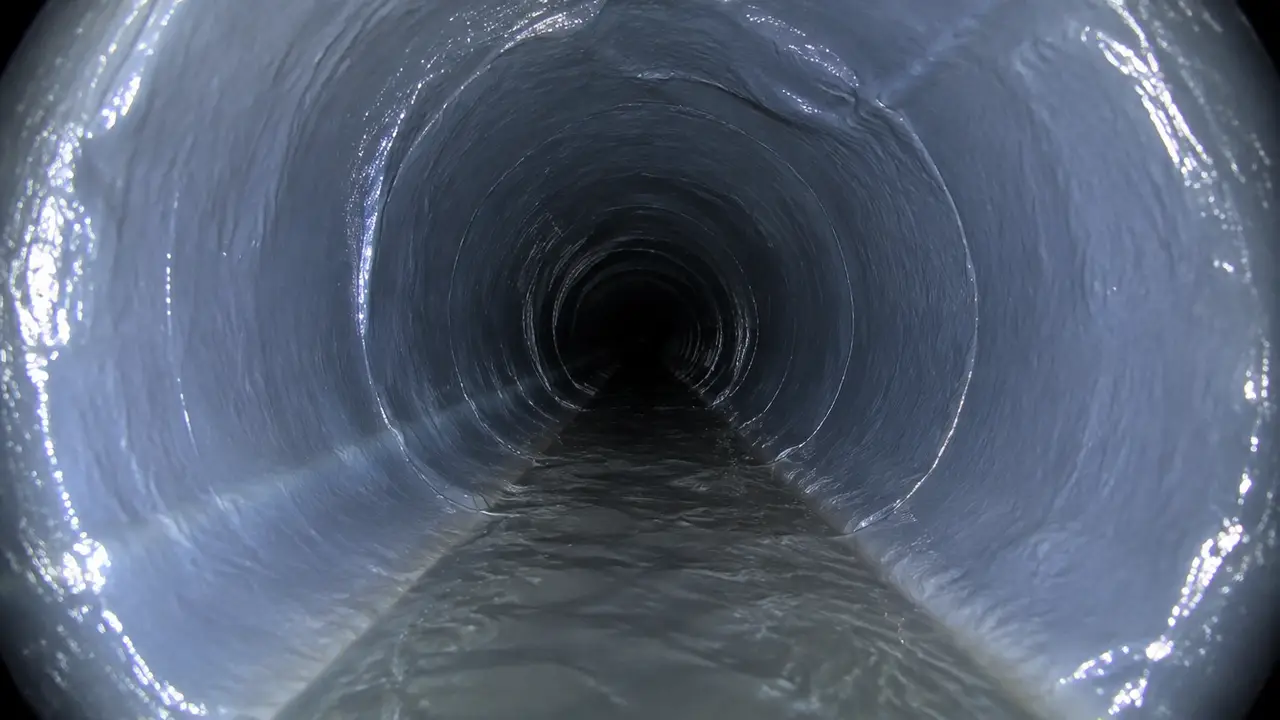
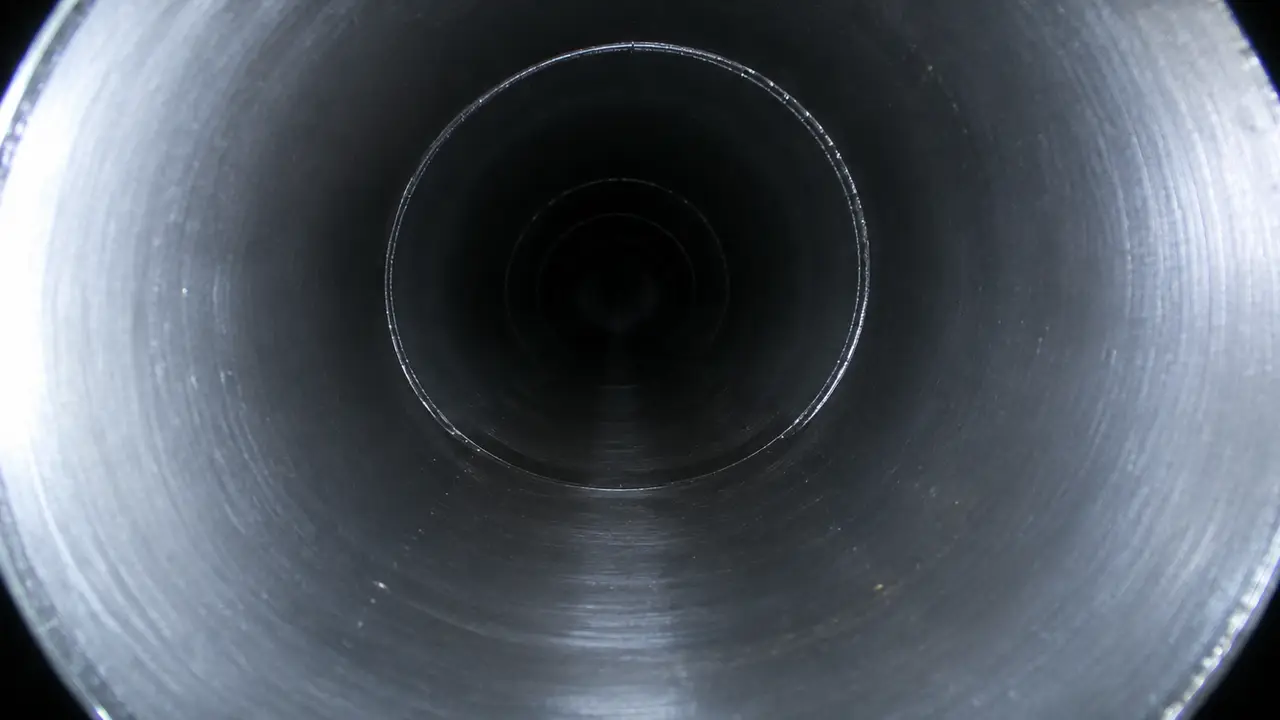
- What it is. Evidence of earlier trenchless work. A cured-in-place pipe (CIPP) liner is a resin-soaked tube cured into a new pipe inside the old one, so it shows a smooth wall with no joints. Pipe bursting pulls a new high-density polyethylene (HDPE) pipe through the path of the old one, splitting the old pipe outward as it goes.
- Why it matters to a buyer. A well-done repair can be a real positive for an older house. The ends are where problems hide: check where the liner or new pipe starts and stops, whether it wrinkles or pulls away from the host pipe, and whether any untouched old section remains between the repair and the house or the main.
- What to ask. The seller's paperwork for the repair: who did it, when, which length was covered, and any warranty and whether it transfers.
- Usual next step: note it when the whole run looks sound; price it when the ends, wrinkles or an unrepaired section are a concern.
11 /Which findings should a buyer price, watch or note?
| Finding | Buyer priority | Typical next step |
|---|---|---|
| 1. Sound ABS or PVC | Note it | Keep the video as a baseline |
| 2. Cast iron scale | Watch it; price it if heavy | Quote comparing descaling with lining or replacement |
| 3. Cast iron channelling | Price it | Quote for the channelled length; ask about the rest of the iron |
| 4. Roots at a joint, or after cutting | Watch light roots; price heavy or repeat roots | Ask for the cutting history; compare maintenance with a repair |
| 5. Offset joint | Watch small; price large or soil-bearing | Size of the step, surface mark, contractor quote |
| 6. Belly | Watch short and shallow; price long or deep | Start and end distances of the pooled water |
| 7. Crack | Watch a tight crack; price open or spreading cracks | Surface mark and quote for open fractures |
| 8. Hole or missing piece | Price it | Locate, mark and quote the spot |
| 9. Collapse | Price it | Locate the collapse; find another way to see the rest |
| 10. Deformed bituminous fibre | Price it | Replacement quote; length of fibre in the run |
| 11. Grease | Note it; watch it if heavy | Clean, then re-scope to see the walls |
| 12. Infiltration | Watch a seep; price running water or soil | Mark the joint; consider a wet-season re-check |
| 13. Protruding connection or tie-in issue | Note it; report City-side issues | Distance against the property line; 311 if on the City's portion |
| 14. Liner or burst HDPE | Note it if sound; price it if the ends fail | Seller's repair records and warranty terms |
One finding rarely stands alone. Two or three watch-level findings in the same stretch, such as roots at an offset joint inside a belly, often add up to a price-it conclusion because a single repair would deal with all of them. Read the run as a whole before deciding.
12 /What should a buyer do once the findings are sorted?
- Confirm the evidence
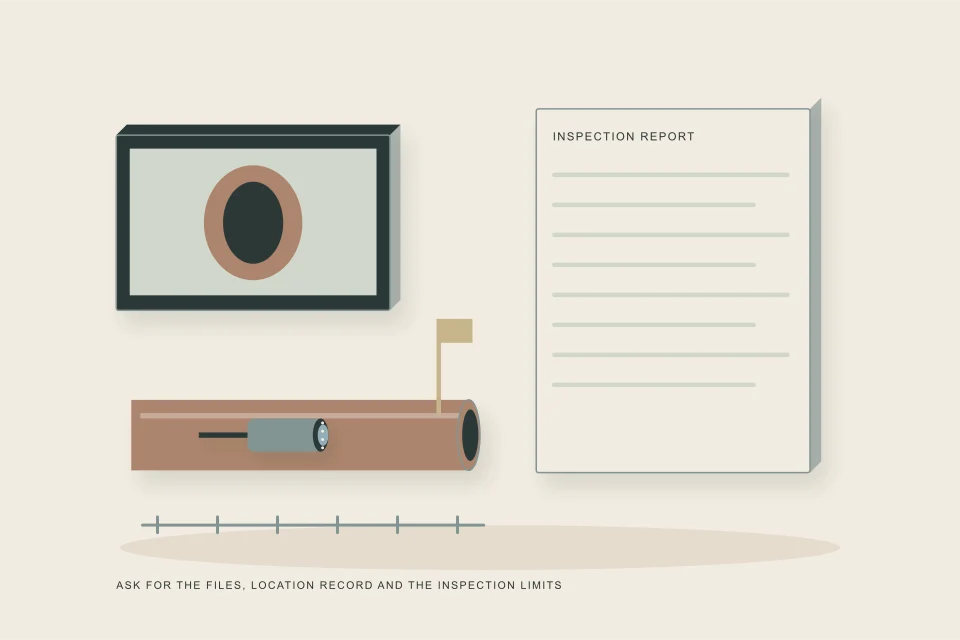
Make sure each price-it finding has a distance, a still and a surface mark with an estimated depth. Without them, a contractor is quoting a guess.
- Place it on the map
Compare the mark with the property line on the Real Property Report. A defect past the line is on the City's portion; call 311.
- Get a written quote
One quote is the minimum for a price-it finding; two helps when the provider who scoped the line also sells the repair.
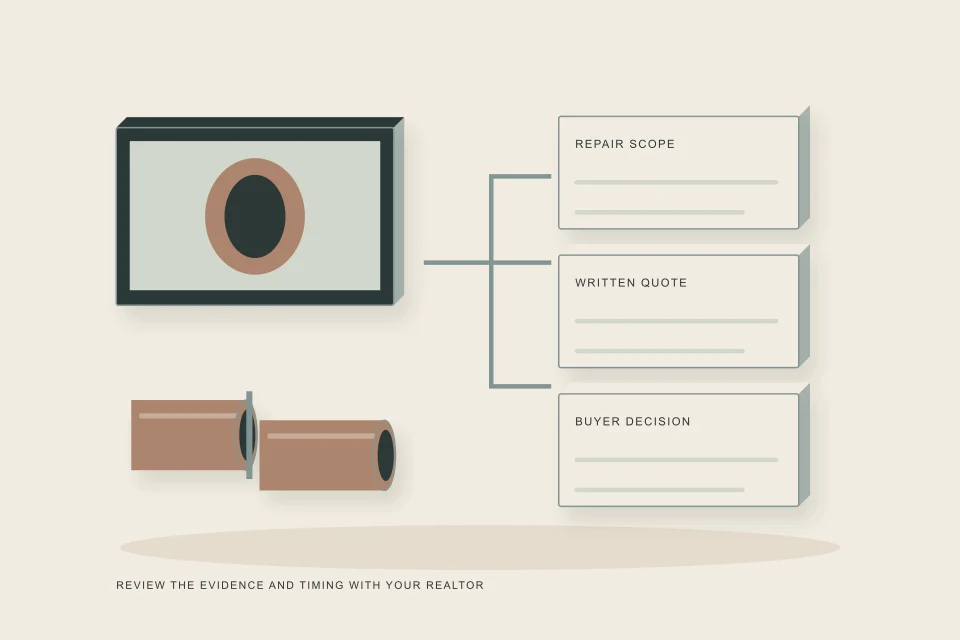
- Decide with your Realtor
Waive, ask for a price adjustment or credit, ask the seller to repair, or walk away, all before the condition deadline.
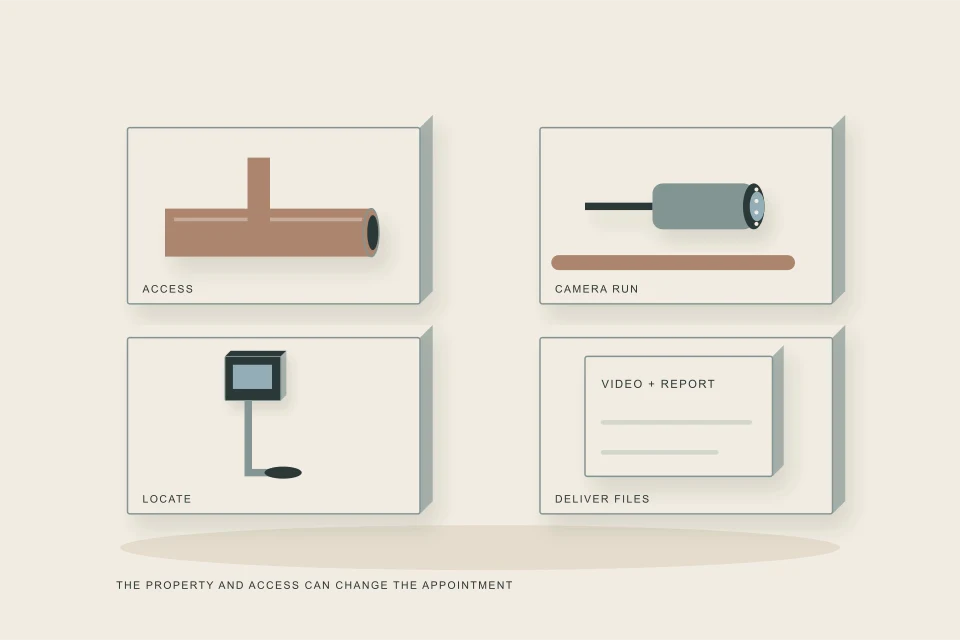
For how to read the written report itself, see what a sewer scope report should give a Calgary buyer. For the steps after a price-it result, see after a bad sewer scope; replacement methods and costs are covered in depth on CalgarySewerReplacement.com. If you have not booked yet, what happens on scope day and questions to ask before booking help you set it up well, and the HAUSE desk can take the request.
FAQQuestions people ask
Can a buyer tell a harmless sewer camera finding from a serious one just by watching the footage?
Sometimes, but not reliably. The same finding can be minor or serious depending on its size, its distance and what surrounds it. Ask the operator to explain each item on site, then rely on the written report and a contractor's quote for anything labelled price it.
Does a pipe liner found on a sewer scope mean the line was recently fixed?
It means someone lined at least part of it at some point. Ask the seller for the paperwork, check how much of the run the liner covers, and look closely at both ends, where the liner meets the old pipe.
Why would two joints in the same Calgary sewer line look completely different on camera?
Joints age differently depending on the soil, nearby trees, traffic above and how each section was laid. A line can hold one tight joint and one root-filled offset a few metres apart, which is why the report should list each finding by distance.
Should grease in the line lower what a buyer offers for a house?
Usually not on its own, because grease reflects how the kitchen was used rather than damage to the pipe. The concern is what the grease hides, so a cleaning followed by a second camera run is the sensible check when the coating is heavy.
NETWORKGo deeper across the HAUSE Sewer network
How long cast iron drain pipes last, and when to repair, line or replace
How long do cast iron drain pipes last? Why they rust and crack, how to judge remaining life, and when a repair sleeve, lining or replacement is right.
SewerRoots.caSewer lining for tree roots: will a CIPP liner stop them for good?
Sewer lining for tree roots: how a CIPP liner seals root-damaged joints, which lines qualify, preparation, weak points at the ends, and planning costs.
SewerJetting.caJet or auger? A decision tool for your blocked line
Jet or auger decision tool: enter blockage type, pipe material, camera findings, pipe size and access to see whether to jet, auger or camera first.